Betulaceae
Himalayan Birch (Betula utilis)
Betula utilis
A cool-climate tree for sun or afternoon shade in cool, moist, well-drained soil. Mulch the roots and never let it go thirsty, because stressed trees attract borers.
Every 7 days
Bright indirect
-30° - 30°C
40% - 80%
Categories
What is Himalayan birch?
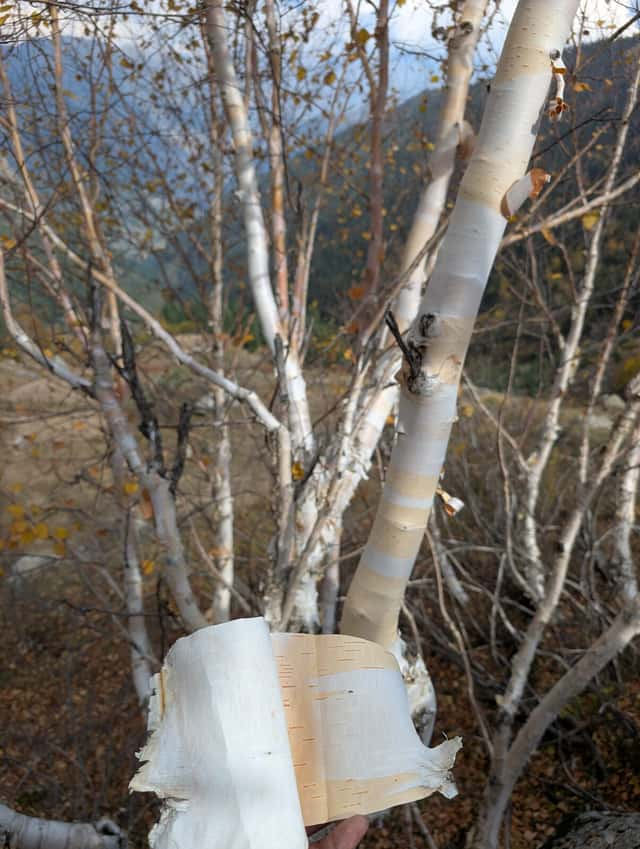
Himalayan birch (Betula utilis) is a medium-care plant from the Betulaceae family. Betula utilis is a birch in the family Betulaceae, native to the Himalayas, Central Asia and China, where it forms forests up to 4,500 m among conifers and rhododendrons. It reaches 20 m in the wild and usually 9 to 15 m in gardens, with a pyramidal crown. It is known for its white, paper-thin bark...
Himalayan birch grows up to 20.0m, spread of 1000cm, watering every 7 days, -30°C – 30°C, 40–80% humidity. It is not suitable for indoor environments and safe for pets.
Unlike many popular species, Himalayan birch is safe to keep around pets.
How to Care for Himalayan birch?
TLDR: Himalayan birch needs Bright indirect, watering every 7 days, and temperatures between -30-30°C with 40-80% humidity.
How Often Should You Water Himalayan birch?
Water weekly in the first season and during dry spells, soaking deeply. The roots are shallow, so keep the soil evenly moist but not waterlogged.
How Much Light Does Himalayan birch Need?
Full sun in cool climates. Where summers are warmer, give it afternoon shade.
What Is the Best Soil for Himalayan birch?
Fertile, moist, well-drained loam. It tolerates many soil types and pH levels. A layer of bark mulch keeps the roots cool.
What Pot Should You Use for Himalayan birch?
A tree for the ground. In a container only while young, in a large, deep pot that does not overheat in the sun.
What Is Himalayan birch and Where Does It Come From?
Betula utilis is a birch in the family Betulaceae, native to the Himalayas, Central Asia and China, where it forms forests up to 4,500 m among conifers and rhododendrons. It reaches 20 m in the wild and usually 9 to 15 m in gardens, with a pyramidal crown. It is known for its white, paper-thin bark that peels in sheets, and for oval, toothed leaves that drop in autumn. In spring it hangs out catkins. The whitest-barked form, subspecies jacquemontii, is the one most often planted.
How to Propagate Himalayan birch?
Seed
The whitest-barked forms, such as jacquemontii, do not always come true from seed.
- 1 Collect ripe catkins in late summer or autumn
- 2 Sow on the surface of a moist mix without covering
- 3 Keep in a cool, bright place
- 4 Pot up the seedlings the following year
Materials needed:
Grafting
This is how nurseries reproduce the white-barked selections.
- 1 Use a young potted birch as rootstock
- 2 In late winter, prepare a scion of the chosen form
- 3 Join them with a side graft and tie firmly
- 4 Keep sheltered until it leafs out
Materials needed:
How Big Does Himalayan birch Grow?
TLDR: Himalayan birch can reach up to 20.0m tall with Medium growth rate.
Max height
20.0m
Spread
10.0m
Growth rate
Medium
Foliage
Deciduous
Plant Uses
Ornamental
Great for decoration
Is your plant showing symptoms?
Click on the symptom to discover possible causes:
What Diseases Commonly Affect Himalayan birch?
TLDR: Himalayan birch is susceptible to 5 known diseases. Monitor regularly for early detection.
Aphids
Aphids are small, soft-bodied, pear-shaped insects (1/16 to 1/8 inch long) that feed by sucking nutrient-rich sap from plants. They reproduce rapidly and can quickly weaken plants, causing distorted growth and transmitting plant viruses. Aphids come in various colors including green, black, red, yellow, brown, and gray. They secrete honeydew, a sticky substance that attracts ants and encourages sooty mold growth.
leaf miners
Larval stages of leaf-mining insects are feeding on the leaf tissue of plants, building little tunnels under the leaf surface.
Rust
Rust is a common fungal disease caused by fungi in the order Pucciniales that affects a wide variety of plants. The disease gets its name from the characteristic orange, yellow, or reddish-brown pustules that appear on leaves, resembling metal rust. This obligate fungal parasite requires living plants to survive and can cause significant economic losses in agricultural crops.
Sooty Mold
Sooty mold is a fungal disease that develops on surfaces coated with honeydew, a sticky sweet substance secreted by sap-sucking insects like aphids, scale insects, and whiteflies. While it does not directly infect plant tissue, it reduces photosynthetic capacity by blocking sunlight and diminishes the plant's aesthetic appearance.
Fun Facts
Its name utilis means useful, for the tree's many uses
The bark was used as paper for Sanskrit manuscripts
Mantras are still written on the bark and carried in amulets
Frequently asked questions
Can Himalayan birch handle heat?
What is the main pest?
How do I keep the bark white?
When should I prune it?
Compare with similar plants
| Attribute | Difficulty | Light | Watering | Pet Safe |
|---|---|---|---|---|
| Dark Fieldcap | Medium | Low light | 2d | ⚠️ |
| Azalea | Medium | Partial shade | 3d | ⚠️ |
| Muriel's Bamboo | Medium | Partial shade | 3d | ✓ |
| Silver Birch | Easy | Direct sun | 14d | ✓ |




