Plantaginaceae
Hebe brachysiphon
Veronica brachysiphon
Sun or part shade, free-draining soil and water when the surface dries. After flowering, trim off the dead spikes. No feeding needed.
Every 7 days
Bright indirect
° - °C
% - %
Categories
What is Hebe brachysiphon?
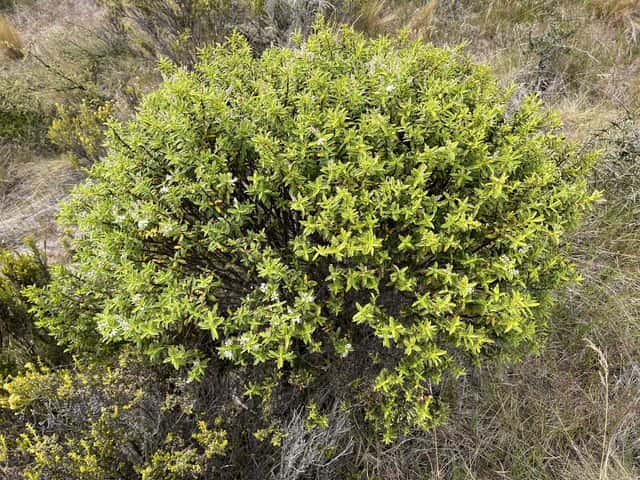
Hebe brachysiphon (Veronica brachysiphon) is a easy-care plant from the Plantaginaceae family. Veronica brachysiphon, still sold as Hebe brachysiphon, is a shrub from the mountains of New Zealand's South Island. It forms a dense, rounded bush with small, bright green, glossy leaves that stay all year. In summer it is covered in spikes of white flowers with purple-tinged centres. In gardens it...
Hebe brachysiphon grows up to 1.8m, spread of 100cm, watering every 7 days. It is not suitable for indoor environments and safe for pets.
Unlike many tropical plants, Hebe brachysiphon tolerates watering mistakes. Best for beginners. Unlike many popular species, Hebe brachysiphon is safe to keep around pets.
How to Care for Hebe brachysiphon?
TLDR: Hebe brachysiphon needs Bright indirect, watering every 7 days, and temperatures between 15-30°C with 40-70% humidity.
How Often Should You Water Hebe brachysiphon?
Water when the top few centimetres are dry, about once a week in hot weather. In the ground, once settled, only in long dry spells. Soggy soil rots the roots.
How Much Light Does Hebe brachysiphon Need?
Full sun or part shade. In sun it stays tighter and flowers more.
What Is the Best Soil for Hebe brachysiphon?
Any soil that drains well, including chalk or clay, as long as water does not pool. Poor soil keeps it more compact.
What Pot Should You Use for Hebe brachysiphon?
A medium pot with a drainage hole and free-draining compost. In a pot it stays smaller and needs more frequent watering in summer.
What Is Hebe brachysiphon and Where Does It Come From?
Veronica brachysiphon, still sold as Hebe brachysiphon, is a shrub from the mountains of New Zealand's South Island. It forms a dense, rounded bush with small, bright green, glossy leaves that stay all year. In summer it is covered in spikes of white flowers with purple-tinged centres. In gardens it stays between 50 cm and 1 metre; in the wild it reaches 1.8 m. It grows slowly and takes clipping well, so it works as a low hedge. The name brachysiphon means short tube, after the short flower tube.
How to Propagate Hebe brachysiphon?
Semi-ripe cutting
Take cuttings in midsummer from this year's growth that has started to firm up. A clear bag or cut bottle over the pot holds in moisture.
- 1 Cut a non-flowering shoot tip about 8 cm long
- 2 Strip the leaves from the lower half
- 3 Push it into a pot of gritty compost
- 4 Keep in light shade with the soil slightly moist
Materials needed:
How Big Does Hebe brachysiphon Grow?
TLDR: Hebe brachysiphon can reach up to 1.8m tall with Slow growth rate.
Max height
1.8m
Spread
1.0m
Growth rate
Slow
Foliage
Evergreen
Plant Uses
Ornamental
Great for decoration
Is your plant showing symptoms?
Click on the symptom to discover possible causes:
What Diseases Commonly Affect Hebe brachysiphon?
TLDR: Hebe brachysiphon is susceptible to 4 known diseases. Monitor regularly for early detection.
Aphids
Aphids are small, soft-bodied, pear-shaped insects (1/16 to 1/8 inch long) that feed by sucking nutrient-rich sap from plants. They reproduce rapidly and can quickly weaken plants, causing distorted growth and transmitting plant viruses. Aphids come in various colors including green, black, red, yellow, brown, and gray. They secrete honeydew, a sticky substance that attracts ants and encourages sooty mold growth.
Leaf Spot
Leaf spot is a common fungal disease caused by various pathogens including Alternaria, Ascochyta, Colletotrichum, Septoria, and Venturia. It primarily affects leaves, causing discolored spots that can lead to premature leaf drop if left untreated.
Downy Mildew
Downy mildew is a fungal-like disease caused by oomycetes (water molds) that thrives in cool, wet conditions. It affects a wide range of plants, causing yellowing leaves with fuzzy white-gray growth underneath, leading to defoliation and reduced yields if left untreated.
Root Rot
Root rot is a serious fungal disease that affects the root system of plants, causing them to decay and die. It is primarily caused by overwatering, poor drainage, or soil-borne fungi such as Pythium, Phytophthora, Rhizoctonia, and Fusarium. The disease thrives in waterlogged conditions where roots are deprived of oxygen, making them susceptible to fungal infection.
Fun Facts
Brachysiphon comes from Greek and means short tube
In the wild it grows near the treeline in the South Island mountains
Some plants carry only male flowers and others only female ones
Frequently asked questions
Are Hebe brachysiphon and Veronica brachysiphon the same plant?
When should I prune it?
Why does it have spots on the leaves?
How often should I water it?
Compare with similar plants
| Attribute | Difficulty | Light | Watering | Pet Safe |
|---|---|---|---|---|
| Field Maple | Easy | Bright indirect | 14d | ✓ |
| Iberian Houseleek | Easy | Direct sun | 14d | ✓ |
| Silver Birch | Easy | Direct sun | 14d | ✓ |
| Common Blanketflower | Easy | Direct sun | 10d | ✓ |





