Bromeliaceae
Harris's Air Plant: Pet-Safe Plant
Tillandsia harrisii
An easy, beginner-friendly air plant that wants bright light, a weekly soak, and fast, complete drying. It tolerates dry household air well but must never sit wet, since trapped moisture at the base quickly causes crown rot.
Every 7 days
Bright indirect
15° - 29°C
40% - 60%
Categories
What is Harris's Air Plant?
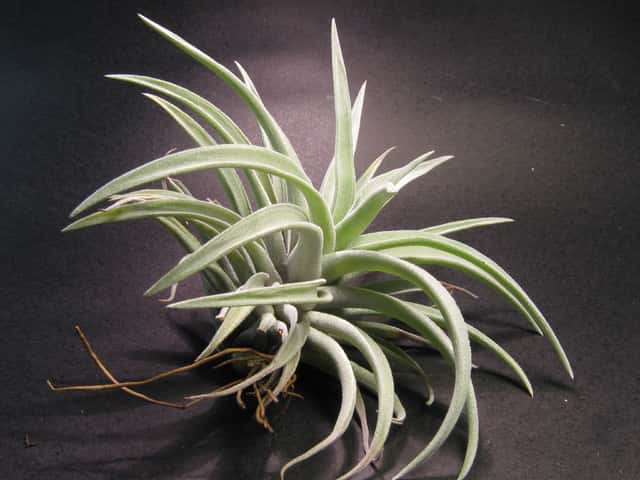
Harris's Air Plant (Tillandsia harrisii) is a easy-care plant from the Bromeliaceae family. Tillandsia harrisii is a slow-growing epiphytic bromeliad endemic to the dry rocky slopes of Zacapa, Guatemala. Its silvery, densely trichome-covered leaves form a tight rosette on a short stem, giving the plant a soft, fuzzy, almost white appearance that helps it survive intense sun and low humidit...
Harris's Air Plant grows up to 20cm, spread of 15cm, watering every 7 days, 15°C – 29°C, 40–60% humidity. It is suitable for indoor environments and safe for pets.
Unlike many tropical plants, Harris's Air Plant tolerates watering mistakes. Best for beginners. Unlike many popular species, Harris's Air Plant is safe to keep around pets. Without adequate drainage, root rot can develop within 14 days.
How to Care for Harris's Air Plant?
TLDR: Harris's Air Plant needs Bright indirect, watering every 7 days, and temperatures between 15-29°C with 40-60% humidity.
How Often Should You Water Harris's Air Plant?
Soak the whole plant in room-temperature water for 20-30 minutes once a week (more often in hot, dry weather; less in winter). Afterward, shake off excess water and dry it upside down within a few hours - never let water pool in the base or leaf crown.
How Much Light Does Harris's Air Plant Need?
Give it bright, indirect light with a couple hours of gentle morning or late-afternoon sun. It tolerates brief direct sun but grows slower and can scorch in intense, prolonged direct light.
What Is the Best Soil for Harris's Air Plant?
This is an epiphyte and is grown without any soil or potting mix. Mount it on bark, driftwood, or wire, or display it loose in an open bowl or shallow dish - never in a sealed container or enclosed terrarium, which traps moisture and causes rot.
What Pot Should You Use for Harris's Air Plant?
No pot or soil needed. Best displayed mounted on bark/wood, in an open wire holder, or in a shallow, well-ventilated bowl that allows quick drying.
Care Schedule
Fertilize
Every 14 days
Misting
Every 3 days
Rotate
Every 7 days
Repot
Every 365 days
What Is Harris's Air Plant and Where Does It Come From?
Tillandsia harrisii is a slow-growing epiphytic bromeliad endemic to the dry rocky slopes of Zacapa, Guatemala. Its silvery, densely trichome-covered leaves form a tight rosette on a short stem, giving the plant a soft, fuzzy, almost white appearance that helps it survive intense sun and low humidity in its native habitat. After a year or two of growth it produces an upright spike with coral-red to orange bracts and violet-blue flowers, after which pups form at the base.
How to Propagate Harris's Air Plant?
Pup (offset) division
Pups can also be left attached to form a dense clumping cluster instead of being separated.
- 1 Wait for a pup to develop at the base of the mother plant after it flowers
- 2 Let the pup grow until it is at least one-third the size of the mother plant
- 3 Gently twist or snip the pup away from the base with clean fingers or scissors
- 4 Let the cut area air-dry for a few hours before resuming normal watering
- 5 Care for the separated pup exactly like a mature plant
Materials needed:
How Big Does Harris's Air Plant Grow?
TLDR: Harris's Air Plant can reach up to 20cm tall with Slow growth rate.
Max height
20cm
Spread
15cm
Growth rate
Slow
Foliage
Evergreen
Plant Uses
Ornamental
Great for decoration
Is your plant showing symptoms?
Click on the symptom to discover possible causes:
What Diseases Commonly Affect Harris's Air Plant?
TLDR: Harris's Air Plant is susceptible to 6 known diseases. Monitor regularly for early detection.
Crown Rot
Crown rot is a serious fungal disease that attacks the crown (base) of the plant where the stem meets the soil. It is caused by various fungal pathogens including Phytophthora, Fusarium, and Rhizoctonia. The disease thrives in waterlogged conditions and can quickly spread to kill the entire plant if not addressed promptly.
Overwatering
Overwatering occurs when plants receive too much water, depriving roots of oxygen and causing root rot. This environmental stress is one of the most common causes of houseplant death, as waterlogged soil prevents roots from breathing and functioning properly.
Underwatering
Underwatering or drought stress is a physiological disorder that occurs when the amount of water a plant loses through transpiration exceeds the amount its roots can absorb from the soil. This leads to cellular dehydration and various visible symptoms that can compromise plant health and productivity.
Mealybugs
Mealybugs are small, soft-bodied insects covered with a white, waxy, cottony material. They are common pests of houseplants and outdoor plants in mild climates. These sap-sucking insects feed on plant tissue, causing damage, stunted growth, and can lead to plant death if left untreated. They produce sticky honeydew which attracts sooty mold.
Meaning & Symbolism
As a plant that thrives suspended in open air without roots in soil, Tillandsia is often associated with independence, resilience, and adaptability.
Compare with similar plants
| Attribute | Difficulty | Light | Watering | Pet Safe |
|---|---|---|---|---|
| Field Maple | Easy | Bright indirect | 14d | ✓ |
| Silver Birch | Easy | Direct sun | 14d | ✓ |
| Common Blanketflower | Easy | Direct sun | 10d | ✓ |
| Cushion Bush | Easy | Direct sun | 14d | ✓ |





