Cactaceae
Golden Snake Cactus: Full Sun Plant
Bergerocactus emoryi
Requires full sun, very well-draining substrate, and sparse watering. Allow the substrate to dry out completely between waterings, reduce frequency in October, and keep virtually dry during winter. It tolerates brief cold spells down to about 28°F (-2°C) if kept dry. Avoid excessively intense heat and sun. Repot every two years or when the pot becomes too small. Watch for mealybugs and spider mites.
Every 14 days
Direct sun
-2° - °C
% - %
Categories
What is Golden Snake Cactus?
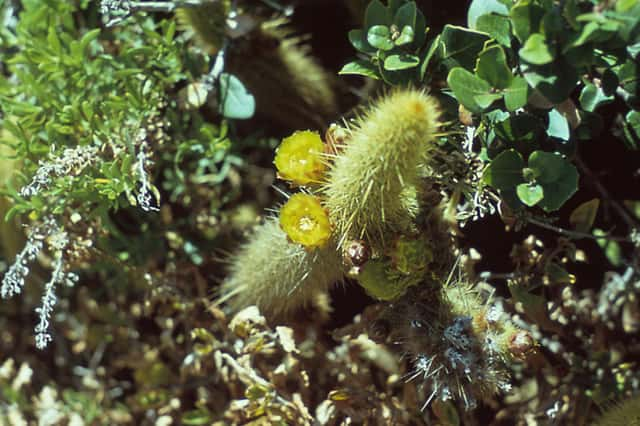
Golden Snake Cactus (Bergerocactus emoryi) is a medium-care plant from the Cactaceae family. Bergerocactus emoryi is a shrubby cactus in the Cactaceae family, native to the coast of Southern California and northwestern Baja California. It forms dense thickets of cylindrical branches with 12 to 18 ribs, covered in golden-yellow spines that appear velvety when backlit by the sun. Stems are ty...
Golden Snake Cactus grows up to 2.0m, watering every 14 days. It is suitable for indoor environments and safe for pets.
Unlike many popular species, Golden Snake Cactus is safe to keep around pets. Without adequate drainage, root rot can develop within 28 days.
How to Care for Golden Snake Cactus?
TLDR: Golden Snake Cactus needs Direct sun, watering every 14 days, and temperatures between -2-30°C with 40-70% humidity.
How Often Should You Water Golden Snake Cactus?
Water sparingly during the growing season, only when the substrate is completely dry. Reduce watering starting in October and keep dry in winter to prevent rot.
How Much Light Does Golden Snake Cactus Need?
Full sun outdoors. Indoors, provide intense light with some direct sun. In winter, place in a cool, bright location. During extreme heat, partial shade is preferred.
What Is the Best Soil for Golden Snake Cactus?
Use a loose, well-draining mix for cacti and succulents, incorporating sand. Maintain a pH between 6 and 7.5.
What Pot Should You Use for Golden Snake Cactus?
Clay or terracotta pots with drainage holes are recommended to help the substrate dry out. Choose a size that comfortably accommodates the roots.
Care Schedule
Repot
Every 730 days
What Is Golden Snake Cactus and Where Does It Come From?
Bergerocactus emoryi is a shrubby cactus in the Cactaceae family, native to the coast of Southern California and northwestern Baja California. It forms dense thickets of cylindrical branches with 12 to 18 ribs, covered in golden-yellow spines that appear velvety when backlit by the sun. Stems are typically less than 6 feet (2 m) long. It blooms in spring with diurnal yellow flowers featuring reddish tips and produces globular, reddish, and spiny fruits. It is rare in cultivation and highly valued as an ornamental plant.
How to Propagate Golden Snake Cactus?
Stem Cuttings
- Use thick gloves when handling due to the dense spines
- Avoid watering for the first few weeks to prevent fungal growth
- 1 Cutting
Cut a healthy stem segment using a sterilized knife during spring or summer.
- 2 Callousing
Allow the cutting to dry in a shaded area until a firm callus forms.
- 3 Planting
Plant in a slightly moist, well-draining cactus substrate.
Materials needed:
Seeds
- Maintain a constant temperature around 68°F (20°C)
- 1 Sowing
Scatter the seeds over a mixture of sand and fine soil.
- 2 Moisture
Keep the substrate slightly moist until germination, which takes 14 to 28 days.
Materials needed:
How Big Does Golden Snake Cactus Grow?
TLDR: Golden Snake Cactus can reach up to 2.0m tall with Medium growth rate.
Max height
2.0m
Foliage
Evergreen
Plant Uses
Ornamental
Great for decoration
Is your plant showing symptoms?
Click on the symptom to discover possible causes:
What Diseases Commonly Affect Golden Snake Cactus?
TLDR: Golden Snake Cactus is susceptible to 4 known diseases. Monitor regularly for early detection.
Root Rot
Root rot is a serious fungal disease that affects the root system of plants, causing them to decay and die. It is primarily caused by overwatering, poor drainage, or soil-borne fungi such as Pythium, Phytophthora, Rhizoctonia, and Fusarium. The disease thrives in waterlogged conditions where roots are deprived of oxygen, making them susceptible to fungal infection.
Scale Insects
Scale insects are small sap-sucking pests that appear as brown, shell-like bumps on plant stems and leaves. There are over 25 species, divided into armored (hard) and unarmored (soft) scales. They feed by piercing plant tissue and extracting sap, which weakens the plant and can lead to yellowing, stunted growth, and even death if left untreated. They also excrete honeydew, which attracts ants and promotes sooty mold growth.
Mealybugs
Mealybugs are small, soft-bodied insects covered with a white, waxy, cottony material. They are common pests of houseplants and outdoor plants in mild climates. These sap-sucking insects feed on plant tissue, causing damage, stunted growth, and can lead to plant death if left untreated. They produce sticky honeydew which attracts sooty mold.
Spider Mites
Spider mites are tiny arachnids (less than 1/20 inch long) related to spiders and ticks that feed on plant sap. They thrive in hot, dry conditions and can cause significant damage to ornamental and vegetable plants. During severe infestations, crop losses can reach 14% or higher as these pests disrupt vital plant processes including photosynthesis, carbon dioxide absorption, and transpiration.
Meaning & Symbolism
Symbolizes resilience and endurance due to its adaptation to arid coastal environments.
Compare with similar plants
| Attribute | Difficulty | Light | Watering | Pet Safe |
|---|---|---|---|---|
| Dark Fieldcap | Medium | Low light | 2d | ⚠️ |
| Azalea | Medium | Partial shade | 3d | ⚠️ |
| Muriel's Bamboo | Medium | Partial shade | 3d | ✓ |
| Bougainvillea | Medium | Direct sun | 7d | ⚠️ |




