Asteraceae
Giant Goldenrod (Solidago gigantea): Complete Care Guide
Solidago gigantea
A low-maintenance, hardy plant best suited for outdoor gardens. Thrives in full sun with moderately moist, well-drained soil. Water weekly, fertilize every 90 days during the growing season, and cut back to ground level in autumn after flowering.
Every 7 days
Direct sun
-35° - 35°C
40% - 70%
Categories
What is giant goldenrod?
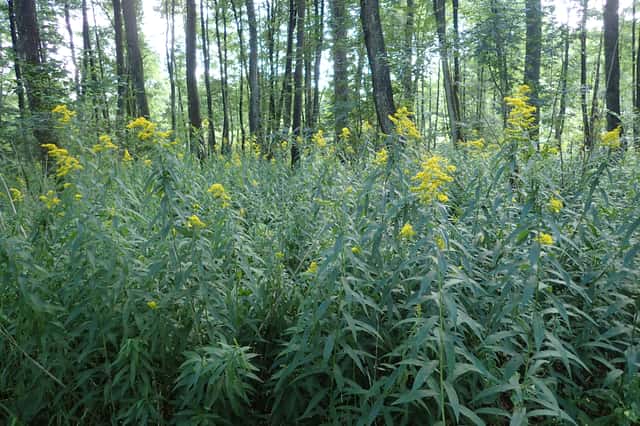
giant goldenrod (Solidago gigantea) is a easy-care plant from the Asteraceae family. Giant goldenrod (Solidago gigantea) is a vigorous herbaceous perennial in the Asteraceae family, native to North America. It grows up to 7 feet tall and produces large plumes of tiny golden-yellow flowers from late summer through fall. Widely cultivated as an ornamental and valued for its medicinal...
giant goldenrod grows up to 2.1m, spread of 182cm, watering every 7 days, -35°C – 35°C, 40–70% humidity. It is not suitable for indoor environments and safe for pets.
Unlike many tropical plants, giant goldenrod tolerates watering mistakes. Best for beginners. Unlike many popular species, giant goldenrod is safe to keep around pets.
How to Care for giant goldenrod?
TLDR: giant goldenrod needs Direct sun, watering every 7 days, and temperatures between -35-35°C with 40-70% humidity.
How Often Should You Water giant goldenrod?
Water every 7 days, keeping soil consistently moist but not waterlogged. Check soil moisture more frequently during hot summer periods. Avoid standing water at the base to prevent root rot.
How Much Light Does giant goldenrod Need?
Plant in full sun (6-8 hours of direct light per day). Tolerates partial shade but produces the best flowers and most compact growth in full sun.
What Is the Best Soil for giant goldenrod?
Prefers loamy, slightly acidic soil (pH 5.5–7.0) with good drainage. Tolerates average to poor soils — avoid overly rich soils which encourage excessive spreading.
What Pot Should You Use for giant goldenrod?
Large outdoor garden bed or oversized container with drainage holes. Not suitable as a houseplant.
Care Schedule
Fertilize
Every 90 days
What Is giant goldenrod and Where Does It Come From?
Giant goldenrod (Solidago gigantea) is a vigorous herbaceous perennial in the Asteraceae family, native to North America. It grows up to 7 feet tall and produces large plumes of tiny golden-yellow flowers from late summer through fall. Widely cultivated as an ornamental and valued for its medicinal properties, it is also known as an aggressive spreader outside its native range.
How to Propagate giant goldenrod?
Crown Division
Divide every 2-3 years to maintain plant vigor and control spreading.
- 1 Dig up the clump in early spring
- 2 Divide the rhizome into sections with 2-3 shoots each
- 3 Replant divisions in prepared soil
- 4 Water thoroughly after planting
Materials needed:
Seed Sowing
Germination can be irregular. No cold stratification required.
- 1 Collect ripe seeds in autumn
- 2 Store in a cool, dry location until spring
- 3 Surface-sow in trays with light seed-starting mix
- 4 Keep moist and in full sun; transplant at 4 inches tall
Materials needed:
How Big Does giant goldenrod Grow?
TLDR: giant goldenrod can reach up to 2.1m tall with Fast growth rate.
Max height
2.1m
Spread
1.8m
Growth rate
Fast
Foliage
Deciduous
Plant Uses
Ornamental
Great for decoration
Medicinal
Medicinal properties
Medicinal Uses
- Historically used as an anti-inflammatory and diuretic in folk medicine
- Flower infusions used for urinary and kidney support
Is your plant showing symptoms?
Click on the symptom to discover possible causes:
What Diseases Commonly Affect giant goldenrod?
TLDR: giant goldenrod is susceptible to 6 known diseases. Monitor regularly for early detection.
Powdery Mildew
Powdery mildew is a common fungal disease caused by various fungi species including Erysiphe, Podosphaera, Oïdium, and Leveillula. It affects over 10,000 plant species worldwide. The disease thrives in warm, dry climates with high humidity and appears as a distinctive white powdery coating on plant surfaces.
Rust
Rust is a common fungal disease caused by fungi in the order Pucciniales that affects a wide variety of plants. The disease gets its name from the characteristic orange, yellow, or reddish-brown pustules that appear on leaves, resembling metal rust. This obligate fungal parasite requires living plants to survive and can cause significant economic losses in agricultural crops.
Leaf Spot
Leaf spot is a common fungal disease caused by various pathogens including Alternaria, Ascochyta, Colletotrichum, Septoria, and Venturia. It primarily affects leaves, causing discolored spots that can lead to premature leaf drop if left untreated.
Root Rot
Root rot is a serious fungal disease that affects the root system of plants, causing them to decay and die. It is primarily caused by overwatering, poor drainage, or soil-borne fungi such as Pythium, Phytophthora, Rhizoctonia, and Fusarium. The disease thrives in waterlogged conditions where roots are deprived of oxygen, making them susceptible to fungal infection.
Meaning & Symbolism
Symbol of encouragement, good fortune, and healing. In North American folk traditions, goldenrod represents optimism and resilience.
Fun Facts
Can grow up to 7 feet tall under ideal conditions
Considered invasive in many European and Asian countries outside its native range
An exceptional pollinator plant — attracts bees, butterflies, and over 100 insect species
Has been used in folk medicine for centuries as a natural diuretic and anti-inflammatory
Frequently asked questions
How often should I water giant goldenrod?
Is giant goldenrod toxic to pets?
When does giant goldenrod bloom?
How do I control the spreading of giant goldenrod?
Compare with similar plants
| Attribute | Difficulty | Light | Watering | Pet Safe |
|---|---|---|---|---|
| Field Maple | Easy | Bright indirect | 14d | ✓ |
| Silver Birch | Easy | Direct sun | 14d | ✓ |
| Common Blanketflower | Easy | Direct sun | 10d | ✓ |
| Cushion Bush | Easy | Direct sun | 14d | ✓ |





