Cactaceae
Giant Chin Cactus (Gymnocalycium saglionis)
Gymnocalycium saglionis
A slow-growing, easy cactus: plenty of light but no harsh midday summer sun, well-drained cactus compost, generous water in the warm season and a dry winter above 0 °C.
Every 10 days
Bright indirect
0° - °C
% - %
Categories
What is Giant chin cactus?
Giant chin cactus (Gymnocalycium saglionis) is a easy-care plant from the Cactaceae family. Gymnocalycium saglionis, the giant chin cactus, is the largest species in the genus Gymnocalycium and comes from rocky hillsides in northwest Argentina, from Jujuy to San Juan. It is a solitary cactus, globular and flattened when young, that after decades can reach 90 cm tall and 30 to 40 cm across....
Giant chin cactus grows up to 90cm, spread of 40cm, watering every 10 days. It is suitable for indoor environments and safe for pets.
Unlike many tropical plants, Giant chin cactus tolerates watering mistakes. Best for beginners. Unlike many popular species, Giant chin cactus is safe to keep around pets. Without adequate drainage, root rot can develop within 20 days.
How to Care for Giant chin cactus?
TLDR: Giant chin cactus needs Bright indirect, watering every 10 days, and temperatures between 0-30°C with 40-70% humidity.
How Often Should You Water Giant chin cactus?
In spring and summer, water thoroughly when the mix dries out, roughly every 10 days. Keep it almost dry in winter.
How Much Light Does Giant chin cactus Need?
Bright light, ideally filtered during the hottest summer hours: direct midday sun can scorch it and stunt growth.
What Is the Best Soil for Giant chin cactus?
A mineral, well-drained, slightly acidic cactus compost; avoid limy mixes.
What Pot Should You Use for Giant chin cactus?
A wide terracotta pot with good drainage; repot every other year or when it fills the pot, as the roots need room.
Care Schedule
Fertilize
Every 30 days
Repot
Every 730 days
What Is Giant chin cactus and Where Does It Come From?
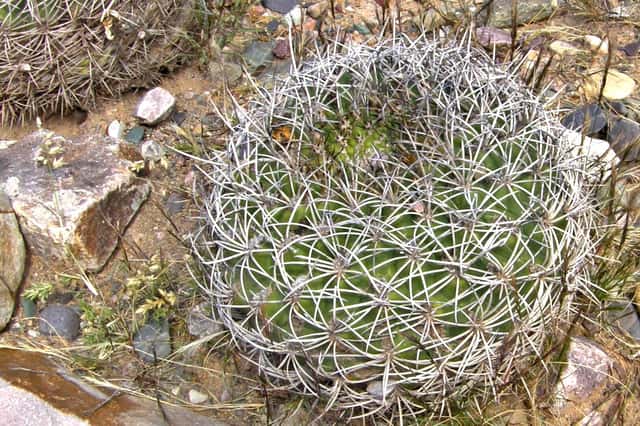
Gymnocalycium saglionis, the giant chin cactus, is the largest species in the genus Gymnocalycium and comes from rocky hillsides in northwest Argentina, from Jujuy to San Juan. It is a solitary cactus, globular and flattened when young, that after decades can reach 90 cm tall and 30 to 40 cm across. The dull green to blue-green body has 10 to 30 ribs split into broad tubercles, with stout curved spines 3 to 4 cm long, yellowish, reddish or black, that turn red when wet. In spring and summer it opens pinkish-white flowers with a reddish throat, followed by round red fruits.
How to Propagate Giant chin cactus?
Seed
Growth is slow: seedlings take years to size up.
- 1 Let the fruit become fully ripe before collecting seed; clean and dry it
- 2 Scatter seed over fine, moist cactus mix
- 3 Keep warm and bright, out of direct sun, with the mix slightly moist
- 4 Pot seedlings individually once they are sturdy
Materials needed:
Offsets
This is a solitary species that rarely offsets; seed is the usual method.
- 1 If an offset forms, cut it from the parent with a clean knife
- 2 Let the cut dry for a few days
- 3 Plant in dry cactus mix
- 4 Water lightly only after a week
Materials needed:
How Big Does Giant chin cactus Grow?
TLDR: Giant chin cactus can reach up to 90cm tall with Slow growth rate.
Max height
90cm
Spread
40cm
Growth rate
Slow
Foliage
Evergreen
Plant Uses
Ornamental
Great for decoration
Is your plant showing symptoms?
Click on the symptom to discover possible causes:
What Diseases Commonly Affect Giant chin cactus?
TLDR: Giant chin cactus is susceptible to 3 known diseases. Monitor regularly for early detection.
Root Rot
Root rot is a serious fungal disease that affects the root system of plants, causing them to decay and die. It is primarily caused by overwatering, poor drainage, or soil-borne fungi such as Pythium, Phytophthora, Rhizoctonia, and Fusarium. The disease thrives in waterlogged conditions where roots are deprived of oxygen, making them susceptible to fungal infection.
Mealybugs
Mealybugs are small, soft-bodied insects covered with a white, waxy, cottony material. They are common pests of houseplants and outdoor plants in mild climates. These sap-sucking insects feed on plant tissue, causing damage, stunted growth, and can lead to plant death if left untreated. They produce sticky honeydew which attracts sooty mold.
Sunburn (Sun Scorch)
Sunburn or sun scorch is an environmental condition that occurs when plants are exposed to intense, direct sunlight beyond their tolerance level. This causes the breakdown of chlorophyll in the leaves, resulting in bleached, dried, and damaged foliage. The damage can happen rapidly, sometimes within just a few hours of exposure.
Fun Facts
It is the largest Gymnocalycium species, reaching up to 90 cm tall.
Its spines turn bright red when wet.
It is named after Joseph Saglio, a 19th-century French cactus collector.
Frequently asked questions
How much sun does a giant chin cactus need?
How should I water it?
How big does it get?
Is it cold hardy?
Compare with similar plants
| Attribute | Difficulty | Light | Watering | Pet Safe |
|---|---|---|---|---|
| Field Maple | Easy | Bright indirect | 14d | ✓ |
| Iberian Houseleek | Easy | Direct sun | 14d | ✓ |
| Silver Birch | Easy | Direct sun | 14d | ✓ |
| Common Blanketflower | Easy | Direct sun | 10d | ✓ |





