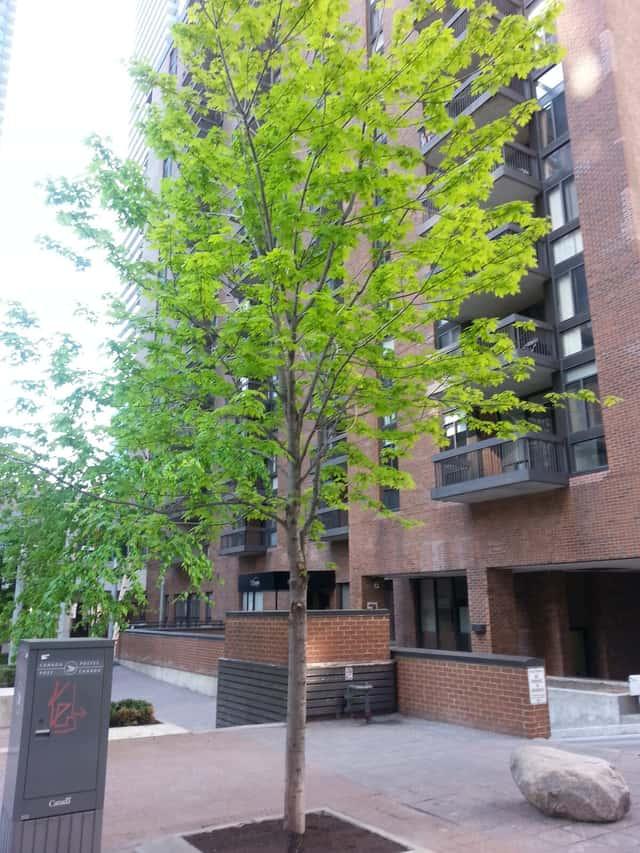
Sapindaceae
Freeman Maple (Acer × freemanii)
Acer × freemanii
An easy, fast shade tree for full sun or light shade. Water young trees regularly for the first two years, then only in long dry spells. Prune in late summer or winter to keep one central leader and remove weak forks.
Every 10 days
Bright indirect
-35° - 35°C
40% - 70%
Categories
What is Freeman Maple?
Freeman Maple (Acer × freemanii) is a easy-care plant from the Sapindaceae family. Freeman maple (Acer × freemanii) is a hybrid between red maple and silver maple. It occurs naturally in eastern North America where the two parents grow together, and is widely sold in named cultivars such as Autumn Blaze. It is a large deciduous tree, usually 13-20 m tall, with deeply lobed, toothe...
Freeman Maple grows up to 21.0m, spread of 1200cm, watering every 10 days, -35°C – 35°C, 40–70% humidity. It is not suitable for indoor environments and safe for pets.
Unlike many tropical plants, Freeman Maple tolerates watering mistakes. Best for beginners. Unlike many popular species, Freeman Maple is safe to keep around pets.
How to Care for Freeman Maple?
TLDR: Freeman Maple needs Bright indirect, watering every 10 days, and temperatures between -35-35°C with 40-70% humidity.
How Often Should You Water Freeman Maple?
Water young trees deeply once a week in the first two summers. Established trees cope with short droughts and even brief flooding; water only during long dry spells.
How Much Light Does Freeman Maple Need?
Full sun gives the best autumn colour; it also grows in partial shade.
What Is the Best Soil for Freeman Maple?
Prefers moist, well-drained, slightly acidic soil, but tolerates clay and alkaline soil better than red maple.
What Pot Should You Use for Freeman Maple?
Not suited to pots long term; young nursery trees can be kept in a large container with drainage holes for one or two seasons before planting out.
What Is Freeman Maple and Where Does It Come From?
Freeman maple (Acer × freemanii) is a hybrid between red maple and silver maple. It occurs naturally in eastern North America where the two parents grow together, and is widely sold in named cultivars such as Autumn Blaze. It is a large deciduous tree, usually 13-20 m tall, with deeply lobed, toothed leaves that sit between the two parents in shape. It grows fast like silver maple but has stronger branches, and in autumn the leaves turn orange-red to scarlet. Small red flowers appear in clusters in early spring before the leaves; many cultivars set few or no seeds.
How to Propagate Freeman Maple?
Grafting or budding
Named cultivars do not come true from seed, so nurseries bud or graft them. For home gardeners, buying a nursery tree is much easier.
- 1 Choose a red maple seedling as rootstock
- 2 Cut a healthy bud from the chosen cultivar
- 3 Insert the bud under a T-shaped cut in the rootstock bark
- 4 Wrap tightly with budding tape
- 5 Cut the rootstock above the bud the following spring
Materials needed:
Softwood cuttings
Cuttings root more easily from young trees. Keep the humidity high and never let the mix dry out.
- 1 Take 10-15 cm cuttings from new soft growth
- 2 Remove the lower leaves
- 3 Dip the base in rooting hormone
- 4 Insert into a moist mix of peat and perlite
- 5 Keep under mist or a clear cover in bright shade
Materials needed:
How Big Does Freeman Maple Grow?
TLDR: Freeman Maple can reach up to 21.0m tall with Fast growth rate.
Max height
21.0m
Spread
12.0m
Growth rate
Fast
Foliage
Deciduous
Plant Uses
Ornamental
Great for decoration
Is your plant showing symptoms?
Click on the symptom to discover possible causes:
What Diseases Commonly Affect Freeman Maple?
TLDR: Freeman Maple is susceptible to 5 known diseases. Monitor regularly for early detection.
Verticillium Wilt
Verticillium wilt is a soil-borne fungal disease caused primarily by the fungi Verticillium dahliae and V. albo-atrum. These pathogens infect plant roots and grow within the vascular tissues, blocking water and nutrient transport, resulting in wilting and eventual plant death. The disease affects over 350 plant species including vegetables, fruits, ornamental flowers, and trees. The fungi can survive in soil for more than 10 years as resistant structures called microsclerotia.
Eriophyid Mites
Eriophyid mites (family Eriophyidae) are extremely small, worm-shaped mites that feed by piercing plant tissue and sucking out the contents. They live on young leaves, buds, and sometimes fruit. Typical signs include tightly curled or blistered leaves, felt-like patches (erineum), small galls, bronzing or rough “russeted” fruit skin, and stunted or distorted new growth. They do not make the obvious webbing seen with spider mites, and you often need a hand lens to spot them. Many ornamentals and edibles can be affected, including roses, maples, grapes, apples, pears, birch, and viburnum. Some species can also spread certain plant viruses (for example, on roses).
Scale Insects
Scale insects are small sap-sucking pests that appear as brown, shell-like bumps on plant stems and leaves. There are over 25 species, divided into armored (hard) and unarmored (soft) scales. They feed by piercing plant tissue and extracting sap, which weakens the plant and can lead to yellowing, stunted growth, and even death if left untreated. They also excrete honeydew, which attracts ants and promotes sooty mold growth.
Aphids
Aphids are small, soft-bodied, pear-shaped insects (1/16 to 1/8 inch long) that feed by sucking nutrient-rich sap from plants. They reproduce rapidly and can quickly weaken plants, causing distorted growth and transmitting plant viruses. Aphids come in various colors including green, black, red, yellow, brown, and gray. They secrete honeydew, a sticky substance that attracts ants and encourages sooty mold growth.
Fun Facts
It is named after Oliver M. Freeman, who crossed red and silver maples at the US National Arboretum in 1933.
Even detailed leaf measurements struggle to tell it apart from its two parent species.
The cultivar Marmo produces no seeds, so there is no litter of winged keys.
Frequently asked questions
How fast does a Freeman maple grow?
Is Freeman maple the same as Autumn Blaze maple?
What problems does Freeman maple have?
Does Freeman maple have invasive roots?
Compare with similar plants
| Attribute | Difficulty | Light | Watering | Pet Safe |
|---|---|---|---|---|
| Field Maple | Easy | Bright indirect | 14d | ✓ |
| Iberian Houseleek | Easy | Direct sun | 14d | ✓ |
| Silver Birch | Easy | Direct sun | 14d | ✓ |
| Common Blanketflower | Easy | Direct sun | 10d | ✓ |





