Amaryllidaceae
Fragrant-flowered Garlic (Allium ramosum)
Allium ramosum
Full sun, light free-draining soil and little water. It is tough and cold-hardy; the top dies back in winter and regrows in spring. Keep away from dogs and cats.
Every 7 days
Bright indirect
° - °C
% - %
Categories
What is Fragrant-flowered Garlic?
Fragrant-flowered Garlic (Allium ramosum) is a easy-care plant from the Amaryllidaceae family. Fragrant-flowered garlic (Allium ramosum) is a perennial bulb and a wild relative of garlic chives (Allium tuberosum), native to the steppes and dry meadows of Siberia, Mongolia, Kazakhstan and northern China. It forms clumps of small bulbs strung along a rhizome, with 3 to 7 grass-like leaves 20 to...
Fragrant-flowered Garlic grows up to 60cm, watering every 7 days. It is not suitable for indoor environments and not safe for pets.
Unlike many tropical plants, Fragrant-flowered Garlic tolerates watering mistakes. Best for beginners. Without precautions, ingestion can cause irritation in pets. Keep out of reach of cats and dogs.
How to Care for Fragrant-flowered Garlic?
TLDR: Fragrant-flowered Garlic needs Bright indirect, watering every 7 days, and temperatures between 15-30°C with 40-70% humidity.
How Often Should You Water Fragrant-flowered Garlic?
Water about once a week in dry weather, when the surface is dry. As a steppe plant it handles drought well; waterlogged soil rots the bulbs.
How Much Light Does Fragrant-flowered Garlic Need?
Full sun, at least 6 hours a day. In shade it flowers poorly and the leaves flop.
What Is the Best Soil for Fragrant-flowered Garlic?
Light, sandy or stony soil that drains well. Alkaline soil is fine. Plant the bulbs fairly deep.
What Pot Should You Use for Fragrant-flowered Garlic?
Wide pot at least 20 cm across with drainage and gritty mix; best in the open ground.
What Is Fragrant-flowered Garlic and Where Does It Come From?
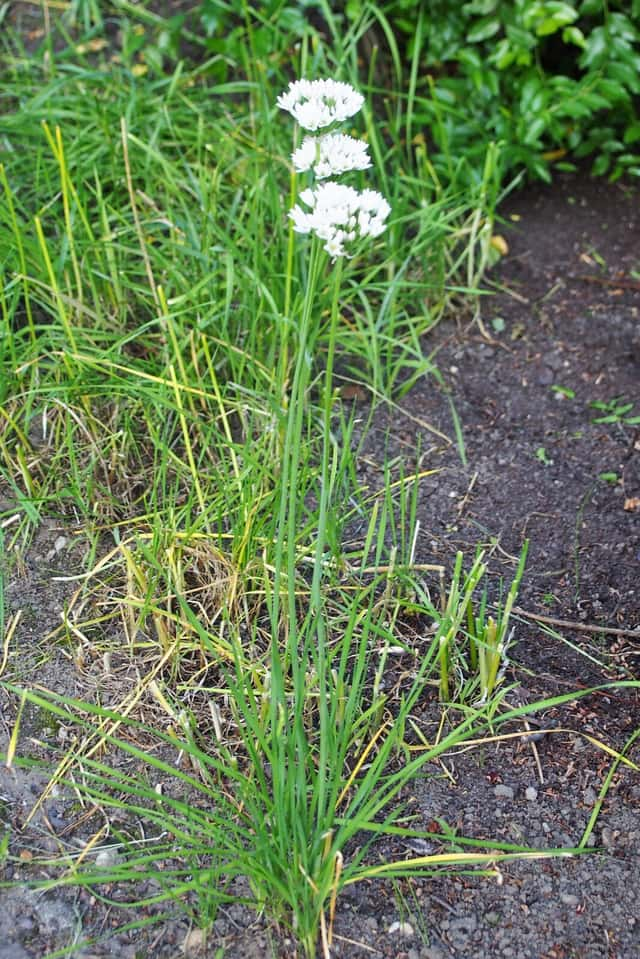
Fragrant-flowered garlic (Allium ramosum) is a perennial bulb and a wild relative of garlic chives (Allium tuberosum), native to the steppes and dry meadows of Siberia, Mongolia, Kazakhstan and northern China. It forms clumps of small bulbs strung along a rhizome, with 3 to 7 grass-like leaves 20 to 50 cm long. In summer it sends up stems to 60 cm topped with rounded heads of scented white flowers, each tepal marked with a reddish midline. Leaves, bulbs and flowers are edible, with a taste between garlic and chives.
How to Propagate Fragrant-flowered Garlic?
Division
Very easy: divisions take at any time in the growing season. Dividing every 3 or 4 years keeps clumps vigorous.
- 1 Lift the clump with a spade
- 2 Split it into groups of 3 to 5 small bulbs with roots
- 3 Replant straight away in the final spot, fairly deep
- 4 Water well after planting
Materials needed:
Seed
Leave a few flower heads to dry on the plant if you want seed.
- 1 Sow in spring in a tray
- 2 Prick out seedlings, three to a pot for faster clumps
- 3 Keep them protected through their first winter
- 4 Plant out the following spring
Materials needed:
How Big Does Fragrant-flowered Garlic Grow?
TLDR: Fragrant-flowered Garlic can reach up to 60cm tall with Medium growth rate.
Max height
60cm
Foliage
Deciduous
Warning: Toxic Plant
This plant can be toxic if ingested. Keep out of reach of:
Plant Uses
Ornamental
Great for decoration
Edible
Can be consumed
Medicinal
Medicinal properties
Medicinal Uses
- In Vietnamese folk medicine, used for coughs, sore throat and digestive complaints
- Like other alliums, eaten to support cholesterol levels and digestion
Culinary Uses
- Leaves raw or cooked, tasting between garlic and chives
- Small bulbs raw or cooked
- Flowers raw as a salad garnish; in northern China and Mongolia flowers are salted for winter
Is your plant showing symptoms?
Click on the symptom to discover possible causes:
What Diseases Commonly Affect Fragrant-flowered Garlic?
TLDR: Fragrant-flowered Garlic is susceptible to 4 known diseases. Monitor regularly for early detection.
Root Rot
Root rot is a serious fungal disease that affects the root system of plants, causing them to decay and die. It is primarily caused by overwatering, poor drainage, or soil-borne fungi such as Pythium, Phytophthora, Rhizoctonia, and Fusarium. The disease thrives in waterlogged conditions where roots are deprived of oxygen, making them susceptible to fungal infection.
Downy Mildew
Downy mildew is a fungal-like disease caused by oomycetes (water molds) that thrives in cool, wet conditions. It affects a wide range of plants, causing yellowing leaves with fuzzy white-gray growth underneath, leading to defoliation and reduced yields if left untreated.
Rust
Rust is a common fungal disease caused by fungi in the order Pucciniales that affects a wide variety of plants. The disease gets its name from the characteristic orange, yellow, or reddish-brown pustules that appear on leaves, resembling metal rust. This obligate fungal parasite requires living plants to survive and can cause significant economic losses in agricultural crops.
Thrips
Thrips are tiny cigar-shaped insects (1/25-inch long) that damage plants by sucking plant juices and scraping at fruits, flowers, and leaves. With over 6,000 species and rapid reproduction (lifecycle as short as 14 days), they can quickly infest plants and transmit viruses like tomato spotted wilt virus.
Fun Facts
In Mongolia and northern China the flowers are picked and salted for winter
The small bulbs grow in a row along a rhizome, building up clumps
Deer rarely touch plants in the Allium genus
Frequently asked questions
Is it the same as garlic chives?
Is it edible?
Is it toxic to dogs and cats?
Does it need much water?
Compare with similar plants
| Attribute | Difficulty | Light | Watering | Pet Safe |
|---|---|---|---|---|
| Field Maple | Easy | Bright indirect | 14d | ✓ |
| Iberian Houseleek | Easy | Direct sun | 14d | ✓ |
| Silver Birch | Easy | Direct sun | 14d | ✓ |
| Common Blanketflower | Easy | Direct sun | 10d | ✓ |





