Iridaceae
Fragrant Baboon Flower (Babiana fragrans)
Babiana fragrans
Water regularly from autumn through spring during active growth, and keep completely dry during summer dormancy. Grow in full sun to light partial shade in sandy, sharply-drained soil. Feed lightly before and after flowering. Hardy to about 5°C (USDA zone 9-10); not frost hardy in colder climates.
Every 7 days
Bright indirect
5° - 32°C
% - %
Categories
What is Fragrant Baboon Flower?
Fragrant Baboon Flower (Babiana fragrans) is a medium-care plant from the Iridaceae family. Babiana fragrans (Jacq.) Steud., also known by its widely-used synonym Babiana disticha, is a perennial cormous geophyte in the iris family (Iridaceae), endemic to the low-lying Western Cape of South Africa, from the Cape Peninsula to the Ceres area. It grows in fynbos and renosterveld vegetation on...
Fragrant Baboon Flower grows up to 20cm, watering every 7 days, 5°C – 32°C. It is not suitable for indoor environments and safe for pets.
Unlike many popular species, Fragrant Baboon Flower is safe to keep around pets.
How to Care for Fragrant Baboon Flower?
TLDR: Fragrant Baboon Flower needs Bright indirect, watering every 7 days, and temperatures between 5-32°C with 40-70% humidity.
How Often Should You Water Fragrant Baboon Flower?
Water whenever the soil has nearly dried out during autumn, winter and spring; withhold water almost entirely in summer while the corm is dormant, since wet soil at that time causes rot.
How Much Light Does Fragrant Baboon Flower Need?
Grows best in full sun, though it tolerates partial shade; more direct light generally produces more abundant flowering.
What Is the Best Soil for Fragrant Baboon Flower?
Plant in sandy or sandy-loam soil with excellent drainage and a slightly acidic to neutral pH; waterlogged soil during summer dormancy will rot the corm.
What Pot Should You Use for Fragrant Baboon Flower?
Wide, shallow pots with excellent drainage, at least 15 cm deep, with a gravel layer at the base.
Care Schedule
Fertilize
Every 120 days
Repot
Every 365 days
What Is Fragrant Baboon Flower and Where Does It Come From?
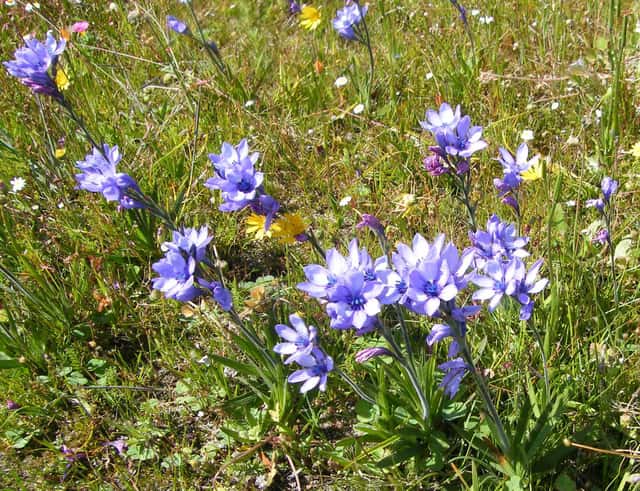
Babiana fragrans (Jacq.) Steud., also known by its widely-used synonym Babiana disticha, is a perennial cormous geophyte in the iris family (Iridaceae), endemic to the low-lying Western Cape of South Africa, from the Cape Peninsula to the Ceres area. It grows in fynbos and renosterveld vegetation on sandstone, granite or clay-derived soils. Its hairy, pleated, dagger-shaped leaves emerge in autumn. Between winter and spring (July to September in the Southern Hemisphere) it produces branched stems 7-20 cm tall bearing strongly sweet-scented flowers, violet to pale blue in colour, occasionally creamy-yellow, with dark markings near the base of the lower tepals. The plant is deciduous, dying back and resting as a dormant corm through the dry summer.
How to Propagate Fragrant Baboon Flower?
Growing from seed
Seed-grown plants can take 2-3 years to flower; protect trays from excessive rain.
- 1 Collect seed as soon as it ripens in autumn
- 2 Sow onto a mix of equal parts soil, sand and compost
- 3 Keep the substrate lightly moist in a sheltered spot
- 4 Transplant seedlings after their first dormancy period
Materials needed:
Dividing cormlets
This is the fastest, most reliable method; large offsets may flower in their very first season.
- 1 Lift corms while dormant, in late summer or early autumn
- 2 Carefully separate the small cormlets (offsets) from the parent corm
- 3 Replant immediately about 5-8 cm deep in sandy soil
- 4 Water lightly to start the new growth cycle
Materials needed:
How Big Does Fragrant Baboon Flower Grow?
TLDR: Fragrant Baboon Flower can reach up to 20cm tall with Medium growth rate.
Max height
20cm
Growth rate
Medium
Foliage
Deciduous
Plant Uses
Ornamental
Great for decoration
Aromatic
Pleasant fragrance
Culinary Uses
- Corms historically eaten by indigenous South African peoples (historical use only, not recommended without confirmed safety)
Is your plant showing symptoms?
Click on the symptom to discover possible causes:
What Diseases Commonly Affect Fragrant Baboon Flower?
TLDR: Fragrant Baboon Flower is susceptible to 4 known diseases. Monitor regularly for early detection.
Thrips
Thrips are tiny cigar-shaped insects (1/25-inch long) that damage plants by sucking plant juices and scraping at fruits, flowers, and leaves. With over 6,000 species and rapid reproduction (lifecycle as short as 14 days), they can quickly infest plants and transmit viruses like tomato spotted wilt virus.
Spider Mites
Spider mites are tiny arachnids (less than 1/20 inch long) related to spiders and ticks that feed on plant sap. They thrive in hot, dry conditions and can cause significant damage to ornamental and vegetable plants. During severe infestations, crop losses can reach 14% or higher as these pests disrupt vital plant processes including photosynthesis, carbon dioxide absorption, and transpiration.
Southern Blight
Southern blight is a devastating soilborne fungal disease caused by Athelia rolfsii (formerly Sclerotium rolfsii), affecting over 500 plant species including vegetables, ornamentals, and fruit crops. The fungus survives in soil through resting structures called sclerotia that resemble mustard seeds and can remain viable for years.
Root Rot
Root rot is a serious fungal disease that affects the root system of plants, causing them to decay and die. It is primarily caused by overwatering, poor drainage, or soil-borne fungi such as Pythium, Phytophthora, Rhizoctonia, and Fusarium. The disease thrives in waterlogged conditions where roots are deprived of oxygen, making them susceptible to fungal infection.
Fun Facts
Its species name "fragrans" refers to the strongly sweet scent of its flowers, unusual among Babiana species
The genus Babiana is named after baboons, which dig up and eat the corms in the wild
It is classified as Near Threatened due to habitat loss in the low-lying Western Cape
Kew's Plants of the World Online treats Babiana fragrans as the accepted name, with Babiana disticha as a synonym
Frequently asked questions
How often should I water Babiana fragrans?
Does the Fragrant Baboon Flower need full sun?
Why is my Babiana not flowering?
How do I propagate Babiana fragrans?
Compare with similar plants
| Attribute | Difficulty | Light | Watering | Pet Safe |
|---|---|---|---|---|
| Dark Fieldcap | Medium | Low light | 2d | ⚠️ |
| Azalea | Medium | Partial shade | 3d | ⚠️ |
| Muriel's Bamboo | Medium | Partial shade | 3d | ✓ |
| Bougainvillea | Medium | Direct sun | 7d | ⚠️ |




