Asteraceae
Floss Flower: Perfect Plant for Beginners
Ageratum houstonianum
Floss Flower thrives in full sun with consistently moist, well-draining, fertile soil. It is an easy-care annual that rewards regular deadheading with continuous blooms; fertilize every two weeks during the growing season to sustain its vigorous flowering.
Every 7 days
Bright indirect
5° - 35°C
40% - 70%
Categories
What is Floss Flower?
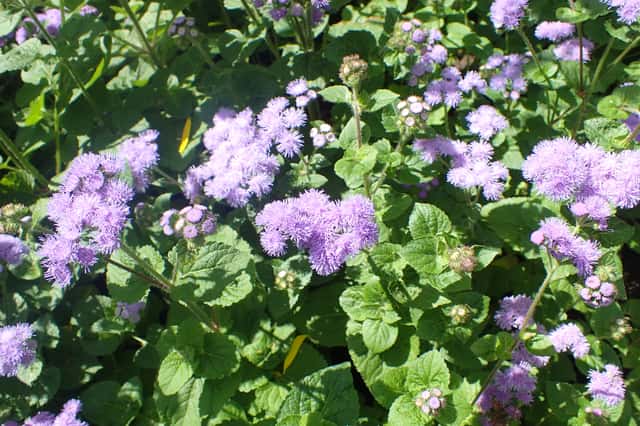
Floss Flower (Ageratum houstonianum) is a easy-care plant from the Asteraceae family. Ageratum houstonianum, commonly known as Floss Flower, is a frost-tender annual native to Central America (Guatemala, Belize, and adjacent Mexico), prized for its dense, fluffy, pom-pom-like flower clusters in shades of blue, purple, pink, and white. Growing 15–90 cm tall, it features soft, ovate to...
Floss Flower grows up to 90cm, spread of 45cm, watering every 7 days, 5°C – 35°C, 40–70% humidity. It is not suitable for indoor environments and not safe for pets.
Unlike many tropical plants, Floss Flower tolerates watering mistakes. Best for beginners. Without precautions, ingestion can cause irritation in pets. Keep out of reach of cats and dogs.
How to Care for Floss Flower?
TLDR: Floss Flower needs Bright indirect, watering every 7 days, and temperatures between 5-35°C with 40-70% humidity.
How Often Should You Water Floss Flower?
Water at the base of the plant approximately once a week, providing about 2.5 cm (1 inch) of water. Ageratums have shallow roots and can wilt quickly in dry spells, so keep soil evenly moist but never waterlogged. Always water at ground level to keep foliage dry and prevent fungal diseases.
How Much Light Does Floss Flower Need?
Plant in a location that receives at least 6 hours of direct sunlight daily for the best flower production. In regions with intense summer heat, light afternoon shade will protect the foliage from scorching without significantly reducing bloom quantity.
What Is the Best Soil for Floss Flower?
Use rich, well-draining soil amended with compost or organic matter. Ageratum is adaptable to a wide pH range (6.0–7.5) and is not fussy about soil type as long as drainage is good. Mulching around the base helps retain moisture and keeps roots cool.
What Pot Should You Use for Floss Flower?
Choose a standard pot or window box with drainage holes at least 20–25 cm deep. Plastic, terracotta, or glazed ceramic all work well. Use a quality peat-free, multi-purpose compost and position in a sunny spot. Water more frequently than in-ground plants, as containers dry out faster.
Care Schedule
Fertilize
Every 14 days
What Is Floss Flower and Where Does It Come From?
Ageratum houstonianum, commonly known as Floss Flower, is a frost-tender annual native to Central America (Guatemala, Belize, and adjacent Mexico), prized for its dense, fluffy, pom-pom-like flower clusters in shades of blue, purple, pink, and white. Growing 15–90 cm tall, it features soft, ovate to triangular, slightly hairy leaves and blooms continuously from late spring until frost. A favorite in summer bedding, borders, and containers, it reliably attracts butterflies and other pollinators throughout its long flowering season.
How to Propagate Floss Flower?
Seed Sowing
- Bottom heat (via heat mat) significantly improves germination speed.
- Do not cover seeds — light is needed for germination.
- 1 Start Indoors
Sow seeds on the surface of moist seed-starting mix 8–10 weeks before the last expected frost date. Do not cover seeds — they need light to germinate.
- 2 Maintain Warmth
Keep the tray at 21–24°C with consistent moisture. Use a transparent lid or plastic wrap to retain humidity. Seeds germinate in 7–14 days.
- 3 Harden Off & Transplant
Once seedlings have two sets of true leaves and all frost risk has passed, gradually harden off over 1–2 weeks before transplanting outdoors at 20–25 cm spacings.
Materials needed:
Stem Cuttings
- Maintain high humidity around the cutting to prevent wilting.
- Avoid direct sun until roots are established.
- 1 Take Cutting
Using sterilized shears, cut a healthy, non-flowering stem tip of about 8–10 cm just below a leaf node.
- 2 Prepare & Dip
Strip the lower leaves and optionally dip the cut end in rooting hormone powder or gel.
- 3 Root in Medium
Insert the cutting into moist perlite or potting mix, cover with a humidity dome, and place in bright indirect light. Roots typically form in 2–3 weeks.
Materials needed:
How Big Does Floss Flower Grow?
TLDR: Floss Flower can reach up to 90cm tall with Medium growth rate.
Max height
90cm
Spread
45cm
Growth rate
Medium
Foliage
Deciduous
Warning: Toxic Plant
This plant can be toxic if ingested. Keep out of reach of:
Plant Uses
Ornamental
Great for decoration
Medicinal Uses
- Leaf extracts have been used in traditional medicine for topical treatment of skin infections and wounds due to reported antifungal and antimicrobial properties. Internal use is not recommended due to the presence of toxic pyrrolizidine alkaloids.
Is your plant showing symptoms?
Click on the symptom to discover possible causes:
What Diseases Commonly Affect Floss Flower?
TLDR: Floss Flower is susceptible to 7 known diseases. Monitor regularly for early detection.
Powdery Mildew
Powdery mildew is a common fungal disease caused by various fungi species including Erysiphe, Podosphaera, Oïdium, and Leveillula. It affects over 10,000 plant species worldwide. The disease thrives in warm, dry climates with high humidity and appears as a distinctive white powdery coating on plant surfaces.
Root Rot
Root rot is a serious fungal disease that affects the root system of plants, causing them to decay and die. It is primarily caused by overwatering, poor drainage, or soil-borne fungi such as Pythium, Phytophthora, Rhizoctonia, and Fusarium. The disease thrives in waterlogged conditions where roots are deprived of oxygen, making them susceptible to fungal infection.
Aphids
Aphids are small, soft-bodied, pear-shaped insects (1/16 to 1/8 inch long) that feed by sucking nutrient-rich sap from plants. They reproduce rapidly and can quickly weaken plants, causing distorted growth and transmitting plant viruses. Aphids come in various colors including green, black, red, yellow, brown, and gray. They secrete honeydew, a sticky substance that attracts ants and encourages sooty mold growth.
Spider Mites
Spider mites are tiny arachnids (less than 1/20 inch long) related to spiders and ticks that feed on plant sap. They thrive in hot, dry conditions and can cause significant damage to ornamental and vegetable plants. During severe infestations, crop losses can reach 14% or higher as these pests disrupt vital plant processes including photosynthesis, carbon dioxide absorption, and transpiration.
Meaning & Symbolism
Longevity, eternal youth, and remembrance. The name "Ageratum" derives from the Greek for "not growing old," reflecting the plant's long-lasting blooms and association with perpetual vigor.
Compare with similar plants
| Attribute | Difficulty | Light | Watering | Pet Safe |
|---|---|---|---|---|
| Field Maple | Easy | Bright indirect | 14d | ✓ |
| Silver Birch | Easy | Direct sun | 14d | ✓ |
| Common Blanketflower | Easy | Direct sun | 10d | ✓ |
| Cushion Bush | Easy | Direct sun | 14d | ✓ |





