Rosaceae
European Dewberry (Rubus caesius)
Rubus caesius
Grows in full sun or partial shade in moist but well-drained soil. Very hardy, tolerating around -20 C. Stems fruit in their second year and then die back, so prune out old fruited canes each year. It spreads naturally by tip layering; remove rooted sections to keep it in check. Generally trouble-free, though grey mould or honey fungus can occasionally occur.
Every 7 days
Bright indirect
-20° - °C
% - %
Categories
What is European dewberry?
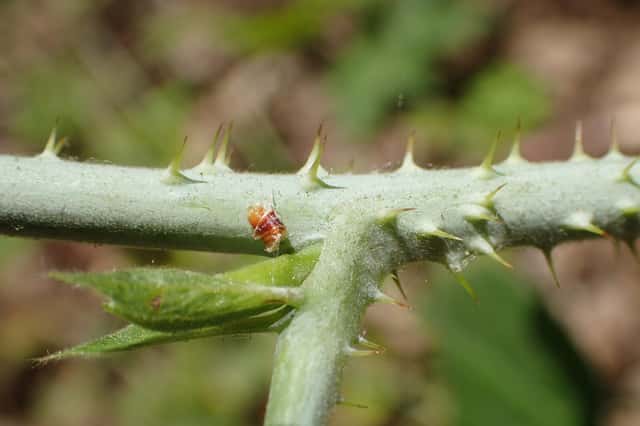
European dewberry (Rubus caesius) is a easy-care plant from the Rosaceae family. A trailing, deciduous shrub in the rose family, native to Europe and Asia and related to blackberries and raspberries. It has arching stems with few prickles, three-leaflet slightly downy leaves and white flowers up to 6 cm across. The fruit is a cluster of blue-black drupelets coated in a waxy bloo...
European dewberry grows up to 2.5m, spread of 150cm, watering every 7 days. It is not suitable for indoor environments and safe for pets.
Unlike many tropical plants, European dewberry tolerates watering mistakes. Best for beginners. Unlike many popular species, European dewberry is safe to keep around pets.
How to Care for European dewberry?
TLDR: European dewberry needs Bright indirect, watering every 7 days, and temperatures between -20-30°C with 40-70% humidity.
How Often Should You Water European dewberry?
Water moderately to keep the soil moist but never waterlogged; water more often in dry spells, especially while fruit is developing.
How Much Light Does European dewberry Need?
Thrives in full sun and tolerates partial shade. More sun encourages better flowering and fruiting.
What Is the Best Soil for European dewberry?
Adapts to clay, loam, sand and chalk, from acid to alkaline. Prefers moist, well-drained loamy soil.
What Pot Should You Use for European dewberry?
Not suited to pots; it is a garden or hedgerow plant. If needed, use a large, deep container with support for the stems.
What Is European dewberry and Where Does It Come From?
A trailing, deciduous shrub in the rose family, native to Europe and Asia and related to blackberries and raspberries. It has arching stems with few prickles, three-leaflet slightly downy leaves and white flowers up to 6 cm across. The fruit is a cluster of blue-black drupelets coated in a waxy bloom that makes them look sky blue, hence the name caesius. It grows in hedgerows, woodland edges, riverbanks and rough ground.
How to Propagate European dewberry?
Seed sowing
Cold stratification is needed for germination; seedlings can vary from the parent plant.
- 1 Collect seed from ripe fruit
- 2 Sow in early autumn in a pot or seedbed, as the seed needs stratification
- 3 Keep the compost moist and leave outdoors over winter
- 4 Transplant seedlings once they are strong enough
Materials needed:
Tip layering
This is the species' natural method; do it in July and remove rooted sections to prevent unwanted spread.
- 1 Choose a long, flexible stem
- 2 Bury the tip about 10 cm deep
- 3 Pin it down and keep the soil moist
- 4 Sever and transplant the new plant once rooted
Materials needed:
Division
Divide outside the active growing period and keep the soil moist afterwards.
- 1 Lift the clump in early spring or autumn
- 2 Separate sections with roots and shoots
- 3 Replant immediately and water well
Materials needed:
Half-ripe cuttings
Use clean tools and keep the compost moist.
- 1 Take half-ripe cuttings in July or August
- 2 Remove the lower leaves
- 3 Insert in moist, free-draining compost
- 4 Keep in bright shade until rooted
Materials needed:
How Big Does European dewberry Grow?
TLDR: European dewberry can reach up to 2.5m tall with Medium growth rate.
Max height
2.5m
Spread
1.5m
Foliage
Deciduous
Plant Uses
Edible
Can be consumed
Ground Cover
Soil coverage
Culinary Uses
- Fruit eaten fresh or cooked
- Jellies and preserves
- Pies and desserts
- Fresh or dried leaves brewed as a tea substitute
Is your plant showing symptoms?
Click on the symptom to discover possible causes:
What Diseases Commonly Affect European dewberry?
TLDR: European dewberry is susceptible to 3 known diseases. Monitor regularly for early detection.
Gray Mold (Botrytis Blight)
Gray mold, caused by the fungus Botrytis cinerea, is a widespread necrotrophic pathogen affecting over 1,400 plant species. It thrives in cool, humid conditions and attacks weakened or aging plant tissues, causing soft rot and characteristic gray fuzzy growth.
Aphids
Aphids are small, soft-bodied, pear-shaped insects (1/16 to 1/8 inch long) that feed by sucking nutrient-rich sap from plants. They reproduce rapidly and can quickly weaken plants, causing distorted growth and transmitting plant viruses. Aphids come in various colors including green, black, red, yellow, brown, and gray. They secrete honeydew, a sticky substance that attracts ants and encourages sooty mold growth.
Spider Mites
Spider mites are tiny arachnids (less than 1/20 inch long) related to spiders and ticks that feed on plant sap. They thrive in hot, dry conditions and can cause significant damage to ornamental and vegetable plants. During severe infestations, crop losses can reach 14% or higher as these pests disrupt vital plant processes including photosynthesis, carbon dioxide absorption, and transpiration.
Meaning & Symbolism
No specific traditional symbolism is documented for this species; as a wild bramble it is associated with hedgerow abundance and wild foraging.
Fun Facts
The name caesius is Latin for pale blue, referring to the waxy bloom on the fruit.
Stems live two years: they fruit in the second year and then die.
The fruit can yield a purple to dull blue dye.
Frequently asked questions
How often should I water European dewberry?
Is the fruit of Rubus caesius edible?
How do I prune a dewberry?
How cold-hardy is it?
How do I stop it spreading?
Compare with similar plants
| Attribute | Difficulty | Light | Watering | Pet Safe |
|---|---|---|---|---|
| Field Maple | Easy | Bright indirect | 14d | ✓ |
| Silver Birch | Easy | Direct sun | 14d | ✓ |
| Common Blanketflower | Easy | Direct sun | 10d | ✓ |
| Cushion Bush | Easy | Direct sun | 14d | ✓ |





