Asparagaceae
Eurasian Solomon's Seal (Polygonatum multiflorum)
Polygonatum multiflorum
An easy, long-lived shade perennial: plant in humus-rich, moist but well-drained soil in partial to full shade, keep the soil from drying out, mulch with compost every year and watch for slugs and sawfly larvae. It dies back in autumn and returns each spring.
Every 5 days
Low light
-30° - 27°C
40% - 70%
Categories
What is Eurasian Solomon's Seal?
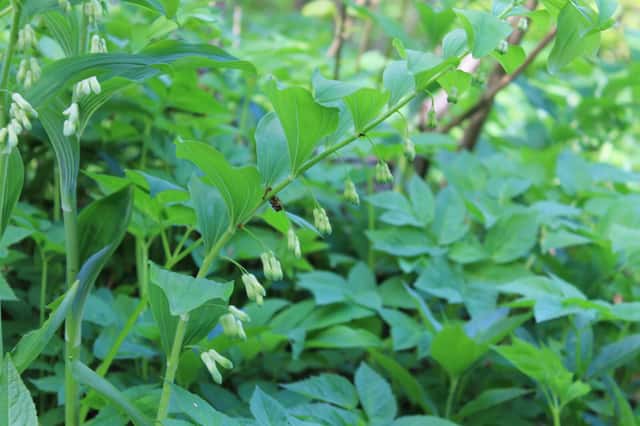
Eurasian Solomon's Seal (Polygonatum multiflorum) is a easy-care plant from the Asparagaceae family. Polygonatum multiflorum is a hardy rhizomatous perennial native to the woodlands of Europe and temperate Asia. Unbranched, gracefully arching stems up to 90 cm tall carry alternate oval leaves, and in late spring clusters of 2-6 pendant, tubular white flowers with green tips hang beneath them, follo...
Eurasian Solomon's Seal grows up to 90cm, spread of 30cm, watering every 5 days, -30°C – 27°C, 40–70% humidity. It is not suitable for indoor environments and not safe for pets.
Unlike many tropical plants, Eurasian Solomon's Seal tolerates watering mistakes. Best for beginners. Without precautions, ingestion can cause irritation in pets. Keep out of reach of cats and dogs.
How to Care for Eurasian Solomon's Seal?
TLDR: Eurasian Solomon's Seal needs Low light, watering every 5 days, and temperatures between -30-27°C with 40-70% humidity.
How Often Should You Water Eurasian Solomon's Seal?
Keep the soil evenly moist, watering about every 5 days in dry spells. It does not tolerate drought, but avoid waterlogged soil, which can rot the rhizomes.
How Much Light Does Eurasian Solomon's Seal Need?
Best in partial or full shade. It tolerates sun only where the soil stays cool and moist; hot afternoon sun scorches the leaves.
What Is the Best Soil for Eurasian Solomon's Seal?
Fertile, humus-rich, moist but well-drained soil; it accepts clay, loam, chalk or sand and acid to alkaline pH. A yearly mulch of leaf mould or compost keeps the shallow rhizomes happy.
What Pot Should You Use for Eurasian Solomon's Seal?
Best grown in the ground in a shady border; for containers use a wide, deep pot with drainage holes to give the spreading rhizomes room.
Care Schedule
Fertilize
Every 365 days
What Is Eurasian Solomon's Seal and Where Does It Come From?
Polygonatum multiflorum is a hardy rhizomatous perennial native to the woodlands of Europe and temperate Asia. Unbranched, gracefully arching stems up to 90 cm tall carry alternate oval leaves, and in late spring clusters of 2-6 pendant, tubular white flowers with green tips hang beneath them, followed by round blue-black berries. It slowly spreads into elegant colonies in shade.
How to Propagate Eurasian Solomon's Seal?
Rhizome division
Handle carefully to avoid breaking the brittle young shoots. Divisions can also be made in autumn after the foliage dies back. Wear gloves, as the plant is harmful if eaten.
- 1 Lift the clump in early spring as shoots begin to emerge
- 2 Cut the rhizome into sections, each with at least one growing bud
- 3 Replant horizontally 5 cm deep in humus-rich soil
- 4 Water well and keep moist while it establishes
Materials needed:
Seed
Germination is slow and irregular, and seedlings take several years to flower.
- 1 Collect ripe blue-black berries in autumn and remove the pulp
- 2 Sow fresh seed in pots of moist compost
- 3 Leave the pots outdoors or in a cold frame over winter
- 4 Grow seedlings on for 1-2 years before planting out
Materials needed:
How Big Does Eurasian Solomon's Seal Grow?
TLDR: Eurasian Solomon's Seal can reach up to 90cm tall with Medium growth rate.
Max height
90cm
Spread
30cm
Growth rate
Medium
Foliage
Deciduous
Warning: Toxic Plant
This plant can be toxic if ingested. Keep out of reach of:
Plant Uses
Ornamental
Great for decoration
Medicinal
Medicinal properties
Ground Cover
Soil coverage
Medicinal Uses
- Rhizome traditionally used in poultices for bruises and to support tissue repair
- Traditionally used as an astringent and demulcent (only under professional supervision)
Culinary Uses
- Young shoots traditionally boiled like asparagus (berries are poisonous)
Is your plant showing symptoms?
Click on the symptom to discover possible causes:
What Diseases Commonly Affect Eurasian Solomon's Seal?
TLDR: Eurasian Solomon's Seal is susceptible to 3 known diseases. Monitor regularly for early detection.
Slugs and Snails
Slugs and snails are mollusks that feed on plant tissue, causing irregular holes in leaves and damage to young seedlings. They are most active at night and in moist conditions, leaving characteristic silvery slime trails. These pests can quickly devastate gardens, especially during wet seasons.
Leaf chewing damage
Leaf chewing damage is caused by various pests like caterpillars, beetles, and slugs that eat plant tissue. This physical damage reduces the plant ability to make food through photosynthesis and can leave the plant open to infections. If left alone, these pests can strip a plant of its leaves very quickly.
Root Rot
Root rot is a serious fungal disease that affects the root system of plants, causing them to decay and die. It is primarily caused by overwatering, poor drainage, or soil-borne fungi such as Pythium, Phytophthora, Rhizoctonia, and Fusarium. The disease thrives in waterlogged conditions where roots are deprived of oxygen, making them susceptible to fungal infection.
Meaning & Symbolism
Symbol of protection, healing and wisdom, linked to King Solomon's seal through the round scars on its rhizome.
Fun Facts
The name multiflorum means many-flowered, for its clusters of up to six bells per leaf joint
The round scars left on the rhizome by old stems look like wax seals, which gave the plant its name
Its cut stems are used by florists and can last 15-22 days in a vase
It is one of the parents of the popular garden hybrid Polygonatum x hybridum
Frequently asked questions
How often should I water Solomon's seal?
Is Polygonatum multiflorum poisonous?
Can Solomon's seal grow in full shade?
What is eating my Solomon's seal leaves?
How do I propagate Solomon's seal?
Compare with similar plants
| Attribute | Difficulty | Light | Watering | Pet Safe |
|---|---|---|---|---|
| Field Maple | Easy | Bright indirect | 14d | ✓ |
| Iberian Houseleek | Easy | Direct sun | 14d | ✓ |
| Silver Birch | Easy | Direct sun | 14d | ✓ |
| Common Blanketflower | Easy | Direct sun | 10d | ✓ |