Asteraceae
Eastern Annual Saltmarsh Aster (Symphyotrichum subulatum)
Symphyotrichum subulatum
An annual for damp open ground: sun, constantly wet soil and no special care. It grows from seed and dies at the end of the year.
Every 3 days
Bright indirect
0° - 38°C
% - %
Categories
What is Eastern Annual Saltmarsh Aster?
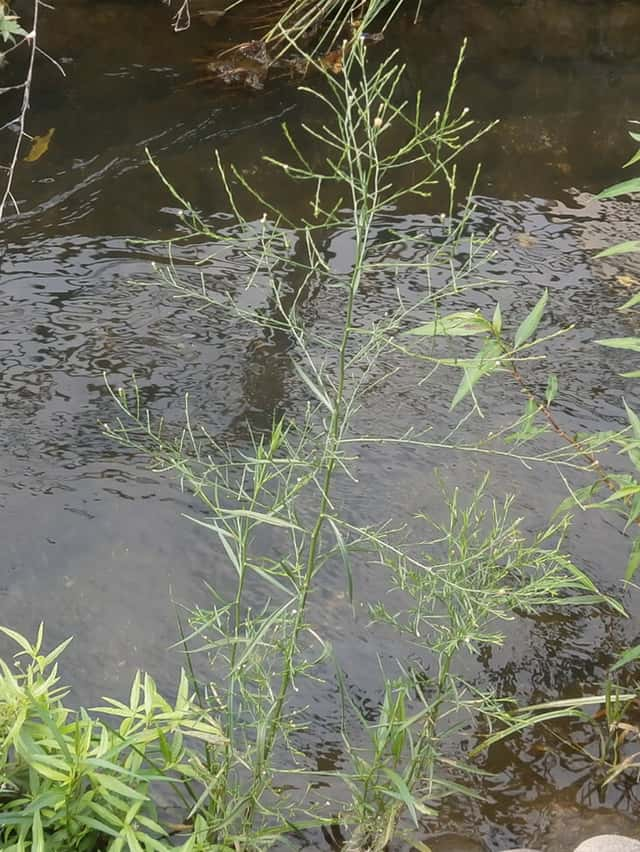
Eastern Annual Saltmarsh Aster (Symphyotrichum subulatum) is a easy-care plant from the Asteraceae family. Eastern annual saltmarsh aster is an annual herb in the daisy family, native to the eastern and southern United States, with varieties ranging through Mexico and the Caribbean to South America. It has a single upright stem up to 1 to 1.5 m, narrow pointed leaves and, from late summer into fall, many...
Eastern Annual Saltmarsh Aster grows up to 1.5m, spread of 30cm, watering every 3 days, 0°C – 38°C. It is not suitable for indoor environments and safe for pets.
Unlike many tropical plants, Eastern Annual Saltmarsh Aster tolerates watering mistakes. Best for beginners. Unlike many popular species, Eastern Annual Saltmarsh Aster is safe to keep around pets.
How to Care for Eastern Annual Saltmarsh Aster?
TLDR: Eastern Annual Saltmarsh Aster needs Bright indirect, watering every 3 days, and temperatures between 0-38°C with 40-70% humidity.
How Often Should You Water Eastern Annual Saltmarsh Aster?
Keep the soil moist at all times, watering every 2 or 3 days without rain. It is a marsh plant and suffers in drought.
How Much Light Does Eastern Annual Saltmarsh Aster Need?
Full sun or light part shade. In the wild it grows in open places.
What Is the Best Soil for Eastern Annual Saltmarsh Aster?
Any moist soil: sandy, clay or limestone-based. It tolerates salty and alkaline soil.
What Pot Should You Use for Eastern Annual Saltmarsh Aster?
A pot of 20 cm or more kept from drying out, or a pond-edge planter. It does best in damp ground.
What Is Eastern Annual Saltmarsh Aster and Where Does It Come From?
Eastern annual saltmarsh aster is an annual herb in the daisy family, native to the eastern and southern United States, with varieties ranging through Mexico and the Caribbean to South America. It has a single upright stem up to 1 to 1.5 m, narrow pointed leaves and, from late summer into fall, many small flower heads with white to lavender rays around a yellow centre. It grows in coastal salt marshes, pond edges, ditches, field margins and lawns, tolerates salty soil and mowing, and has spread as a weed to several countries.
How to Propagate Eastern Annual Saltmarsh Aster?
Seed
It self-sows. Because it dies at the end of the year, leave some flowers to set seed if you want plants next year.
- 1 Collect the fluffy seed when the flowers dry in fall
- 2 Sow in spring on the surface of moist soil, barely covering it
- 3 Keep the soil wet until seedlings appear
- 4 Space plants 20-30 cm apart
Materials needed:
How Big Does Eastern Annual Saltmarsh Aster Grow?
TLDR: Eastern Annual Saltmarsh Aster can reach up to 1.5m tall with Fast growth rate.
Max height
1.5m
Spread
30cm
Growth rate
Fast
Plant Uses
Ornamental
Great for decoration
Is your plant showing symptoms?
Click on the symptom to discover possible causes:
What Diseases Commonly Affect Eastern Annual Saltmarsh Aster?
TLDR: Eastern Annual Saltmarsh Aster is susceptible to 3 known diseases. Monitor regularly for early detection.
Powdery Mildew
Powdery mildew is a common fungal disease caused by various fungi species including Erysiphe, Podosphaera, Oïdium, and Leveillula. It affects over 10,000 plant species worldwide. The disease thrives in warm, dry climates with high humidity and appears as a distinctive white powdery coating on plant surfaces.
Rust
Rust is a common fungal disease caused by fungi in the order Pucciniales that affects a wide variety of plants. The disease gets its name from the characteristic orange, yellow, or reddish-brown pustules that appear on leaves, resembling metal rust. This obligate fungal parasite requires living plants to survive and can cause significant economic losses in agricultural crops.
Aphids
Aphids are small, soft-bodied, pear-shaped insects (1/16 to 1/8 inch long) that feed by sucking nutrient-rich sap from plants. They reproduce rapidly and can quickly weaken plants, causing distorted growth and transmitting plant viruses. Aphids come in various colors including green, black, red, yellow, brown, and gray. They secrete honeydew, a sticky substance that attracts ants and encourages sooty mold growth.
Fun Facts
It was called Aster subulatus before American asters were moved to the genus Symphyotrichum
It tolerates salt water, which is rare among daisies
Subulatum means awl-shaped, after its thin pointed leaves
Frequently asked questions
Does it come back every year?
Is it a weed?
Does it help pollinators?
Compare with similar plants
| Attribute | Difficulty | Light | Watering | Pet Safe |
|---|---|---|---|---|
| Field Maple | Easy | Bright indirect | 14d | ✓ |
| Iberian Houseleek | Easy | Direct sun | 14d | ✓ |
| Silver Birch | Easy | Direct sun | 14d | ✓ |
| Common Blanketflower | Easy | Direct sun | 10d | ✓ |





