Lythraceae
Dwarf Pomegranate (Punica granatum 'Nana')
Punica granatum 'Nana'
Give it full sun to bright light, water when the top inch of soil dries out, and grow it in well-draining, moderately fertile soil. It tolerates brief cold snaps once established but is happiest in warm, sunny spots.
Every 7 days
Direct sun
10° - 32°C
30% - 50%
Categories
What is Dwarf Pomegranate?
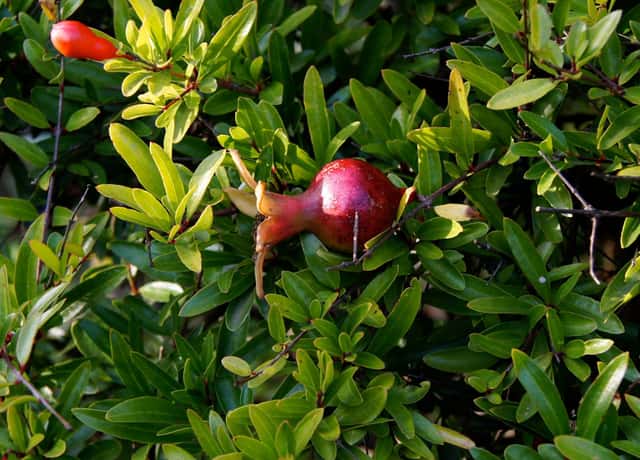
Dwarf Pomegranate (Punica granatum 'Nana') is a medium-care plant from the Lythraceae family. Punica granatum 'Nana' is a compact, ornamental cultivar of the pomegranate prized for its glossy, fine-textured foliage, vivid orange-red trumpet-shaped flowers, and miniature fruit. Native in habit to the Mediterranean and western Asian origin of the parent species, this dwarf form rarely exceeds...
Dwarf Pomegranate grows up to 1.5m, spread of 100cm, watering every 7 days, 10°C – 32°C, 30–50% humidity. It is suitable for indoor environments and not safe for pets.
Without precautions, ingestion can cause irritation in pets. Keep out of reach of cats and dogs. Without adequate drainage, root rot can develop within 14 days.
How to Care for Dwarf Pomegranate?
TLDR: Dwarf Pomegranate needs Direct sun, watering every 7 days, and temperatures between 10-32°C with 30-50% humidity.
How Often Should You Water Dwarf Pomegranate?
Water deeply when the top 2-3 cm of soil feel dry, then let excess drain away completely; reduce watering in winter.
How Much Light Does Dwarf Pomegranate Need?
Place in full sun outdoors or in a south-facing window indoors — at least 6 hours of direct light daily for best flowering and fruiting.
What Is the Best Soil for Dwarf Pomegranate?
Use a well-draining potting mix enriched with organic matter; adding perlite improves drainage and prevents root rot.
What Pot Should You Use for Dwarf Pomegranate?
A terracotta or unglazed clay pot with excellent drainage holes; the plant blooms best when slightly pot-bound.
Care Schedule
Fertilize
Every 30 days
Rotate
Every 14 days
Repot
Every 730 days
What Is Dwarf Pomegranate and Where Does It Come From?
Punica granatum 'Nana' is a compact, ornamental cultivar of the pomegranate prized for its glossy, fine-textured foliage, vivid orange-red trumpet-shaped flowers, and miniature fruit. Native in habit to the Mediterranean and western Asian origin of the parent species, this dwarf form rarely exceeds 1.5 m and is equally at home in containers, borders, or as a flowering bonsai. Its gnarled, twisting trunk develops character with age, making it a favorite among bonsai enthusiasts.
How to Propagate Dwarf Pomegranate?
Semi-hardwood stem cutting
Soaking the cutting in water for a few hours before planting can improve rooting success.
- 1 Cut a 15-20 cm semi-hardwood stem with 2-3 nodes from a healthy branch.
- 2 Remove the lower leaves and dip the cut end in rooting hormone.
- 3 Insert into a well-draining mix of perlite and potting soil.
- 4 Keep the medium consistently moist and in bright, indirect light until roots form.
Materials needed:
Air layering
Keep the moss consistently moist throughout the process; check every couple of weeks.
- 1 Select a healthy branch at least one year old.
- 2 Remove a ring of bark about 2-3 cm wide and apply rooting hormone.
- 3 Wrap the wound in moist sphagnum moss and cover with plastic film.
- 4 Once roots are visible through the moss, cut below the new roots and pot up the new plant.
Materials needed:
How Big Does Dwarf Pomegranate Grow?
TLDR: Dwarf Pomegranate can reach up to 1.5m tall with Medium growth rate.
Max height
1.5m
Spread
1.0m
Growth rate
Medium
Foliage
Deciduous
Warning: Toxic Plant
This plant can be toxic if ingested. Keep out of reach of:
Plant Uses
Ornamental
Great for decoration
Edible
Can be consumed
Medicinal Uses
- Fruit rind and bark traditionally used in folk medicine for their tannins and antioxidants (consult a professional before use)
Culinary Uses
- Miniature fruit is edible, with tart, seedy arils similar to standard pomegranate, though less juicy
Is your plant showing symptoms?
Click on the symptom to discover possible causes:
What Diseases Commonly Affect Dwarf Pomegranate?
TLDR: Dwarf Pomegranate is susceptible to 10 known diseases. Monitor regularly for early detection.
Root Rot
Root rot is a serious fungal disease that affects the root system of plants, causing them to decay and die. It is primarily caused by overwatering, poor drainage, or soil-borne fungi such as Pythium, Phytophthora, Rhizoctonia, and Fusarium. The disease thrives in waterlogged conditions where roots are deprived of oxygen, making them susceptible to fungal infection.
Powdery Mildew
Powdery mildew is a common fungal disease caused by various fungi species including Erysiphe, Podosphaera, Oïdium, and Leveillula. It affects over 10,000 plant species worldwide. The disease thrives in warm, dry climates with high humidity and appears as a distinctive white powdery coating on plant surfaces.
Cercospora Leaf Spot
Anthracnose
Anthracnose is a fungal disease caused by fungi in the genus Colletotrichum that affects many plants, including vegetables, fruits, and trees. The disease thrives in cool, wet conditions, causing dark, sunken lesions on leaves, stems, flowers, and fruits.
Meaning & Symbolism
The pomegranate has long symbolized fertility, abundance, and prosperity across Mediterranean, Middle Eastern, and Asian cultures; the dwarf form carries the same meaning into small gardens and homes.
Fun Facts
Despite its miniature size, 'Nana' produces real, edible (if smaller and less juicy) pomegranates.
Its naturally gnarled, twisting trunk makes it one of the most popular species for flowering bonsai.
The vivid orange-red flowers can appear on and off throughout the warm season, not just once.
Frequently asked questions
Is the dwarf pomegranate toxic to cats or dogs?
Can I eat the fruit from Punica granatum 'Nana'?
Why isn't my dwarf pomegranate flowering?
Does dwarf pomegranate lose its leaves in winter?
How do I keep my dwarf pomegranate small for bonsai?
Compare with similar plants
| Attribute | Difficulty | Light | Watering | Pet Safe |
|---|---|---|---|---|
| Dark Fieldcap | Medium | Low light | 2d | ⚠️ |
| Azalea | Medium | Partial shade | 3d | ⚠️ |
| Muriel's Bamboo | Medium | Partial shade | 3d | ✓ |
| Bougainvillea | Medium | Direct sun | 7d | ⚠️ |
Choose & Compare
Sources & References
- Punica granatum var. nana (Dwarf Pomegranate) - Gardenia.net
- The Complete Dwarf Pomegranate Plant Care Guide - Greg
- Punica granatum Nana (Dwarf Pomegranate) - Top Tropicals Plant Encyclopedia
- Is Dwarf Pomegranate Toxic to Cats & Dogs? - Growli
- Care guide for Pomegranate Bonsai (Punica granatum) - Bonsai Empire
- Diseases of Pomegranate (Punica granatum) in Florida - UF/IFAS EDIS
- What Pests And Diseases Affect Pomegranates




