Fagaceae
Downy oak (Quercus pubescens)
Quercus pubescens
Once established it needs little work: full sun, free-draining soil and patience, since it grows slowly. Plant it young and straight into its final spot, because it dislikes root disturbance. It needs no feeding or regular pruning. Watch for white powder on the leaves (powdery mildew) and for dying branches, which can point to root trouble.
Every 14 days
Direct sun
° - °C
% - %
Categories
What is Downy oak?
Downy oak (Quercus pubescens) is a easy-care plant from the Fagaceae family. Downy oak is a deciduous tree in the beech family (Fagaceae), native to central and southern Europe and east to Turkey and the Caucasus. It reaches 15-20 m, rarely 25 m, and lives for several hundred years. Open-grown trees form a broad, irregular crown, sometimes with several trunks. The name comes...
Downy oak grows up to 20.0m, watering every 14 days. It is not suitable for indoor environments and safe for pets.
Unlike many tropical plants, Downy oak tolerates watering mistakes. Best for beginners. Unlike many popular species, Downy oak is safe to keep around pets.
How to Care for Downy oak?
TLDR: Downy oak needs Direct sun, watering every 14 days, and temperatures between 15-30°C with 40-70% humidity.
How Often Should You Water Downy oak?
Water for the first two years, every one or two weeks in summer. Once established it handles moderate drought and only needs water in a long dry spell. Do not let the soil stay waterlogged.
How Much Light Does Downy oak Need?
Full sun. Young trees accept some side shade, but mature trees need direct light.
What Is the Best Soil for Downy oak?
Prefers deep, well-drained soil, ideally lime-rich. It copes with clay and stony ground, from mildly acid to alkaline. Waterlogged soil encourages root rot.
What Pot Should You Use for Downy oak?
Not a container tree. Only seedlings in their first years belong in a deep, narrow pot that protects the taproot. After that, plant in the ground.
What Is Downy oak and Where Does It Come From?
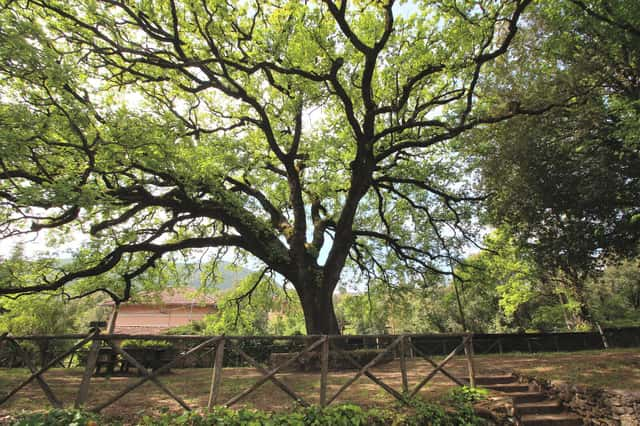
Downy oak is a deciduous tree in the beech family (Fagaceae), native to central and southern Europe and east to Turkey and the Caucasus. It reaches 15-20 m, rarely 25 m, and lives for several hundred years. Open-grown trees form a broad, irregular crown, sometimes with several trunks. The name comes from the fine hairs on young leaves, twigs and acorn cups. Leaves are 5-10 cm long with rounded lobes, and dead leaves often stay on the branches through winter. Acorns ripen from September to November, in clusters of 2 to 5.
How to Propagate Downy oak?
Acorn
Acorns die if they dry out, so sow them straight after collecting. Use a deep pot, as the first root grows fast and straight down.
- 1 Collect ripe acorns in autumn, as soon as they fall
- 2 Discard any that float in a bucket of water
- 3 Sow at once, on their side and 2-3 cm deep, in a deep pot or the final spot
- 4 Keep the soil moist and protect from mice and squirrels
- 5 Plant out in the first or second year
Materials needed:
How Big Does Downy oak Grow?
TLDR: Downy oak can reach up to 20.0m tall with Slow growth rate.
Max height
20.0m
Growth rate
Slow
Foliage
Deciduous
Plant Uses
Ornamental
Great for decoration
Is your plant showing symptoms?
Click on the symptom to discover possible causes:
What Diseases Commonly Affect Downy oak?
TLDR: Downy oak is susceptible to 3 known diseases. Monitor regularly for early detection.
Phytophthora Root Rot
Disease caused by fungus-like organisms (oomycetes) that live in soil and can survive for years. It affects roots, stem, and crown of plants, being especially severe in waterlogged or poorly drained soils. It is the second most common cause of root rot in trees and shrubs.
Powdery Mildew
Powdery mildew is a common fungal disease caused by various fungi species including Erysiphe, Podosphaera, Oïdium, and Leveillula. It affects over 10,000 plant species worldwide. The disease thrives in warm, dry climates with high humidity and appears as a distinctive white powdery coating on plant surfaces.
Caterpillars
Caterpillars are the larval stage of moths and butterflies that feed voraciously on plant foliage, stems, flowers, and fruits. Common species include cabbage loopers, tomato hornworms, armyworms, and cutworms. These pests can cause extensive damage by consuming large amounts of plant tissue in a short time. They vary in size from small (1/4 inch) to large (5 inches), with colors ranging from green to brown, often featuring stripes or spots. Caterpillars are highly mobile and can quickly spread throughout gardens, making them one of the most destructive common pests.
Fun Facts
It is one of the most frequent host trees of truffles, including black and white truffles
The hairs on young leaves give it the name pubescens, Latin for downy
Its branches can hold dead leaves all winter
Frequently asked questions
Why does my downy oak keep dead leaves in winter?
Is downy oak poisonous?
How fast does downy oak grow?
What diseases affect downy oak?
Compare with similar plants
| Attribute | Difficulty | Light | Watering | Pet Safe |
|---|---|---|---|---|
| Field Maple | Easy | Bright indirect | 14d | ✓ |
| Iberian Houseleek | Easy | Direct sun | 14d | ✓ |
| Silver Birch | Easy | Direct sun | 14d | ✓ |
| Common Blanketflower | Easy | Direct sun | 10d | ✓ |





