Asteraceae
Common Tansy (Tanacetum vulgare)
Tanacetum vulgare
Very easy and tough: sun, free-draining soil and almost no care. The work is keeping it contained, since it spreads fast, and remembering that it is toxic.
Every 7 days
Bright indirect
-35° - 32°C
% - %
Categories
What is Common Tansy?
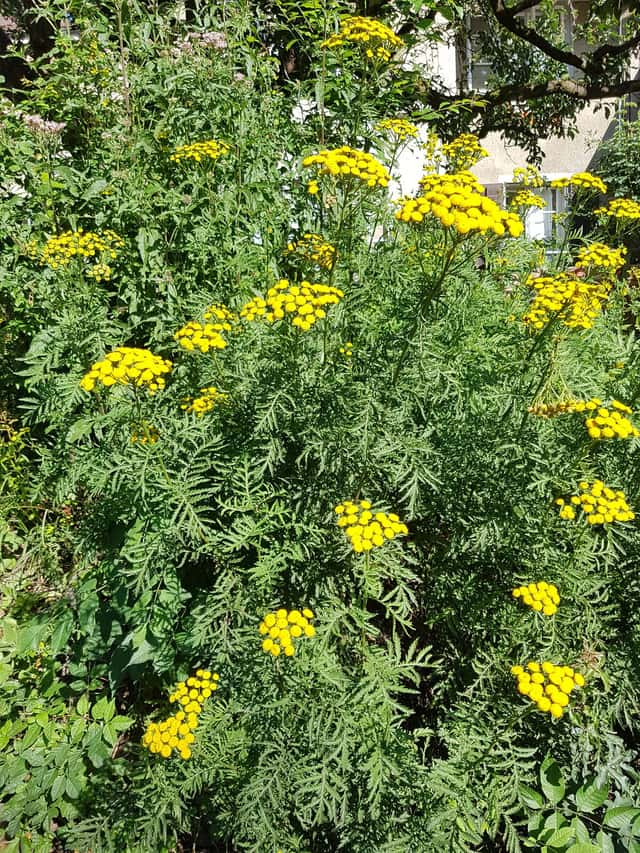
Common Tansy (Tanacetum vulgare) is a easy-care plant from the Asteraceae family. Common tansy is a perennial herb in the daisy family, native to temperate Europe and Asia. It forms clumps of upright, reddish stems 50 to 150 cm tall, with dark green, deeply cut, fern-like leaves that smell strongly of camphor when crushed. From mid to late summer it carries flat clusters of golde...
Common Tansy grows up to 1.5m, spread of 45cm, watering every 7 days, -35°C – 32°C. It is not suitable for indoor environments and safe for pets.
Unlike many tropical plants, Common Tansy tolerates watering mistakes. Best for beginners. Unlike many popular species, Common Tansy is safe to keep around pets.
How to Care for Common Tansy?
TLDR: Common Tansy needs Bright indirect, watering every 7 days, and temperatures between -35-32°C with 40-70% humidity.
How Often Should You Water Common Tansy?
Water weekly while it establishes. Once settled it tolerates drought and only needs water in long dry spells.
How Much Light Does Common Tansy Need?
Full sun, or partial shade with at least a few hours of direct sun. In shade it flops and flowers poorly.
What Is the Best Soil for Common Tansy?
Any well-drained soil, even poor and dry. It does best in soil with some organic matter that stays lightly moist.
What Pot Should You Use for Common Tansy?
Best in the ground with a root barrier. In a container, use a large, deep pot (30 cm or more) with a drainage hole, out of reach of children and pets.
What Is Common Tansy and Where Does It Come From?
Common tansy is a perennial herb in the daisy family, native to temperate Europe and Asia. It forms clumps of upright, reddish stems 50 to 150 cm tall, with dark green, deeply cut, fern-like leaves that smell strongly of camphor when crushed. From mid to late summer it carries flat clusters of golden-yellow button flowers with no visible petals. It spreads by rhizomes and seed, and in parts of North America it is a listed noxious weed. The whole plant contains thujone and is poisonous if eaten.
How to Propagate Common Tansy?
Clump division
Plant it inside a sunken large pot or a root barrier: the rhizomes spread and take over the bed.
- 1 In early spring, dig up a piece of the clump with a spade, wearing gloves
- 2 Split it into pieces with roots and 2 or 3 shoots each
- 3 Replant at the same depth
- 4 Water well for the first few weeks
Materials needed:
Seed
Cut the flowers before they dry so the plant does not self-sow across the garden.
- 1 Sow in spring on the soil surface, covering very lightly
- 2 Keep moist until seedlings appear
- 3 Transplant seedlings 30 to 45 cm apart
Materials needed:
How Big Does Common Tansy Grow?
TLDR: Common Tansy can reach up to 1.5m tall with Fast growth rate.
Max height
1.5m
Spread
45cm
Growth rate
Fast
Foliage
Deciduous
Warning: Toxic Plant
This plant can be toxic if ingested. Keep out of reach of:
Plant Uses
Ornamental
Great for decoration
Aromatic
Pleasant fragrance
Is your plant showing symptoms?
Click on the symptom to discover possible causes:
What Diseases Commonly Affect Common Tansy?
TLDR: Common Tansy is susceptible to 5 known diseases. Monitor regularly for early detection.
Spider Mites
Spider mites are tiny arachnids (less than 1/20 inch long) related to spiders and ticks that feed on plant sap. They thrive in hot, dry conditions and can cause significant damage to ornamental and vegetable plants. During severe infestations, crop losses can reach 14% or higher as these pests disrupt vital plant processes including photosynthesis, carbon dioxide absorption, and transpiration.
Aphids
Aphids are small, soft-bodied, pear-shaped insects (1/16 to 1/8 inch long) that feed by sucking nutrient-rich sap from plants. They reproduce rapidly and can quickly weaken plants, causing distorted growth and transmitting plant viruses. Aphids come in various colors including green, black, red, yellow, brown, and gray. They secrete honeydew, a sticky substance that attracts ants and encourages sooty mold growth.
Aphids
Uroleucon is a genus of aphids that primarily attacks plants in the daisy family (Asteraceae), such as marigold, coneflower, oxeye daisy, chrysanthemum, thistle, and scentless mayweed. The aphids are usually slightly larger and dark reddish-brown. They cluster densely on stems, buds, and inflorescences. Signs of infestation include sticky leaves (honeydew), black coatings (sooty mold), curled/damaged new shoots, and reduced flowering. They are spread by wind and flying aphids, and ants may protect them to harvest honeydew. Warm, stagnant weather and over-fertilization with nitrogen favor their development.
Powdery Mildew
Powdery mildew is a common fungal disease caused by various fungi species including Erysiphe, Podosphaera, Oïdium, and Leveillula. It affects over 10,000 plant species worldwide. The disease thrives in warm, dry climates with high humidity and appears as a distinctive white powdery coating on plant surfaces.
Fun Facts
The name Tanacetum is thought to come from the Greek athanasia, meaning immortality
For centuries tansy leaves were packed into coffins to slow decay
The tansy beetle resists its toxins and feeds almost only on this plant
Frequently asked questions
Is common tansy poisonous?
How do I stop tansy from taking over?
Can handling tansy irritate the skin?
Does tansy repel insects?
Compare with similar plants
| Attribute | Difficulty | Light | Watering | Pet Safe |
|---|---|---|---|---|
| Field Maple | Easy | Bright indirect | 14d | ✓ |
| Iberian Houseleek | Easy | Direct sun | 14d | ✓ |
| Silver Birch | Easy | Direct sun | 14d | ✓ |
| Common Blanketflower | Easy | Direct sun | 10d | ✓ |





