Crassulaceae
Kalanchoe rotundifolia (Common Kalanchoe) Care Guide
Kalanchoe rotundifolia
Give it bright light to full sun, a gritty fast-draining mix and water only when the soil is completely dry. Keep it above about 2 C and protect it from frost. Fertilize lightly in the growing season.
Every 14 days
Bright indirect
2° - 35°C
20% - 50%
Categories
What is Common Kalanchoe?
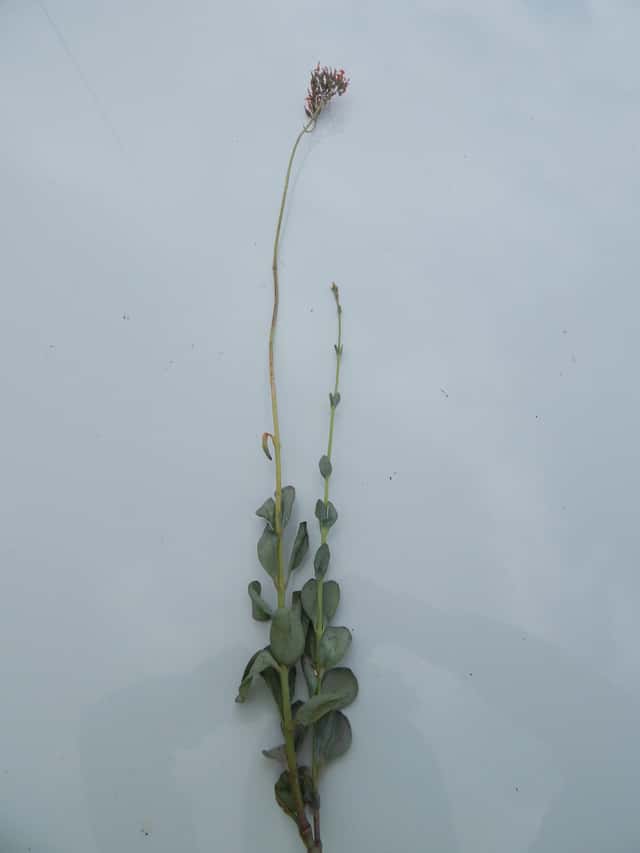
Common Kalanchoe (Kalanchoe rotundifolia) is a easy-care plant from the Crassulaceae family. Kalanchoe rotundifolia is an evergreen succulent from southern Africa with rounded, grey-green fleshy leaves on branching stems. It can reach about 1.2 m in height. In autumn and early winter it carries clusters of orange-red tubular flowers with yellowish-green bases on tall stalks. It is very drou...
Common Kalanchoe grows up to 1.2m, spread of 60cm, watering every 14 days, 2°C – 35°C, 20–50% humidity. It is suitable for indoor environments and not safe for pets.
Unlike many tropical plants, Common Kalanchoe tolerates watering mistakes. Best for beginners. Without precautions, ingestion can cause irritation in pets. Keep out of reach of cats and dogs. Without adequate drainage, root rot can develop within 28 days.
How to Care for Common Kalanchoe?
TLDR: Common Kalanchoe needs Bright indirect, watering every 14 days, and temperatures between 2-35°C with 20-50% humidity.
How Often Should You Water Common Kalanchoe?
Water deeply every 2-3 weeks, only after the soil has dried out completely; reduce in winter. Overwatering and shade reduce flowering and cause rot.
How Much Light Does Common Kalanchoe Need?
Best in full sun to light shade. Very intense midday sun can scorch leaf tips, so acclimate gradually.
What Is the Best Soil for Common Kalanchoe?
Use a sandy, gritty cactus and succulent mix with excellent drainage; it tolerates almost any soil if well drained.
What Pot Should You Use for Common Kalanchoe?
Terracotta pot with drainage holes, only slightly larger than the root ball.
Care Schedule
Fertilize
Every 60 days
Rotate
Every 14 days
Repot
Every 730 days
What Is Common Kalanchoe and Where Does It Come From?
Kalanchoe rotundifolia is an evergreen succulent from southern Africa with rounded, grey-green fleshy leaves on branching stems. It can reach about 1.2 m in height. In autumn and early winter it carries clusters of orange-red tubular flowers with yellowish-green bases on tall stalks. It is very drought tolerant and thrives in sun and well-drained soil.
How to Propagate Common Kalanchoe?
Stem cuttings
Do not keep the cutting wet or it will rot.
- 1 Cut a healthy stem tip 8-10 cm long with a clean knife.
- 2 Let the cut end callus for 2-3 days in a dry shaded spot.
- 3 Insert into gritty, slightly moist succulent mix.
- 4 Keep in bright indirect light and water sparingly once roots form.
Materials needed:
Leaf cuttings
Use mature plump leaves for best results.
- 1 Gently twist off a whole healthy leaf.
- 2 Let it callus for 2 days.
- 3 Lay it on dry gritty mix and mist the soil lightly now and then.
- 4 Pot up when plantlets and roots appear.
Materials needed:
How Big Does Common Kalanchoe Grow?
TLDR: Common Kalanchoe can reach up to 1.2m tall with Medium growth rate.
Max height
1.2m
Spread
60cm
Growth rate
Medium
Foliage
Evergreen
Warning: Toxic Plant
This plant can be toxic if ingested. Keep out of reach of:
Plant Uses
Ornamental
Great for decoration
Medicinal
Medicinal properties
Medicinal Uses
- Used in traditional southern African medicine for minor ailments (not recommended for self-treatment; the plant is toxic).
Is your plant showing symptoms?
Click on the symptom to discover possible causes:
What Diseases Commonly Affect Common Kalanchoe?
TLDR: Common Kalanchoe is susceptible to 4 known diseases. Monitor regularly for early detection.
Root Rot
Root rot is a serious fungal disease that affects the root system of plants, causing them to decay and die. It is primarily caused by overwatering, poor drainage, or soil-borne fungi such as Pythium, Phytophthora, Rhizoctonia, and Fusarium. The disease thrives in waterlogged conditions where roots are deprived of oxygen, making them susceptible to fungal infection.
Mealybugs
Mealybugs are small, soft-bodied insects covered with a white, waxy, cottony material. They are common pests of houseplants and outdoor plants in mild climates. These sap-sucking insects feed on plant tissue, causing damage, stunted growth, and can lead to plant death if left untreated. They produce sticky honeydew which attracts sooty mold.
Powdery Mildew
Powdery mildew is a common fungal disease caused by various fungi species including Erysiphe, Podosphaera, Oïdium, and Leveillula. It affects over 10,000 plant species worldwide. The disease thrives in warm, dry climates with high humidity and appears as a distinctive white powdery coating on plant surfaces.
Aphids
Aphids are small, soft-bodied, pear-shaped insects (1/16 to 1/8 inch long) that feed by sucking nutrient-rich sap from plants. They reproduce rapidly and can quickly weaken plants, causing distorted growth and transmitting plant viruses. Aphids come in various colors including green, black, red, yellow, brown, and gray. They secrete honeydew, a sticky substance that attracts ants and encourages sooty mold growth.
Meaning & Symbolism
Often associated with resilience and endurance, since it survives drought and heat.
Fun Facts
It is a southern African native that grows in rocky terrain and can survive long droughts.
Its flower stalks can reach about 40 cm, rising above the foliage.
Like other kalanchoes, it contains cardiac glycosides, which is why it is toxic to pets.
Frequently asked questions
How often should I water Kalanchoe rotundifolia?
Is Kalanchoe rotundifolia toxic to pets?
Does it need full sun?
When does it flower?
Can it survive frost?
Compare with similar plants
| Attribute | Difficulty | Light | Watering | Pet Safe |
|---|---|---|---|---|
| Field Maple | Easy | Bright indirect | 14d | ✓ |
| Silver Birch | Easy | Direct sun | 14d | ✓ |
| Common Blanketflower | Easy | Direct sun | 10d | ✓ |
| Cushion Bush | Easy | Direct sun | 14d | ✓ |





