Vitaceae
Chestnut Vine (Tetrastigma voinierianum)
Tetrastigma voinierianum
An indoor climber for people with room to spare: bright indirect light without direct sun, high humidity, 18-24 °C and never below 10 °C. Water when the soil is nearly dry, feed monthly while it is growing and give it sturdy support. Prune in the dormant season and repot every spring.
Every 7 days
Partial shade
10° - 24°C
60% - 80%
Categories
What is Chestnut vine?
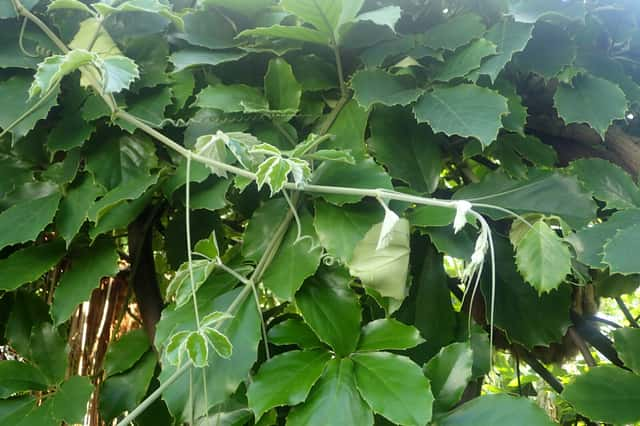
Chestnut vine (Tetrastigma voinierianum) is a medium-care plant from the Vitaceae family. Tetrastigma voinierianum is a vigorous woody climber in the grape family, native to the forests of Vietnam and Laos. It climbs by long tendrils and, in good conditions, grows up to 30 cm a month. The large palmate leaves have five leaflets 15 to 25 cm long, dark green above and covered in rusty hair...
Chestnut vine grows up to watering every 7 days, 10°C – 24°C, 60–80% humidity. It is suitable for indoor environments and safe for pets.
Unlike many popular species, Chestnut vine is safe to keep around pets. Without adequate drainage, root rot can develop within 14 days.
How to Care for Chestnut vine?
TLDR: Chestnut vine needs Partial shade, watering every 7 days, and temperatures between 10-24°C with 60-80% humidity.
How Often Should You Water Chestnut vine?
Let the mix get nearly dry, then water thoroughly and let the excess drain away. Cut back on watering in fall and winter. Soggy soil rots the roots.
How Much Light Does Chestnut vine Need?
Bright, indirect light near a window but out of direct sun, which scorches the leaves. In low light it grows slower with smaller leaves.
What Is the Best Soil for Chestnut vine?
Use a rich potting soil mixed with perlite, coarse sand or fine gravel for good drainage. Slightly acid to neutral pH is fine.
What Pot Should You Use for Chestnut vine?
A large, heavy pot with drainage holes and a stake, trellis or wire for the vine to climb. It also works in a hanging basket.
Care Schedule
Fertilize
Every 30 days
Repot
Every 365 days
What Is Chestnut vine and Where Does It Come From?
Tetrastigma voinierianum is a vigorous woody climber in the grape family, native to the forests of Vietnam and Laos. It climbs by long tendrils and, in good conditions, grows up to 30 cm a month. The large palmate leaves have five leaflets 15 to 25 cm long, dark green above and covered in rusty hairs below, where small pearl-like beads of sap form that feed ants in the wild. New stems are reddish and hairy. The small greenish-white flowers are rarely produced indoors; the fruits are small black berries, not edible grapes.
How to Propagate Chestnut vine?
Semi-ripe stem cuttings
Bottom heat and high humidity make all the difference; in a cool, dry room cuttings usually fail.
- 1 Cut a piece of semi-ripe stem with at least one node and one leaf
- 2 Trim the leaf by half to reduce water loss
- 3 Insert the node into a light, free-draining mix
- 4 Keep warm and very humid, under clear plastic, until rooted
Materials needed:
How Big Does Chestnut vine Grow?
TLDR: Chestnut vine can reach up to ?cm tall with Fast growth rate.
Growth rate
Fast
Foliage
Evergreen
Plant Uses
Ornamental
Great for decoration
Is your plant showing symptoms?
Click on the symptom to discover possible causes:
What Diseases Commonly Affect Chestnut vine?
TLDR: Chestnut vine is susceptible to 8 known diseases. Monitor regularly for early detection.
Spider Mites
Spider mites are tiny arachnids (less than 1/20 inch long) related to spiders and ticks that feed on plant sap. They thrive in hot, dry conditions and can cause significant damage to ornamental and vegetable plants. During severe infestations, crop losses can reach 14% or higher as these pests disrupt vital plant processes including photosynthesis, carbon dioxide absorption, and transpiration.
Mealybugs
Mealybugs are small, soft-bodied insects covered with a white, waxy, cottony material. They are common pests of houseplants and outdoor plants in mild climates. These sap-sucking insects feed on plant tissue, causing damage, stunted growth, and can lead to plant death if left untreated. They produce sticky honeydew which attracts sooty mold.
Scale Insects
Scale insects are small sap-sucking pests that appear as brown, shell-like bumps on plant stems and leaves. There are over 25 species, divided into armored (hard) and unarmored (soft) scales. They feed by piercing plant tissue and extracting sap, which weakens the plant and can lead to yellowing, stunted growth, and even death if left untreated. They also excrete honeydew, which attracts ants and promotes sooty mold growth.
Aphids
Aphids are small, soft-bodied, pear-shaped insects (1/16 to 1/8 inch long) that feed by sucking nutrient-rich sap from plants. They reproduce rapidly and can quickly weaken plants, causing distorted growth and transmitting plant viruses. Aphids come in various colors including green, black, red, yellow, brown, and gray. They secrete honeydew, a sticky substance that attracts ants and encourages sooty mold growth.
Fun Facts
It can grow up to 30 cm a month in good conditions
It belongs to the grape family, Vitaceae
Its name honours M. Voinier, a French veterinary surgeon
Frequently asked questions
Why are my chestnut vine's leaves drooping?
Why did the leaves turn black?
What are the clear beads under the leaves?
Are the berries edible?
Compare with similar plants
| Attribute | Difficulty | Light | Watering | Pet Safe |
|---|---|---|---|---|
| Dark Fieldcap | Medium | Low light | 2d | ⚠️ |
| Azalea | Medium | Partial shade | 3d | ⚠️ |
| Muriel's Bamboo | Medium | Partial shade | 3d | ✓ |
| Bougainvillea | Medium | Direct sun | 7d | ⚠️ |




