Bignoniaceae
Bower Vine (Pandorea jasminoides) Care Guide
Pandorea jasminoides
Grow in full sun or light part shade, in fertile, well-drained soil rich in organic matter. Keep the soil lightly moist in spring and summer and water less in winter. Give the stems a sturdy support to twine around, feed during the growing season and prune lightly after flowering. Protect from hard frost, especially young plants.
Every 7 days
Bright indirect
-2° - 38°C
40% - 70%
Categories
What is Bower of Beauty?
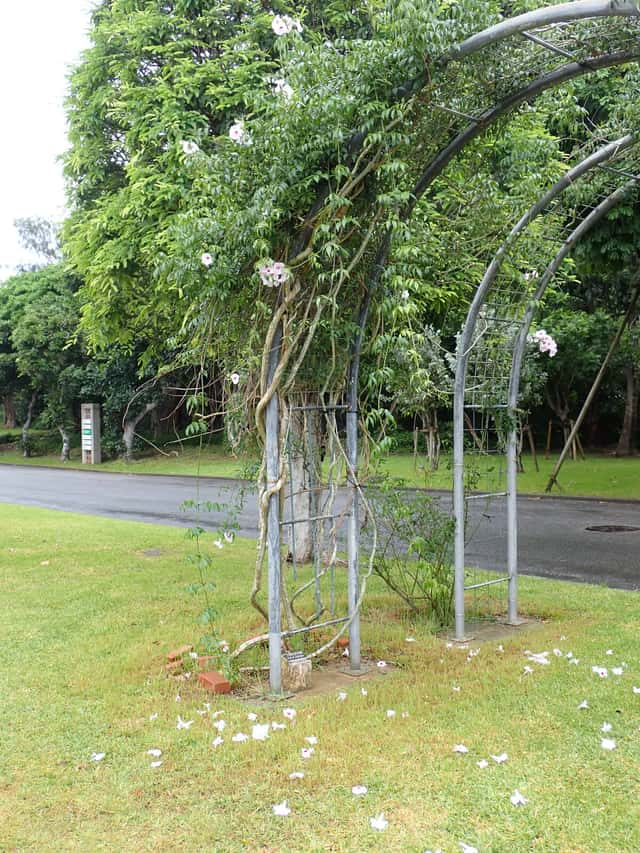
Bower of Beauty (Pandorea jasminoides) is a easy-care plant from the Bignoniaceae family. Pandorea jasminoides is an evergreen woody climber endemic to eastern Australia, in the family Bignoniaceae. It has glossy pinnate leaves with three to nine leaflets and clusters of trumpet-shaped white or pink flowers with a deep red, hairy throat. It blooms from spring into autumn, grows fast and...
Bower of Beauty grows up to 6.0m, spread of 300cm, watering every 7 days, -2°C – 38°C, 40–70% humidity. It is not suitable for indoor environments and safe for pets.
Unlike many tropical plants, Bower of Beauty tolerates watering mistakes. Best for beginners. Unlike many popular species, Bower of Beauty is safe to keep around pets.
How to Care for Bower of Beauty?
TLDR: Bower of Beauty needs Bright indirect, watering every 7 days, and temperatures between -2-38°C with 40-70% humidity.
How Often Should You Water Bower of Beauty?
Water about once a week, when the top few centimetres of soil are dry. Avoid soggy soil, which leads to root rot. Cut back watering in winter.
How Much Light Does Bower of Beauty Need?
Full sun gives the heaviest flowering. It grows in part shade but blooms less.
What Is the Best Soil for Bower of Beauty?
Use fertile, loose, well-drained soil with plenty of compost. It tolerates slightly acidic to slightly alkaline soil; in sandy soil it is more prone to nematodes.
What Pot Should You Use for Bower of Beauty?
Large, deep pot (40 cm or more) with good drainage holes and a sturdy trellis or support.
Care Schedule
Fertilize
Every 30 days
Repot
Every 730 days
What Is Bower of Beauty and Where Does It Come From?
Pandorea jasminoides is an evergreen woody climber endemic to eastern Australia, in the family Bignoniaceae. It has glossy pinnate leaves with three to nine leaflets and clusters of trumpet-shaped white or pink flowers with a deep red, hairy throat. It blooms from spring into autumn, grows fast and is widely planted to cover pergolas, fences and walls in mild to warm climates.
How to Propagate Bower of Beauty?
Semi-hardwood stem cutting
Use clean tools and keep the mix moist but not wet. Ventilate the plastic cover daily to prevent mould.
- 1 Cut a 10-15 cm semi-hardwood shoot with two or three nodes
- 2 Remove the leaves from the lower half
- 3 Dip the base in rooting hormone
- 4 Plant in a light, moist potting mix
- 5 Keep in a shaded, humid spot until roots form
Materials needed:
Seed
Cultivars such as 'Lady Di' or 'Rosea' may not come true from seed.
- 1 Collect ripe pods and remove the winged seeds
- 2 Sow on the surface of moist seed mix
- 3 Keep warm and bright until germination
Materials needed:
How Big Does Bower of Beauty Grow?
TLDR: Bower of Beauty can reach up to 6.0m tall with Fast growth rate.
Max height
6.0m
Spread
3.0m
Growth rate
Fast
Foliage
Evergreen
Plant Uses
Ornamental
Great for decoration
Is your plant showing symptoms?
Click on the symptom to discover possible causes:
What Diseases Commonly Affect Bower of Beauty?
TLDR: Bower of Beauty is susceptible to 6 known diseases. Monitor regularly for early detection.
Aphids
Aphids are small, soft-bodied, pear-shaped insects (1/16 to 1/8 inch long) that feed by sucking nutrient-rich sap from plants. They reproduce rapidly and can quickly weaken plants, causing distorted growth and transmitting plant viruses. Aphids come in various colors including green, black, red, yellow, brown, and gray. They secrete honeydew, a sticky substance that attracts ants and encourages sooty mold growth.
Scale Insects
Scale insects are small sap-sucking pests that appear as brown, shell-like bumps on plant stems and leaves. There are over 25 species, divided into armored (hard) and unarmored (soft) scales. They feed by piercing plant tissue and extracting sap, which weakens the plant and can lead to yellowing, stunted growth, and even death if left untreated. They also excrete honeydew, which attracts ants and promotes sooty mold growth.
Mealybugs
Mealybugs are small, soft-bodied insects covered with a white, waxy, cottony material. They are common pests of houseplants and outdoor plants in mild climates. These sap-sucking insects feed on plant tissue, causing damage, stunted growth, and can lead to plant death if left untreated. They produce sticky honeydew which attracts sooty mold.
Spider Mites
Spider mites are tiny arachnids (less than 1/20 inch long) related to spiders and ticks that feed on plant sap. They thrive in hot, dry conditions and can cause significant damage to ornamental and vegetable plants. During severe infestations, crop losses can reach 14% or higher as these pests disrupt vital plant processes including photosynthesis, carbon dioxide absorption, and transpiration.
Fun Facts
It is endemic to eastern Australia, from Queensland to New South Wales.
The genus is named after Pandora from Greek mythology.
Its fruits are woody pods holding winged seeds that are spread by the wind.
Frequently asked questions
Is bower vine toxic to cats and dogs?
How often should I water bower vine?
Can bower vine survive frost?
When should I prune bower vine?
Compare with similar plants
| Attribute | Difficulty | Light | Watering | Pet Safe |
|---|---|---|---|---|
| Field Maple | Easy | Bright indirect | 14d | ✓ |
| Iberian Houseleek | Easy | Direct sun | 14d | ✓ |
| Silver Birch | Easy | Direct sun | 14d | ✓ |
| Common Blanketflower | Easy | Direct sun | 10d | ✓ |
Choose & Compare
Sources & References
- Pandorea jasminoides - Wikipedia
- Pandorea jasminoides: how to grow the Australian bower vine - Better Homes and Gardens Australia
- Pink Bower Vine - Monrovia
- Pandorea jasminoides - AUB Landscape Plant Database
- Pandorea jasminoides - ASU Plant Library
- Identify and Treat Bower Vine Diseases - Cultivating Flora





