Bromeliaceae
Blue Rain Bromeliad: Pet-Safe Plant
Aechmea 'Blue Rain'
Provide bright, indirect light and maintain moderate to high humidity (50–80%). Water by keeping the central rosette tank filled with fresh water, changing weekly, and keep the potting soil lightly moist. Maintain temperatures between 18–28°C and fertilize sparingly during the growing season (spring and summer). Propagate via pups (offsets) after flowering.
Every 7 days
Partial shade
10° - 28°C
50% - 80%
Categories
What is Blue Rain Bromeliad?
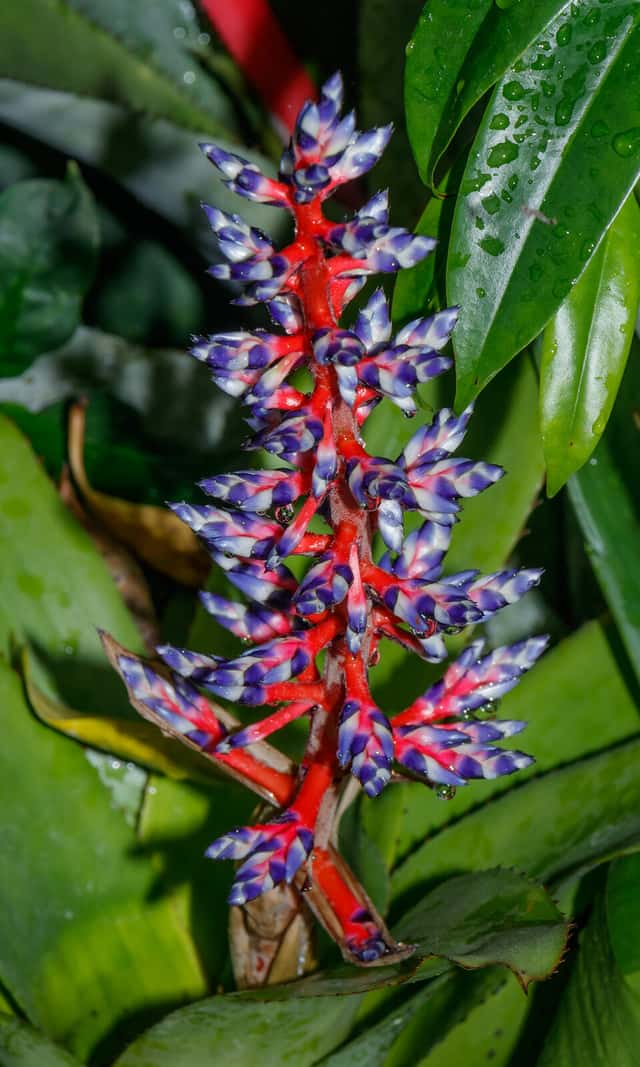
Blue Rain Bromeliad (Aechmea 'Blue Rain') is a medium-care plant from the Bromeliaceae family. Aechmea 'Blue Rain' is a stunning tropical bromeliad hybrid producing dramatic summer blooms with deep blue to purple-blue flowers accented by vibrant purple-red bracts on striking red stems. This evergreen epiphytic perennial forms a characteristic basal rosette of glossy, strap-shaped deep green l...
Blue Rain Bromeliad grows up to 1.0m, spread of 100cm, watering every 7 days, 10°C – 28°C, 50–80% humidity. It is suitable for indoor environments and safe for pets.
Unlike many popular species, Blue Rain Bromeliad is safe to keep around pets. Without adequate drainage, root rot can develop within 14 days.
How to Care for Blue Rain Bromeliad?
TLDR: Blue Rain Bromeliad needs Partial shade, watering every 7 days, and temperatures between 10-28°C with 50-80% humidity.
How Often Should You Water Blue Rain Bromeliad?
Fill the central cup (tank) formed by the leaves with clean water and refresh it weekly to prevent stagnation. Water the soil lightly, keeping it barely moist but well-drained. Empty and rinse the tank monthly with rainwater or filtered water to avoid mineral buildup.
How Much Light Does Blue Rain Bromeliad Need?
Position near an east or north-facing window with sheer curtains to provide bright, filtered light. The plant tolerates partial shade but avoids harsh direct sun, which can scorch leaves. Bright, indirect light at approximately 75% intensity is ideal for vibrant foliage and reliable flowering.
What Is the Best Soil for Blue Rain Bromeliad?
Use a well-draining, epiphytic bromeliad-specific potting mix or a blend of loam and sand. The plant has minimal root systems, so small pots (4–6 inches) are suitable. Ensure excellent drainage to prevent root rot.
What Pot Should You Use for Blue Rain Bromeliad?
Use small terracotta or ceramic pots (4–6 inch diameter) with drainage holes. Terracotta allows beneficial air circulation around the roots and helps prevent waterlogging.
What Is Blue Rain Bromeliad and Where Does It Come From?
Aechmea 'Blue Rain' is a stunning tropical bromeliad hybrid producing dramatic summer blooms with deep blue to purple-blue flowers accented by vibrant purple-red bracts on striking red stems. This evergreen epiphytic perennial forms a characteristic basal rosette of glossy, strap-shaped deep green leaves and grows to approximately 60–100 cm tall. The plant is beloved by tropical plant enthusiasts for its ornamental appeal and relatively easy care requirements, making it an excellent choice for indoor cultivation in bright, filtered light.
How to Propagate Blue Rain Bromeliad?
Pup Division
Aechmea is monocarpic (flowers once per rosette), so the parent rosette will gradually decline after flowering. Pups are genetically identical to the parent (true-to-type clones) and flower within 2–5 years when mature.
- 1 Wait for the parent rosette to flower and produce pups (baby plants) at its base after flowering.
- 2 Once pups reach approximately one-third the size of the mother plant (usually 2–3 months post-flowering), gently separate them using a clean knife.
- 3 Ensure each pup has some roots attached before separation.
- 4 Plant pups in small pots (2–3 inches) filled with bromeliad potting mix.
- 5 Keep the central cup filled with water and maintain humidity at 60–80%.
- 6 Avoid direct sun for 2–3 weeks after separation to allow establishment.
- 7 Pups should establish and begin growing within 4–6 weeks.
Materials needed:
Seed Propagation
Seed-grown plants may not be identical to parents (especially hybrids) and take much longer to mature (3–5+ years). Offset propagation is strongly preferred for speed and reliability.
- 1 Collect seeds from mature fruits (fleshy red berries produced after flowering).
- 2 Clean seeds and soak briefly in lukewarm water.
- 3 Sow seeds on moist bromeliad or sphagnum moss mix without burying.
- 4 Cover container with clear plastic to maintain humidity at 70–80%.
- 5 Maintain temperatures of 21–24°C and provide bright, filtered light.
- 6 Germination occurs in 30–60 days but is often erratic.
- 7 Seedlings are extremely minute and very slow-growing; do not disturb for at least 3 months.
- 8 Keep moss consistently moist but not waterlogged.
- 9 Transplant only when seedlings develop 2–3 true leaves.
Materials needed:
How Big Does Blue Rain Bromeliad Grow?
TLDR: Blue Rain Bromeliad can reach up to 1.0m tall with Medium growth rate.
Max height
1.0m
Spread
1.0m
Growth rate
Medium
Foliage
Evergreen
Plant Uses
Ornamental
Great for decoration
Is your plant showing symptoms?
Click on the symptom to discover possible causes:
What Diseases Commonly Affect Blue Rain Bromeliad?
TLDR: Blue Rain Bromeliad is susceptible to 2 known diseases. Monitor regularly for early detection.
Scale Insects
Scale insects are small sap-sucking pests that appear as brown, shell-like bumps on plant stems and leaves. There are over 25 species, divided into armored (hard) and unarmored (soft) scales. They feed by piercing plant tissue and extracting sap, which weakens the plant and can lead to yellowing, stunted growth, and even death if left untreated. They also excrete honeydew, which attracts ants and promotes sooty mold growth.
Mealybugs
Mealybugs are small, soft-bodied insects covered with a white, waxy, cottony material. They are common pests of houseplants and outdoor plants in mild climates. These sap-sucking insects feed on plant tissue, causing damage, stunted growth, and can lead to plant death if left untreated. They produce sticky honeydew which attracts sooty mold.
Meaning & Symbolism
The blue flowers and rain-like bracts symbolize tropical abundance and natural beauty, evoking the lush rainforests of Brazil where Aechmea species originate.
Compare with similar plants
| Attribute | Difficulty | Light | Watering | Pet Safe |
|---|---|---|---|---|
| Dark Fieldcap | Medium | Low light | 2d | ⚠️ |
| Azalea | Medium | Partial shade | 3d | ⚠️ |
| Muriel's Bamboo | Medium | Partial shade | 3d | ✓ |
| Bougainvillea | Medium | Direct sun | 7d | ⚠️ |




