Poaceae
Bamboo: Edible Plant
Bambusoideae
Full sun to partial shade, fertile soil, rich in organic matter and well-drained, and regular watering to keep the soil moist without waterlogging. Fertilize with a nitrogen-rich fertilizer in early spring and with a balanced fertilizer monthly until early autumn. Once a year, remove old, dry, or damaged culms at ground level. Running bamboos need a rhizome barrier (at least 45 cm deep) or a pot to prevent spreading. In a pot, repot into a larger container or divide the clump every 1 to 2 years.
Every 4 days
Bright indirect
° - °C
% - %
Categories
What is Bamboo?
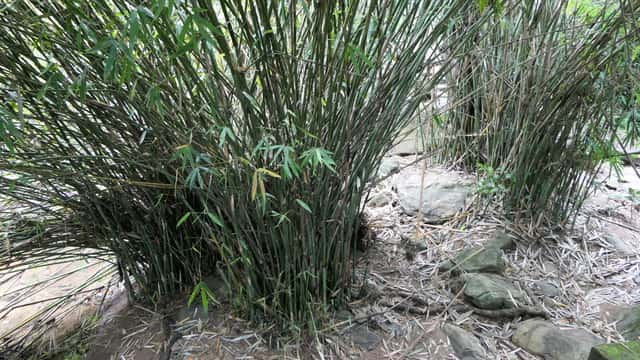
Bamboo (Bambusoideae) is a medium-care plant from the Poaceae family. Bamboo is the name given to woody grasses of the Bambusoideae subfamily (Poaceae family). The hollow culms, segmented by nodes, grow from underground rhizomes, and the leaves are evergreen. Two groups appear in gardens: running bamboos, such as Phyllostachys, which spread via long rhizomes and can i...
Bamboo grows up to watering every 4 days. It is not suitable for indoor environments and safe for pets.
Unlike many popular species, Bamboo is safe to keep around pets.
How to Care for Bamboo?
TLDR: Bamboo needs Bright indirect, watering every 4 days, and temperatures between 15-30°C with 40-70% humidity.
How Often Should You Water Bamboo?
Water frequently and deeply during the growing season: about 2.5 cm of water per week in the garden and, in hot weather, every 2 to 4 days. In a pot, water when the top 2-3 cm of soil are dry. Rolled leaves indicate lack of water; waterlogged soil leads to root rot. Yellowing and falling leaves in spring are part of normal foliage renewal.
How Much Light Does Bamboo Need?
Most bamboos grow faster, taller, and greener in full sun (6 hours or more). They tolerate partial shade. Fargesia prefers filtered light and suffers from strong afternoon sun, which causes the leaves to curl. Indoor bamboo usually withers due to lack of light; prefer a balcony or bright outdoor area.
What Is the Best Soil for Bamboo?
Fertile, loose, humus-rich soil, slightly acidic to neutral (pH 5.5 to 7.0) with good drainage; loose soil facilitates rhizome expansion. In a pot, use potting mix for plants with organic compost and perlite, in a wide and sturdy container. Leave fallen leaves on the soil: they return nutrients (including silica) to the plant.
What Pot Should You Use for Bamboo?
Large, wide, and sturdy pot (60 liters or more), with drainage holes; prefer clumping varieties like Fargesia. Avoid narrow-mouthed pots, which make it difficult to remove the clump when dividing.
Care Schedule
Fertilize
Every 30 days
Repot
Every 730 days
What Is Bamboo and Where Does It Come From?
Bamboo is the name given to woody grasses of the Bambusoideae subfamily (Poaceae family). The hollow culms, segmented by nodes, grow from underground rhizomes, and the leaves are evergreen. Two groups appear in gardens: running bamboos, such as Phyllostachys, which spread via long rhizomes and can invade neighboring areas, and clumping bamboos, such as Fargesia and Bambusa, which form compact clumps. Their size ranges from about 2 m in potted varieties to over 10 m in forest species. Flowering is rare, occurring at decades-long intervals, and usually weakens or kills the clump. Note: the "lucky bamboo" sold in vases with water is not bamboo, but Dracaena sanderiana.
How to Propagate Bamboo?
Clump division
Too small divisions do not establish well; prefer portions with several culms. If the cutting loses leaves, cut the culms in half to reduce water loss.
- 1 In early spring, before new shoots emerge, water the clump thoroughly the day before.
- 2 With a sharp spade or pruning saw, separate a portion with at least 2 to 3 culms and a good piece of rhizome with roots.
- 3 Plant immediately in its final location or in a large pot, at the same depth it was previously.
- 4 Keep the soil constantly moist and the cutting protected from strong sun and wind in the first few weeks.
Materials needed:
Rhizome cutting
Works best for running bamboos like Phyllostachys; for clumping varieties, division is safer.
- 1 Dig up a section of young rhizome with several buds, typical of running bamboos.
- 2 Cut segments with 2 to 3 nodes.
- 3 Bury the segments horizontally, 5-10 cm deep, in moist, well-drained substrate.
- 4 Keep moist and in partial shade until the first shoots appear.
Materials needed:
How Big Does Bamboo Grow?
TLDR: Bamboo can reach up to ?cm tall with Fast growth rate.
Growth rate
Fast
Foliage
Evergreen
Plant Uses
Ornamental
Great for decoration
Edible
Can be consumed
Culinary Uses
- Young shoots of various species (e.g., Phyllostachys) are edible, always cooked: raw they contain cyanogenic compounds
- Pickled shoots
Is your plant showing symptoms?
Click on the symptom to discover possible causes:
What Diseases Commonly Affect Bamboo?
TLDR: Bamboo is susceptible to 9 known diseases. Monitor regularly for early detection.
Bamboo Spider Mites (Stigmaeopsis)
Stigmaeopsis are very small spider mites that primarily infest bamboo. They pierce the leaf cells to suck out plant sap, resulting in fine, light speckles that later develop into yellowish to brownish spots. A delicate webbing is often found on the underside of the leaves. Over time, the leaves become unsightly, dry out in patches, and may drop prematurely. Garden and container-grown bamboo are particularly affected, while other grasses are less common hosts. Infestation can be easily identified using the "white paper test": tap a leaf over a piece of white paper, and tiny, moving dots will fall onto it.
Spider Mites
Spider mites are tiny arachnids (less than 1/20 inch long) related to spiders and ticks that feed on plant sap. They thrive in hot, dry conditions and can cause significant damage to ornamental and vegetable plants. During severe infestations, crop losses can reach 14% or higher as these pests disrupt vital plant processes including photosynthesis, carbon dioxide absorption, and transpiration.
Aphids
Aphids are small, soft-bodied, pear-shaped insects (1/16 to 1/8 inch long) that feed by sucking nutrient-rich sap from plants. They reproduce rapidly and can quickly weaken plants, causing distorted growth and transmitting plant viruses. Aphids come in various colors including green, black, red, yellow, brown, and gray. They secrete honeydew, a sticky substance that attracts ants and encourages sooty mold growth.
Mealybugs
Mealybugs are small, soft-bodied insects covered with a white, waxy, cottony material. They are common pests of houseplants and outdoor plants in mild climates. These sap-sucking insects feed on plant tissue, causing damage, stunted growth, and can lead to plant death if left untreated. They produce sticky honeydew which attracts sooty mold.
Meaning & Symbolism
In East Asian culture, bamboo symbolizes resilience, flexibility, and uprightness: it bends with the wind and does not break.
Compare with similar plants
| Attribute | Difficulty | Light | Watering | Pet Safe |
|---|---|---|---|---|
| Dark Fieldcap | Medium | Low light | 2d | ⚠️ |
| Azalea | Medium | Partial shade | 3d | ⚠️ |
| Muriel's Bamboo | Medium | Partial shade | 3d | ✓ |
| Bougainvillea | Medium | Direct sun | 7d | ⚠️ |




