Crassulaceae
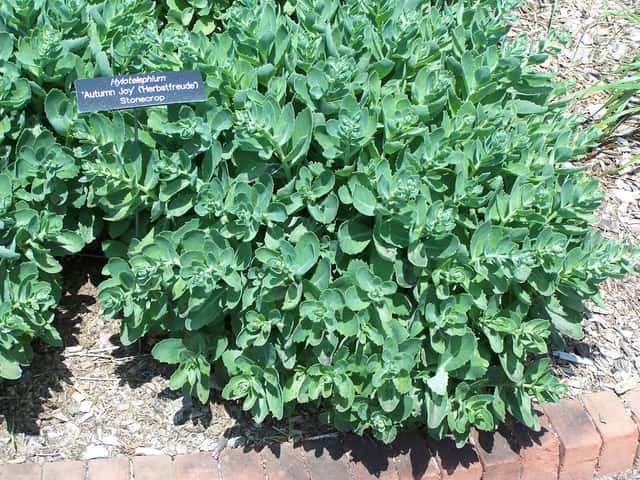
Autumn Joy Stonecrop (Hylotelephium 'Autumn Joy')
Hylotelephium 'Autumn Joy'
A very easy, cold-hardy perennial: full sun, well-drained, lean soil and hardly any water once established. Rich or wet soil makes it flop or rot.
Every 10 days
Bright indirect
-35° - °C
% - %
Categories
What is Autumn Joy Stonecrop?
Autumn Joy Stonecrop (Hylotelephium 'Autumn Joy') is a easy-care plant from the Crassulaceae family. Hylotelephium 'Autumn Joy', also sold as Sedum 'Autumn Joy' or 'Herbstfreude' (German for autumn joy), is a hybrid cultivar of Hylotelephium spectabile and H. telephium; the RHS now lists it as Hylotelephium × mottramianum 'Herbstfreude'. It is a clump-forming succulent perennial about 60 cm tall an...
Autumn Joy Stonecrop grows up to 60cm, spread of 60cm, watering every 10 days. It is not suitable for indoor environments and safe for pets.
Unlike many tropical plants, Autumn Joy Stonecrop tolerates watering mistakes. Best for beginners. Unlike many popular species, Autumn Joy Stonecrop is safe to keep around pets.
How to Care for Autumn Joy Stonecrop?
TLDR: Autumn Joy Stonecrop needs Bright indirect, watering every 10 days, and temperatures between -35-30°C with 40-70% humidity.
How Often Should You Water Autumn Joy Stonecrop?
Water about every 10 days only in the first year and in long dry spells. Once established it is drought tolerant. Never let the soil stay soggy.
How Much Light Does Autumn Joy Stonecrop Need?
Full sun, 6 or more hours a day. In very hot climates it accepts morning or afternoon shade; in too much shade the stems flop.
What Is the Best Soil for Autumn Joy Stonecrop?
Well-drained sandy, gravelly or chalky soil of average to low fertility, neutral to slightly alkaline pH. No fertilizer needed.
What Pot Should You Use for Autumn Joy Stonecrop?
A wide clay pot with good drainage; it does best in borders, edges or rock gardens.
What Is Autumn Joy Stonecrop and Where Does It Come From?
Hylotelephium 'Autumn Joy', also sold as Sedum 'Autumn Joy' or 'Herbstfreude' (German for autumn joy), is a hybrid cultivar of Hylotelephium spectabile and H. telephium; the RHS now lists it as Hylotelephium × mottramianum 'Herbstfreude'. It is a clump-forming succulent perennial about 60 cm tall and wide, with thick stems and fleshy grey-green leaves. From late summer into autumn it opens large flat heads of starry flowers that keep changing colour: greenish-pink buds turn pink, deep pink and coppery red, and the dried heads turn brown and stand through winter. Bees and butterflies love it. The top growth dies back in winter and returns in spring.
How to Propagate Autumn Joy Stonecrop?
Division
Dividing every 3-4 years stops the centre of the clump opening up and flopping.
- 1 In spring, as shoots appear, lift the clump
- 2 Split it into pieces with roots and shoots
- 3 Replant at the same depth
- 4 Water until settled
Materials needed:
Stem cutting
Even single leaves root; no hormone needed.
- 1 In early summer, cut 8-10 cm tips from non-flowering shoots
- 2 Strip the lower leaves
- 3 Insert in lightly moist, gritty mix
- 4 Keep in light shade until rooted
Materials needed:
How Big Does Autumn Joy Stonecrop Grow?
TLDR: Autumn Joy Stonecrop can reach up to 60cm tall with Fast growth rate.
Max height
60cm
Spread
60cm
Growth rate
Fast
Foliage
Deciduous
Warning: Toxic Plant
This plant can be toxic if ingested. Keep out of reach of:
Plant Uses
Ornamental
Great for decoration
Is your plant showing symptoms?
Click on the symptom to discover possible causes:
What Diseases Commonly Affect Autumn Joy Stonecrop?
TLDR: Autumn Joy Stonecrop is susceptible to 7 known diseases. Monitor regularly for early detection.
Aphids
Aphids are small, soft-bodied, pear-shaped insects (1/16 to 1/8 inch long) that feed by sucking nutrient-rich sap from plants. They reproduce rapidly and can quickly weaken plants, causing distorted growth and transmitting plant viruses. Aphids come in various colors including green, black, red, yellow, brown, and gray. They secrete honeydew, a sticky substance that attracts ants and encourages sooty mold growth.
Mealybugs
Mealybugs are small, soft-bodied insects covered with a white, waxy, cottony material. They are common pests of houseplants and outdoor plants in mild climates. These sap-sucking insects feed on plant tissue, causing damage, stunted growth, and can lead to plant death if left untreated. They produce sticky honeydew which attracts sooty mold.
Scale Insects
Scale insects are small sap-sucking pests that appear as brown, shell-like bumps on plant stems and leaves. There are over 25 species, divided into armored (hard) and unarmored (soft) scales. They feed by piercing plant tissue and extracting sap, which weakens the plant and can lead to yellowing, stunted growth, and even death if left untreated. They also excrete honeydew, which attracts ants and promotes sooty mold growth.
Slugs and Snails
Slugs and snails are mollusks that feed on plant tissue, causing irregular holes in leaves and damage to young seedlings. They are most active at night and in moist conditions, leaving characteristic silvery slime trails. These pests can quickly devastate gardens, especially during wet seasons.
Fun Facts
Herbstfreude, its original German name, means autumn joy.
The flowers change colour for weeks: greenish pink, pink, coppery red, then brown.
It is one of the busiest autumn plants for bees and butterflies.
Frequently asked questions
Is Autumn Joy sedum toxic?
Why does my sedum flop open in the middle?
When should I prune it?
How is it different from Sedum spectabile?
Compare with similar plants
| Attribute | Difficulty | Light | Watering | Pet Safe |
|---|---|---|---|---|
| Field Maple | Easy | Bright indirect | 14d | ✓ |
| Iberian Houseleek | Easy | Direct sun | 14d | ✓ |
| Silver Birch | Easy | Direct sun | 14d | ✓ |
| Common Blanketflower | Easy | Direct sun | 10d | ✓ |





