Taxaceae
Anglojap yew (Taxus × media)
Taxus × media
A tough, slow-growing conifer for sun or part shade. Drainage is what matters: it handles drought but dies in waterlogged soil. Prune once a year to keep its shape.
Every 10 days
Partial shade
° - °C
% - %
Categories
What is Anglojap yew?
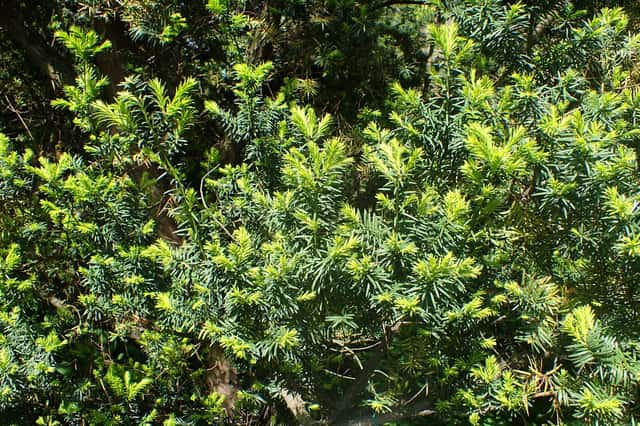
Anglojap yew (Taxus × media) is a easy-care plant from the Taxaceae family. Taxus × media is a hybrid yew, a cross between English yew (Taxus baccata) and Japanese yew (Taxus cuspidata). It was raised in the early 1900s by T. D. Hatfield, a horticulturist in Wellesley, Massachusetts. It is an evergreen conifer with flat, glossy dark green needles set in two rows along the s...
Anglojap yew grows up to 6.0m, spread of 365cm, watering every 10 days. It is not suitable for indoor environments and not safe for pets.
Unlike many tropical plants, Anglojap yew tolerates watering mistakes. Best for beginners. Without precautions, ingestion can cause irritation in pets. Keep out of reach of cats and dogs.
How to Care for Anglojap yew?
TLDR: Anglojap yew needs Partial shade, watering every 10 days, and temperatures between 15-30°C with 40-70% humidity.
How Often Should You Water Anglojap yew?
Water about every 10 days for the first two years and in long dry spells. Once established it lives on rainfall. Never let the soil stay soggy.
How Much Light Does Anglojap yew Need?
Full sun to part shade. It copes with shade better than most conifers but grows thinner there.
What Is the Best Soil for Anglojap yew?
Sandy or loamy, well-drained soil. On heavy or wet ground, plant in a raised bed.
What Pot Should You Use for Anglojap yew?
Best in the ground. Compact cultivars can live in a large, deep container with a wide drainage hole and a gravel layer.
What Is Anglojap yew and Where Does It Come From?
Taxus × media is a hybrid yew, a cross between English yew (Taxus baccata) and Japanese yew (Taxus cuspidata). It was raised in the early 1900s by T. D. Hatfield, a horticulturist in Wellesley, Massachusetts. It is an evergreen conifer with flat, glossy dark green needles set in two rows along the shoots. Depending on the cultivar it grows from 60 cm to 6 m tall and up to 3.5 m wide: 'Densiformis' stays low and dense, 'Hicksii' is tall and columnar, and 'Wellesleyana' carries the name of the town where it was raised. Female plants bear seeds wrapped in a red, fleshy cup. It takes hard pruning well and is one of the most planted shrubs for hedges, topiary and foundation beds in the northern US. Every part except the red flesh is highly poisonous to people and animals.
How to Propagate Anglojap yew?
Semi-ripe cutting
Wear gloves: the whole plant is toxic. Cultivars only come true from cuttings, not from seed.
- 1 In late summer or autumn, cut shoot tips 10 to 15 cm long
- 2 Strip the needles from the lower half
- 3 Dip the base in rooting hormone
- 4 Insert in a sand and peat mix in a cool, sheltered spot
Materials needed:
How Big Does Anglojap yew Grow?
TLDR: Anglojap yew can reach up to 6.0m tall with Slow growth rate.
Max height
6.0m
Spread
3.6m
Growth rate
Slow
Foliage
Evergreen
Warning: Toxic Plant
This plant can be toxic if ingested. Keep out of reach of:
Plant Uses
Ornamental
Great for decoration
Is your plant showing symptoms?
Click on the symptom to discover possible causes:
What Diseases Commonly Affect Anglojap yew?
TLDR: Anglojap yew is susceptible to 6 known diseases. Monitor regularly for early detection.
Root Rot
Root rot is a serious fungal disease that affects the root system of plants, causing them to decay and die. It is primarily caused by overwatering, poor drainage, or soil-borne fungi such as Pythium, Phytophthora, Rhizoctonia, and Fusarium. The disease thrives in waterlogged conditions where roots are deprived of oxygen, making them susceptible to fungal infection.
Phytophthora Root Rot
Disease caused by fungus-like organisms (oomycetes) that live in soil and can survive for years. It affects roots, stem, and crown of plants, being especially severe in waterlogged or poorly drained soils. It is the second most common cause of root rot in trees and shrubs.
Scale Insects
Scale insects are small sap-sucking pests that appear as brown, shell-like bumps on plant stems and leaves. There are over 25 species, divided into armored (hard) and unarmored (soft) scales. They feed by piercing plant tissue and extracting sap, which weakens the plant and can lead to yellowing, stunted growth, and even death if left untreated. They also excrete honeydew, which attracts ants and promotes sooty mold growth.
Mealybugs
Mealybugs are small, soft-bodied insects covered with a white, waxy, cottony material. They are common pests of houseplants and outdoor plants in mild climates. These sap-sucking insects feed on plant tissue, causing damage, stunted growth, and can lead to plant death if left untreated. They produce sticky honeydew which attracts sooty mold.
Fun Facts
It was raised by T. D. Hatfield in Wellesley, Massachusetts, in the early 1900s
It combines the looks of English yew with the cold hardiness of Japanese yew
There are dozens of cultivars, from low shrubs to 6 m columns
Frequently asked questions
Is yew poisonous?
When should I prune Taxus × media?
Why is my yew turning yellow?
What is the difference between 'Hicksii' and 'Densiformis'?
Compare with similar plants
| Attribute | Difficulty | Light | Watering | Pet Safe |
|---|---|---|---|---|
| Field Maple | Easy | Bright indirect | 14d | ✓ |
| Iberian Houseleek | Easy | Direct sun | 14d | ✓ |
| Silver Birch | Easy | Direct sun | 14d | ✓ |
| Common Blanketflower | Easy | Direct sun | 10d | ✓ |





