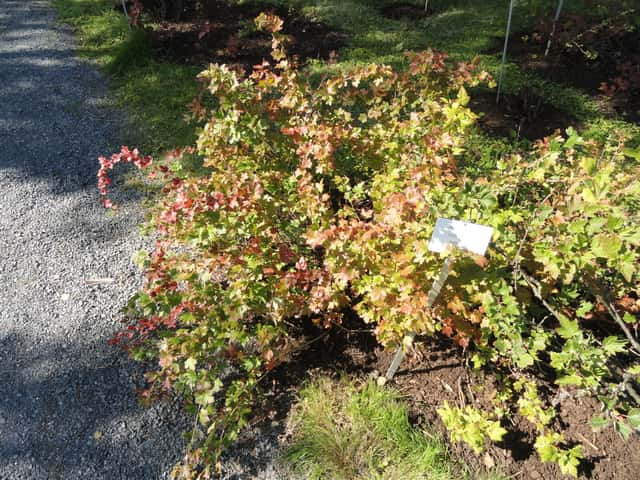
Grossulariaceae
American Gooseberry (Ribes hirtellum)
Ribes hirtellum
A hardy fruiting shrub for cold climates. Give it sun or part shade, moist, well-drained loam at pH 6-7, steady watering and a late-winter prune. Hardy to about -37 °C (USDA zones 3-8). Not a houseplant.
Every 7 days
Bright indirect
-37° - °C
% - %
Categories
What is American gooseberry?
American gooseberry (Ribes hirtellum) is a easy-care plant from the Grossulariaceae family. Ribes hirtellum is a deciduous, somewhat prickly shrub native to northern North America, from Alberta to Newfoundland and south to Nebraska and West Virginia. It grows in fens, swamps, stream and lake shores, rocky woods and cliffs. It reaches 50-150 cm, with upright to sprawling branches and small,...
American gooseberry grows up to 1.5m, spread of 150cm, watering every 7 days. It is not suitable for indoor environments and safe for pets.
Unlike many tropical plants, American gooseberry tolerates watering mistakes. Best for beginners. Unlike many popular species, American gooseberry is safe to keep around pets.
How to Care for American gooseberry?
TLDR: American gooseberry needs Bright indirect, watering every 7 days, and temperatures between -37-30°C with 40-70% humidity.
How Often Should You Water American gooseberry?
Water about once a week, more often in hot weather, to keep the soil moist but not waterlogged. The roots are shallow, so mulch and drip irrigation help. Drought in summer drops leaves and buds that will not regrow that season.
How Much Light Does American gooseberry Need?
Full sun to part shade. Where summers are hot, afternoon shade keeps the leaves from scorching. More sun means more fruit.
What Is the Best Soil for American gooseberry?
Loam rich in organic matter that holds moisture but drains well, pH 6.0 to 7.0. Dig compost into clay soils before planting.
What Pot Should You Use for American gooseberry?
Best in the ground. In a container, use a large, deep pot (40 L or more) with drainage, and do not let it dry out in summer.
Care Schedule
Fertilize
Every 365 days
What Is American gooseberry and Where Does It Come From?
Ribes hirtellum is a deciduous, somewhat prickly shrub native to northern North America, from Alberta to Newfoundland and south to Nebraska and West Virginia. It grows in fens, swamps, stream and lake shores, rocky woods and cliffs. It reaches 50-150 cm, with upright to sprawling branches and small, lobed, toothed leaves. In May and June it bears small bell-shaped flowers, greenish-white and often edged with purple, hanging in clusters of 1 to 3. The smooth berries, 8-10 mm across, ripen from green to red or dark purple in July and August. They are edible fresh or cooked in jams and pies. Breeders crossed it with the European gooseberry to make mildew-resistant cultivars such as 'Houghton' and 'Pixwell'.
How to Propagate American gooseberry?
Hardwood cutting
Half-ripe cuttings, 10-15 cm with a heel, also root in midsummer in a sheltered, humid spot.
- 1 In late autumn or winter, cut 20-25 cm lengths of this year's wood
- 2 Remove the lower buds, leaving 2-3 at the top
- 3 Insert two thirds of the cutting into a sheltered bed or cold frame
- 4 Keep the soil moist and move to its final spot the next autumn
Materials needed:
Seed
Seedlings vary and take a few years to fruit; use cuttings to keep a named cultivar true.
- 1 Clean seed from fully ripe berries
- 2 Sow at once in autumn in a cold frame outdoors
- 3 Stored seed needs 4-5 months of cold, moist stratification first
- 4 Plant out the seedlings in late spring of the following year
Materials needed:
How Big Does American gooseberry Grow?
TLDR: American gooseberry can reach up to 1.5m tall with Medium growth rate.
Max height
1.5m
Spread
1.5m
Growth rate
Medium
Foliage
Deciduous
Plant Uses
Ornamental
Great for decoration
Edible
Can be consumed
Culinary Uses
- Fresh berries when fully ripe
- Jams, jellies, pies and preserves
- Dried berries for storage
Is your plant showing symptoms?
Click on the symptom to discover possible causes:
What Diseases Commonly Affect American gooseberry?
TLDR: American gooseberry is susceptible to 8 known diseases. Monitor regularly for early detection.
Caterpillars
Caterpillars are the larval stage of moths and butterflies that feed voraciously on plant foliage, stems, flowers, and fruits. Common species include cabbage loopers, tomato hornworms, armyworms, and cutworms. These pests can cause extensive damage by consuming large amounts of plant tissue in a short time. They vary in size from small (1/4 inch) to large (5 inches), with colors ranging from green to brown, often featuring stripes or spots. Caterpillars are highly mobile and can quickly spread throughout gardens, making them one of the most destructive common pests.
Anthracnose
Anthracnose is a fungal disease caused by fungi in the genus Colletotrichum that affects many plants, including vegetables, fruits, and trees. The disease thrives in cool, wet conditions, causing dark, sunken lesions on leaves, stems, flowers, and fruits.
Septoria Leaf Spot
Septoria leaf spot is a destructive fungal disease caused by Septoria lycopersici, particularly devastating during seasons of moderate temperature and abundant rainfall. The disease starts on lower leaves and progresses upward, causing small circular spots with tan to gray centers and dark brown margins. If left untreated, it can dramatically reduce plant yields and cause complete leaf blight.
Leaf Spot
Leaf spot is a common fungal disease caused by various pathogens including Alternaria, Ascochyta, Colletotrichum, Septoria, and Venturia. It primarily affects leaves, causing discolored spots that can lead to premature leaf drop if left untreated.
Fun Facts
Crossed with the European gooseberry, it gave the mildew-resistant American cultivars.
Gooseberries host white pine blister rust, so growing them was once banned in parts of the US.
Stored seed can stay viable for more than 17 years.
Frequently asked questions
Will American gooseberry grow in hot climates?
When should I prune it?
Are the berries edible?
Why did the leaves vanish overnight in spring?
Compare with similar plants
| Attribute | Difficulty | Light | Watering | Pet Safe |
|---|---|---|---|---|
| Field Maple | Easy | Bright indirect | 14d | ✓ |
| Iberian Houseleek | Easy | Direct sun | 14d | ✓ |
| Silver Birch | Easy | Direct sun | 14d | ✓ |
| Common Blanketflower | Easy | Direct sun | 10d | ✓ |





