Rosemary in Winter: Cold Hardiness and Frost Protection
In-ground rosemary tolerates around 18 °F (−8 °C), and cultivars like 'Arp' withstand even colder temperatures. In containers, roots freeze sooner, and cold, waterlogged soil causes the most winter deaths. Learn how much cold each variety tolerates, how to protect potted plants, and how to revive frost-damaged rosemary.
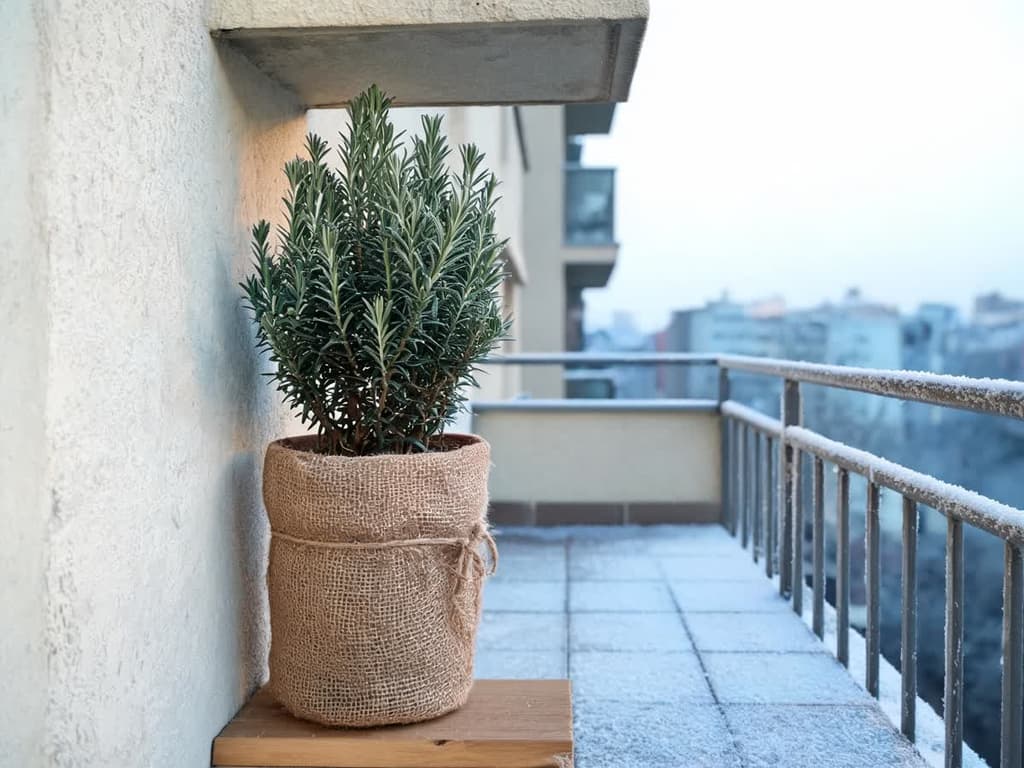
Rosemary in winter tolerates around 18 °F (−8 °C) when planted in the ground and well established. This figure comes from the Royal Horticultural Society (RHS), the UK gardening charity. Cultivars like 'Arp' and 'Madeline Hill' tolerate a few degrees colder. In pots, the roots freeze before the leaves, so container rosemary needs protection sooner.
More than the cold, what kills rosemary in winter is roots sitting in cold, waterlogged soil. In Brazil, frost only occurs in the South, Southeast, and Mato Grosso do Sul, between June and August. In the rest of the country, winter for rosemary is either a rainy season or a dry season, and each requires different care.
Your situation | What to do in winter |
|---|---|
In-ground rosemary, well established, forecast lows above 18 °F (−8 °C) | Leave it where it is. Do not prune and do not fertilize. |
In-ground rosemary with forecast lows below 18 °F (−8 °C), or a plant started this year | Cover with horticultural fleece on frosty nights (protect new plants during any frost; protect mature rosemary only below 18 °F / −8 °C) and remove it during the day. |
Potted rosemary with frost in the forecast | Move the pot against a wall, away from rain, and wrap the container. If temperatures are forecast to reach 23 °F (−5 °C) or lower, bring the pot into a bright, unheated, frost-free space. |
Wet winter, no frost | Move the pot out of the rain. Waterlogged soil poses the real risk. |
Dry winter, no frost | Water when the top 2 inches (5 cm) of soil feel dry. Potting soil dries out faster than garden soil. |
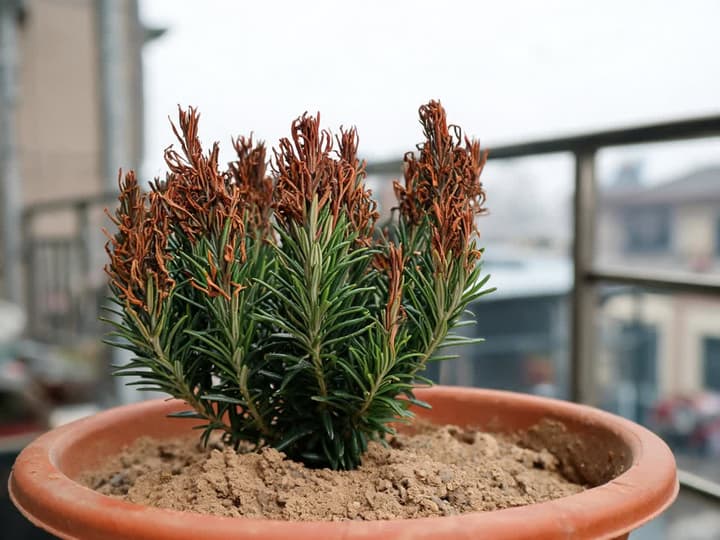
Turned brown after frost | Do not prune anything yet. Wait for new growth and perform the scratch test. |
How much cold rosemary tolerates, variety by variety
Common rosemary (Salvia rosmarinus, formerly called Rosmarinus officinalis) tolerates around −8 °C once well established, according to the RHS. University extension services in the United States, which guide gardeners and growers, provide hardiness (how much cold the plant tolerates) in US Department of Agriculture (USDA) climate zones. Each zone is a temperature range: the average coldest night of each year in that location (USDA).
Variety | Zone according to university extensions | Minimum zone temperature |
|---|---|---|
Common rosemary | Zone 8a (Wisconsin); zones 8 to 10 (Penn State) | 10 to 15 °F / −12.2 to −9.4 °C (zone 8a) |
'Arp' | Zone 7a, or 6a with protection (Wisconsin); zone 7, or 6b with protection (Penn State); zone 7 (Tennessee) | 0 to 5 °F / −17.8 to −15 °C (zone 7a); down to zone 6 with protection |
'Madeline Hill', also sold as 'Hill Hardy' | Zone 7a, or 6a in a protected spot (Wisconsin); zone 7, or 6b with protection (Penn State); zone 7 (Tennessee) | 0 to 5 °F / −17.8 to −15 °C (zone 7a) |
'Salem' | Zone 7 (Tennessee) | 0 to 10 °F / −17.8 to −12.2 °C (zone 7) |
'Veitshöchheim' and 'Blue Winter' | Sold in Europe as hardy; no extension consulted gives a zone | No figure from an independent source |
For common rosemary, sources vary by a few degrees: the RHS cites 18 °F (−8 °C), while Wisconsin extension's zone 8a rating goes down to 10 °F (−12 °C). This guide uses the RHS figure, the more conservative of the two: providing unneeded protection costs only a single night under plant cover.
Penn State and Wisconsin Extension write "with protection" next to the coldest zone for 'Arp' and 'Madeline Hill'. Without protection, count on zone 7. NC State Extension lists 'Arp' as the hardiest of the varieties on its plant profile.
Why the same rosemary survives one winter and dies the next
The figure in the table applies to a mature plant that has already experienced several cold days before the frost, and in dry soil. The RHS explains that many plants only tolerate freezing after several cold days beforehand (RHS, frost damage). That is why a frost that arrives suddenly after warm days burns even a hardy plant.
Three conditions make rosemary suffer from cold above the temperatures listed in the table:
Age. The RHS warns that severe frost can kill young plants. A start planted just a few months ago lacks the cold hardiness of a three-year-old shrub.
Cold wind. Cold wind strips moisture from leaves faster than roots can replace it, turning tips brown (RHS).
Wet soil. The University of Tennessee Extension sums it up: not even the hardiest rosemary survives a winter in waterlogged soil.
Does creeping rosemary tolerate frost?
None of the reviewed extension services list a specific hardiness zone for prostrate or creeping rosemary (varieties that cascade over pot rims or retaining walls). Treat these plants like common rosemary, with a threshold of 18 °F (−8 °C), and protect them earlier. In tall planters, window boxes, or on stone walls, the roots have little surrounding soil and freeze faster.
What kills rosemary most in winter: cold, waterlogged soil
Excess water is the most common cause of rosemary decline and death, according to NC State Extension and the University of Wisconsin Extension. In winter, cold soil takes longer to dry, leaving roots deprived of oxygen for days. The RHS warns that cold, wet soil rots rosemary roots even in mild winters with high rainfall.
Penn State adds that root rot kills rosemary in the garden and causes even more deaths in potted rosemary overwintered indoors. The rot starts underground, and Penn State points to browning shoot tips as a warning sign.
The same rule applies to lavender, another Mediterranean plant that dies more often from waterlogging than from cold. Both need full sun and well-draining soil, in summer and winter.
Rosemary in the Brazilian winter: frost, rain, or drought
In Brazil, winter runs from June to August. According to the National Institute of Meteorology (INMET), frost occurs in the South, Southeast, and Mato Grosso do Sul. In the mountain ranges and plateaus of the South, it also snows (INMET, winter forecast). The highest frost risk lies between southern Paraná and northern Rio Grande do Sul. Within this belt, the risk is higher in cities at higher elevations (Wrege and colleagues, Revista Brasileira de Climatologia, 2018).
Winter rainfall also varies by region, and each type of winter demands a distinct approach:
Rainy winter (eastern Northeast and parts of the South, according to INMET): the primary risk is waterlogged soil. Move the pot out of the rain and place it under an eave or covered porch where water cannot reach it.
Dry winter (Central-West and Southeast): in the Central-West, relative humidity can drop below 30% (INMET). Potting soil dries out faster than garden soil. Continue watering through winter whenever the top 2 inches (5 cm) of soil feel dry.
The cultivar table matters most for gardeners living in frost zones. For those living in frost-free areas, standard nursery-grown common rosemary overwinters outdoors provided the soil does not stay soggy.
Potted rosemary in winter: roots freeze before leaves
In a container, the root system has limited surrounding soil, and this potting mix freezes long before garden soil does. The RHS notes that container rosemary is the most vulnerable to winter cold: extended freezing periods freeze both the substrate and the roots inside the pot.
To protect container rosemary on a frosty night:
Move the pot against a house wall, ideally beneath an eave. The RHS recommends the wind-sheltered side of the wall, and the overhang blocks rain.
Wrap the container, not the foliage, using bubble wrap, burlap, or an old blanket. The RHS also suggests grouping multiple pots together side by side.
Elevate the pot off cold ground: rest the container on a wooden board or a piece of polystyrene, as advised by the German magazine Mein schöner Garten.
Check the pot size and drainage holes before the next freeze. The RHS recommends pots at least 12 inches (30 cm) wide and deep, with multiple drainage holes in the base.
When temperatures are forecast to drop to 23 °F (−5 °C) or lower, German nursery Pflanzen-Kölle recommends bringing the pot into a bright, frost-free location.
A balcony that gets no sun in winter and receives cold wind is the worst place for rosemary. In Brazil, a south-facing balcony is the one that loses the sun in winter. On this balcony, push the pot against the wall that is most protected from the wind or bring the pot indoors on nights of −5 °C or colder.
Other potted plants experience the same issue in winter: with potted eucalyptus, the roots also suffer before the leaves, and with succulents, keeping up summer watering in cold weather rots the roots.
In-ground rosemary in winter
A mature, woody rosemary shrub planted in the ground or in a raised bed (a planting box above ground level) and thoroughly established will overwinter in place. Raised beds provide a clear benefit: the RHS recommends growing rosemary in raised beds specifically because water drains away better. Do not dig up the plant to move it inside. University of Illinois Extension warns that in-ground rosemary tolerates transplanting poorly.
If you inherited a garden and are not certain whether a woody plant is rosemary, verify its identity before deciding on care. The Bloom app (available for iOS) identifies plants from a photo of their branches.
On frosty nights dropping below 18 °F (−8 °C), cover the plant with horticultural fleece, burlap, or an old bedsheet, as advised by the RHS. Horticultural fleece is a non-woven fabric sold at garden centers. Take the covering off in the morning once the sun comes out. Use breathable fabric rather than plastic.
Sources differ regarding mulch applied over the root zone around the base of the plant. The general frost advice page from the RHS suggests a thick layer of organic matter, such as dry leaves or compost, over the roots. Penn State, in its rosemary-specific guide, prefers fine gravel or sand because organic mulch traps moisture. This guide follows Penn State: its recommendation is tailored directly to the plant, and excess moisture poses the greatest winter danger to rosemary.
Bringing rosemary indoors: lighting is the challenge
Indoors, rosemary needs a cool, very bright spot. Illinois Extension recommends 50 to 60 °F (10 to 15 °C), with as much direct sun as possible. Mein schöner Garten mentions a maximum of 50 °F (10 °C), and this guide follows the Illinois range, which comes from a university. A heated room is too hot and dry for rosemary. It is also difficult to find a corner of the house that is both cool and very bright (Illinois, gardening blog).
The best spots are a sunny window in an unheated room, an enclosed glass porch, or a bright stairwell. In Brazil, the window that receives the most sun in winter faces north. NC State Extension warns that rosemary is difficult to keep indoors in winter. For that reason, where frost is rare, bring the pot inside only on nights of 23 °F (−5 °C) or lower and return the pot outdoors in the morning.
Indoors, dry air dries out the leaves, and the tips turn brown. Illinois Extension warns that this is not a sign of underwatering: watering more leads to root rot. If the soil has been wet for days, the likely cause is the roots, not dry air. Illinois Extension suggests placing the pot on a tray of pebbles and water, without the water touching the bottom of the pot.
Illinois Extension also suggests misting the leaves. NC State cautions that still, humid air encourages powdery mildew on rosemary, a fungal problem that coats leaves in white powder. This guide recommends using the pebble tray and skipping misting: the pebble tray increases ambient humidity around the plant without wetting the foliage.
Watering and fertilizing rosemary in winter
Rosemary planted in the ground for over a year requires no supplemental watering, according to the RHS. The exception is the dry winter of the Central-West and Southeast: after weeks without rainfall, irrigate when the soil dries out to a depth of 2 inches (5 cm).
Potted rosemary continues to need moisture, just in reduced amounts. Water only when the top 2 inches (5 cm) of soil (down to the second knuckle) feel dry. Saturate until water drains freely from the base holes, then empty the saucer immediately. Mein schöner Garten summarizes the rule: water just enough so the root ball does not dry out completely.
Do not fertilize rosemary during winter. Mein schöner Garten and German magazine kraut&rüben give the same advice: the plant barely grows in cold temperatures and lower light, so wait to resume fertilizing until new growth begins.
Frost-damaged rosemary: can it be saved?
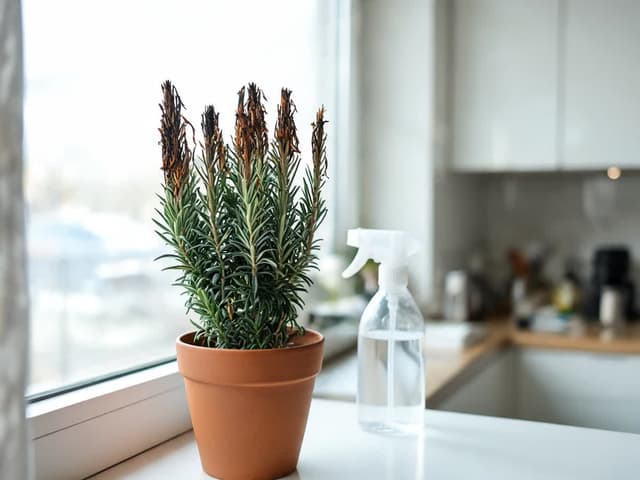
You can save rosemary if its stems still contain green tissue under the outer bark. The RHS explains that frost typically damages branch tips and the most exposed side of the plant first. Avoid hard pruning immediately after a freeze.
Follow this order of steps:
Do not cut anything back while frost risks remain. The RHS advises pruning damaged sections only after the threat of frost has passed. Brown branches help shelter lower growth during subsequent cold nights.
Do the scratch test. Lightly scratch the bark of a branch with a fingernail. Underneath, green means living tissue; brown or black means dead tissue (UF/IFAS). Test from top to bottom until finding green.
Prune back only to healthy wood with active buds or foliage. The RHS instructs gardeners to cut back to an undamaged lateral shoot or bud. For rosemary, the RHS adds another caution: do not cut into old, bare wood. The plant rarely recovers from severe cuts into old stems.
Wait for spring growth before assuming the plant is dead. If the scratch test reveals brown tissue all the way down to the base on every branch, the plant has died.
Brown leaves during winter stem from three causes, distinguished by the condition of the potting soil:
Soil has stayed wet for days: suspect root damage. Remove the plant from its container and inspect the root system. Dark, mushy roots indicate root rot.
Soil is dry, plant is indoors: dry indoor air or insufficient sunlight. Water only if the top 2 inches (5 cm) of soil are dry, and relocate the plant.
Soil is neither soggy nor dry, browning appeared immediately after a frosty night: cold damage. Follow the four steps outlined above.
Frequently asked questions
Can I prune rosemary before winter?
No. Magazine kraut&rüben explains that freshly cut stems become more vulnerable to cold, and the RHS recommends pruning rosemary after flowering. Before winter, harvest only light sprigs for cooking. Reserve shaping and structural pruning for after flowering once all frost risks have passed.
Does snow harm rosemary?
Snow generally provides protection. University of Illinois Extension explains that a blanket of snow insulates the plant against severe temperatures. The real danger comes on bitterly cold nights without any snow cover on the ground. On those nights, protect in-ground rosemary with horticultural fleece.
Can I store rosemary in a dark garage for the winter?
Yes, provided temperatures stay close to 32 °F (0 °C). Mein schöner Garten explains that rosemary kept in the dark usually drops its leaves and leafs out again in spring. The garage must remain cold: the same magazine advises dark storage only when temperatures stay near 32 °F (0 °C). Water minimally, just enough to prevent the root ball from drying out entirely.
Can supermarket rosemary survive winter outdoors?
It struggles significantly. Supermarket herb pots usually pack multiple young seedlings crowded into very little soil, and young plants suffer the worst frost injury (RHS). During their first winter, keep these plants protected from freezing temperatures. Magazine kraut&rüben advises waiting until the following spring to plant newly bought rosemary out in the garden.
Checklist before the next frosty night
On the afternoon before a freeze, check four things: containers placed against a wall and lifted off cold surfaces, soil free of standing water, protective fleece ready for in-ground shrubs, and no recent pruning cuts. If the plant turns brown the next morning, wait until the frost period ends, perform the scratch test, and cut back only to healthy, living wood.
Related articles
How to Care for Syngonium: Light, Watering, Cuttings, and Pests
How to care for syngonium indoors: bright indirect light, watering when the soil surface dries, 64 to 81°F (18 to 27°C), and 40 to 60% humidity. Also cover water cuttings, thrips, yellow leaves, and pet toxicity.
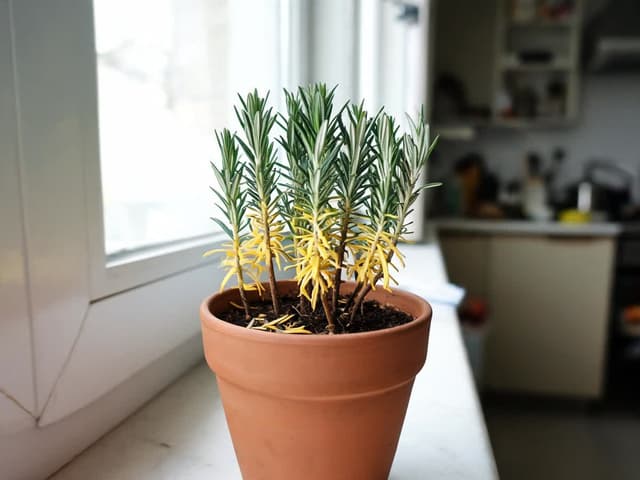
Rosemary Leaves Turning Yellow: Causes and Solutions
Rosemary with yellow leaves usually has overly wet roots. Check where the yellowing appears to see if it stems from wet roots, low light, spider mites, powdery mildew, or normal leaf shed, and learn how to save the plant.
Is Your Rosemary Dying? How to Save Soap-Burned Rosemary
Rosemary with soap-burned leaves can usually be saved: the damage stays on the affected needles. Rinse the leaves, wait a week, scrape the stems, and prune only what is brown inside.