Pothos Leaf Turning Yellow: How to Find the Cause and What to Do
Yellow streaks on golden pothos leaves are the plant's natural color. An old leaf yellowing one at a time, with new growth at the vine tip, is normal shedding. Soft leaves with wet soil, pale foliage near a window, or a wilted plant after a trip require different action. See the test for each cause.
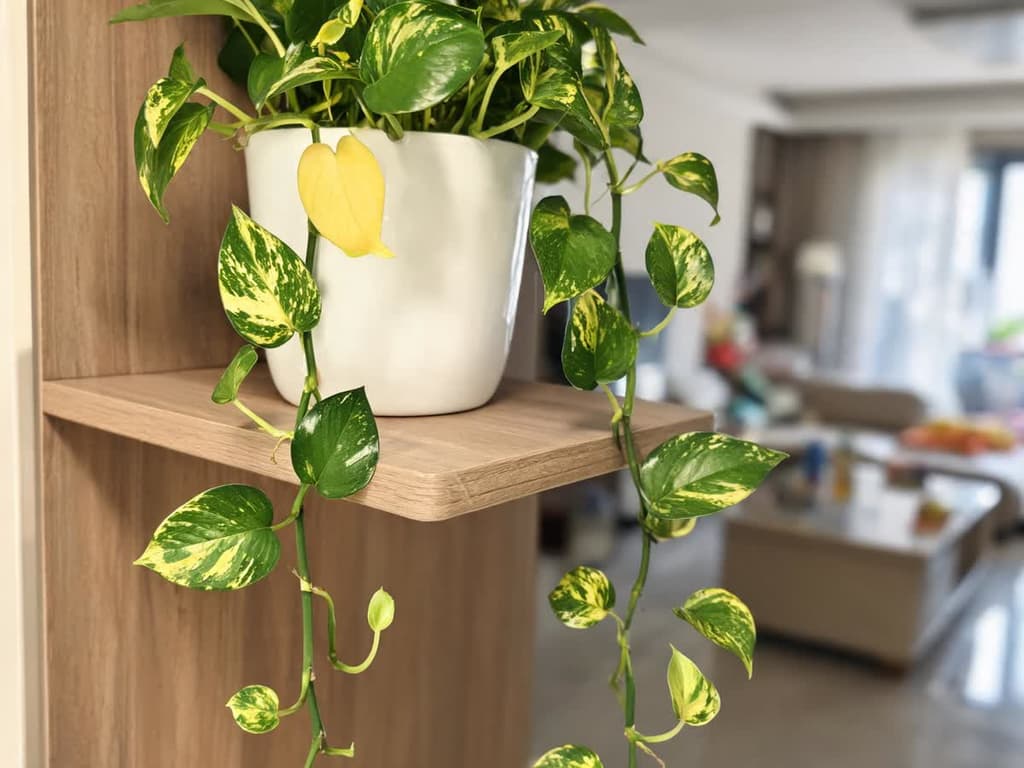
A pothos with yellow leaves is not always sick. First, check whether the yellow belongs to the plant: golden pothos has yellow streaks from the moment the leaf unfurls, and Neon, a cultivar (a variety developed through cultivation), is entirely yellow. Next, look at where the leaf is located. One old leaf yellowing at a time, while the tip of the vine pushes out a new green leaf, is just the pothos shedding an old leaf.
Four signs call for action: multiple yellow leaves at the same time, and a yellow, soft leaf when the soil is wet. Pale leaves near a window and tiny dots or cottony webbing on the underside of the leaf also call for action. Three tests separate the causes, in this order. First, which leaf turned yellow. Second, how the soil feels 2 inches below the surface. Third, if both answers point to an issue, the condition of the roots.
Quick summary:
Over time, old pothos leaves turn yellow and drop, and the foliage stays concentrated at the tips of the vines (NC State Extension).
Overwatering is the most common cause of yellow leaves on houseplants, and in pothos it rots the roots (Clemson HGIC).
A black spot on the leaf indicates that the soil stayed wet for too long (SDSU Extension).
When in doubt between watering and waiting, wait: Penn State says pothos does better too dry than too wet (Penn State Extension).
A yellow leaf will not turn green again. Prune it off once it turns completely yellow.
Cultivar coloration or yellowing leaf: how to tell them apart
On pothos, yellow in streaks or irregular patches, present from the moment the leaf opens, is the plant's natural color. Golden pothos has green leaves with chartreuse streaks. NC State also lists 'Lime', with chartreuse foliage, and 'Neon', with yellow foliage (NC State Extension). The University of Wisconsin describes 'Neon' as having all yellow leaves (Wisconsin Horticulture).
Yellowing that is not natural to the cultivar follows a different pattern. A leaf that was once green loses its green color entirely, in a uniform way, turning pale yellow. This yellow spreads within a few days, and the leaf often turns soft or dry. A cultivar's natural streaks do not change overnight, and the leaf stays firm and glossy.
Under low light, the yellow variegation fades and the foliage turns greener. NC State and the University of Wisconsin link low light to the loss of variegation (the bands of another color on the foliage). 'Marble Queen' has white variegation rather than yellow: on this variety, yellow is always a sign to investigate.
Pothos yellow leaves diagnosis table
Check first which leaf turned yellow, then inspect the soil, and only then adjust your watering, light, or fertilizer.
What you see | Where it appears | One-minute test | Probable cause | What to do |
|---|---|---|---|---|
One yellow leaf at a time, entirely yellow | Oldest leaf, close to the pot | Is the tip of the vine putting out a new, firm green leaf? | Natural leaf shedding (normal) | Nothing. Snip it off once it is entirely yellow |
Yellow, limp leaves, drooping vines | Lower leaves first | Is the soil damp 2 inches below the surface? Is there standing water in the saucer? | Overwatering | Stop watering and unpot the plant today to check the roots |
Yellowing with black patches or dark edges | Multiple leaves | Does the soil stay soggy for days after watering? | Soil stayed wet for too long | Let the soil dry out and inspect the roots |
Yellow, dry, wilted leaves | Entire plant | Does the pot feel light? Has the soil pulled away from the pot walls? | Underwatering | Water slowly until water drains out the drainage hole |
Pale or yellow leaves that dry out | Vines closest to the window | Does direct sunlight hit the plant at any point during the day? | Too much light or direct sun | Move it out of direct sunlight |
Yellow streaks fading, leaves turning greener | New growth | Is the plant sitting in a dark corner far from the window? | Low light | Move it closer to the window, out of direct sun |
Whole plant looks paler, new leaves are smaller | Entire plant | Has it been months without fertilizer? | Lack of fertilizer | Fertilize during the growing season |
Lower leaves yellowing and roots poking out the drainage hole | Base of the pot | Are roots tightly circling the root ball (the block of soil and roots that slips out intact)? | Root-bound | Repot into a slightly larger container |
Pale speckles or white cottony tufts | Underside of the leaf and leaf axils (where the leaf stem meets the vine) | When you tap the leaf over a white sheet of paper, do tiny dots crawl around? | Spider mites (dots) or mealybugs (cottony tufts) | Isolate the plant from others and treat the pest |
Brown spots with dry tips and no surrounding yellow ring have other causes. The most common are soil left dry for too long and accumulated fertilizer salts. The pothos with yellow leaves page in Bloom's plant directory lists 21 possible causes, each with its own remedy.
Old bottom leaf turning yellow: normal pothos shedding
An old leaf yellowing while the tip of the vine grows is the pothos shedding a leaf. The University of Wisconsin notes that older leaves naturally turn yellow and drop. Over the years, most leaves remain at the tip of the vine (Wisconsin Horticulture). Iowa State notes that the loss of a few old leaves on a healthy plant is not a cause for concern (Iowa State Extension).
Leaf shedding is no longer normal in three situations:
several leaves turn yellow in the same week;
the yellow leaf appears in the middle or at the tip of the vine, rather than on the oldest section;
the tip of the vine stops producing new leaves.
A long, bare vine near the base of the pot is the natural result of this shedding over time. Pruning fixes its appearance: the University of Wisconsin notes that vines can be cut back to 2 inches (5 cm) above the soil line if needed.
Overwatering vs. underwatering your pothos: how to tell
Both overwatering and underwatering cause yellow leaves and drooping stems, which is why the same pothos can seem to ask for both things. Iowa State explains the trap: roots rotting in waterlogged soil can no longer transport water to the leaves. The plant wilts, and the person waters it even more (Iowa State Extension).
If you watered less, then watered more, and saw your pothos get worse, root rot is likely setting in. The soil reveals the cause much better than the leaves.
Signs of overwatering
The soil is moist 2 inches (5 cm) below the surface and the leaves are limp. Penn State advises watering only when the soil is dry (Penn State Extension).
Water is standing in the saucer beneath the pot.
Black spots appear on the leaf. SDSU notes that constantly moist soil rots the roots. According to the same source, black spots are a sign of overwatered soil (SDSU Extension).
The leaf edge darkens. NC State links black edges and root rot to overwatering (NC State Extension). The University of Wisconsin adds that black edges also come from underwatering and fertilizer salts. Count a dark edge as overwatering only when the soil is damp 5 cm below the surface.
Tiny gnats appear flying over the soil. The larva of this fungus gnat lives in moist soil and feeds on roots.
Signs of underwatering
The pot feels very light when lifted.
The potting mix is dry all the way to the bottom and has pulled away from the inner walls of the container.
The foliage is wilted and the yellowed leaves feel papery and dry, not soft. Dry, brown edges are also a sign of soil kept dry for too long (SDSU).
The plant bounces back within hours of watering. Penn State notes that underwatering causes the foliage to droop temporarily.
When underwatered, water slowly until the entire soil volume is moist and water runs out the drainage hole. If water rushes down the sides of the pot without soaking into the soil, water in two or three rounds, waiting a few minutes in between. Iowa State describes this occurrence: water runs around the shrunken root ball and straight down the sides of the pot.
When torn between watering and waiting, wait an extra day or two. Penn State writes that pothos tolerates being kept too dry far better than being kept too wet. Wilting from dry soil clears up with a single drink. Rotted roots do not come back.
Yellow, wilted pothos after a trip
If you returned from a two-week vacation to a pothos with yellow, wilted leaves, underwatering is the most likely culprit. Verify before watering: a featherlight pot and bone-dry soil down to the base point to underwatering. Water thoroughly until water drains out the bottom and wait a few hours to a day. The wilted green leaves will perk back up. The ones that have already yellowed will stay yellow: prune them off once they are fully yellow.
If the soil was damp when you returned, look for a different cause. Soil stays wet for two weeks only if someone watered the plant while you were gone or if the pot sat in a saucer filled with water. With wet soil, follow the steps for treating root rot.
How to save a pothos with root rot
Root rot is serious: Iowa State notes that a plant with root rot rarely recovers. You can still save the pothos as long as firm roots remain or you have at least one piece of healthy vine, because the stem roots again. With wet soil and limp leaves, take the plant out of the pot and look at the roots. Healthy roots are firm and light-colored. Clemson describes diseased roots as brown to black, sometimes mushy (Clemson HGIC). The University of Wisconsin adds another sign: the roots may be gone entirely.
Gently tease the old, wet potting mix away from the roots using your hands.
Trim off any dark, mushy portions with clean shears, cutting back until you reach firm, healthy root tissue.
Repot in fresh, well-draining soil, in a pot with a drainage hole at the bottom. Clemson links rot to overwatering and poorly draining soil (Clemson HGIC).
Water again only when the soil has dried out 2 inches below the surface, and empty the saucer as soon as water finishes draining through the pot. Penn State warns that heavy watering right after repotting adds extra stress to the plant.
When almost the entire root system is blackened and mushy, Clemson recommends discarding the plant. With pothos, before throwing it away, it is worth salvaging the healthy tips of the vines as cuttings. Pothos stems root in water or vermiculite within 3 to 4 weeks, according to the University of Wisconsin. Cut sections with two or three leaves and at least one node each. The node is the joint on the vine where a leaf and an aerial root (the short, brown nub growing along the stem) emerge.
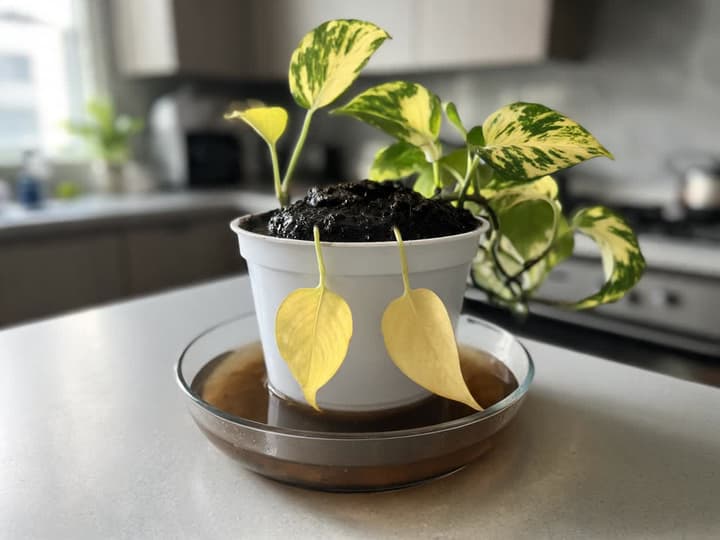
Pothos growing in water with yellow leaves
A pothos grown in a container of water turns yellow too. Two causes are likely: stagnant water and a lack of nutrients. Illinois Extension advises changing the water when it begins to look cloudy (Illinois Extension). A brown, mushy root in the water is rot: cut off that part and change the water. Clean water does not provide the nutrients that fertilized soil supplies, which is why a plant kept in water for months tends to turn pale.
The same Illinois Extension guide cautions that roots developed in water are fragile and struggle when transitioned to soil. If you plan to transfer your pothos into a pot of soil, move it as soon as the roots emerge, before they grow excessively long. The consulted sources do not specify an exact target root length for the move.
Pale leaves near a window: too much light
Pale or yellow leaves on the side facing the window indicate too much light. Penn State says direct sun yellows pothos leaves and recommends bright light without direct sun (Penn State Extension). SDSU says pale leaves are a sign of too much light (SDSU Extension).
Move the pot out of direct sunlight or put a sheer curtain on the window. In Brazil, a north-facing window gets the most sun throughout the day, and a south-facing one gets the least. Leaves yellowed by the sun do not recover, but new leaves come in green.
Fading yellow streaks: low light
In low light, golden pothos loses its yellow streaks and the leaf turns greener. Penn State says that pothos survives for a long time in low light, but loses its variegation or leaf shine. SDSU adds that the variegation returns when the plant is moved to a brighter spot (SDSU Extension).
Move the pot closer to a bright window, keeping direct sun off the foliage, and watch for new leaves: new growth shows whether lighting conditions have improved.
Cold temperatures, fertilizer, and root-bound plants
Cold. The University of Wisconsin says cold and sudden drops in temperature cause brown patches in the center of the leaf. Clemson advises keeping pothos away from air conditioning drafts and, in winter, from window sills (Clemson HGIC). Penn State recommends 60 to 80 °F (16 to 27 °C), and the University of Wisconsin, 70 to 90 °F (21 to 32 °C). Keep pothos between 70 and 80 °F (21 to 27 °C), a range that fits both. In Brazil, the cold risk runs from June to August, mainly in the South and the mountains of the Southeast.
Fertilizer. Clemson cites a lack of fertilizer, alongside overwatering, as a frequent cause of yellow leaves on pothos. The sign is an overall paler plant and smaller new leaves. NC State recommends fertilizing every two months, except in winter (NC State Extension). Penn State fertilizes more: once a month in winter and every two weeks the rest of the year. Here, NC State applies, along with the University of Wisconsin, because too much fertilizer leaves salt in the soil. In Brazil, the fertilization period runs from September to May. Excess fertilizer also causes harm: a white or gray crust on the soil or the rim of the pot is accumulated salt (Clemson HGIC). If you see the crust, stop fertilizing and water slowly with clean water until it drains through the hole to flush the salt away. Epsom salt only helps with magnesium deficiency, and the yellow leaves guide shows how to identify this deficiency.
Rootbound plant. Roots growing out of the drainage hole and wrapped around the root ball leave little soil to hold water and fertilizer. The sign is yellowing on the lower leaves. Penn State recommends repotting the pothos every year, in spring, into a slightly larger pot. In Brazil, spring runs from September to November.
Specks or cottony patches on the undersides: pests
When the yellow appears as tiny specks rather than across the entire leaf, the cause is usually pests. According to the University of Wisconsin, the most common indoor pothos pests are mealybugs and scale. Scale looks like small, bark-colored bumps clinging to the stem and leaf. Spider mites appear occasionally (Wisconsin Horticulture). Turn the leaf over and inspect the underside in good light.
Mealybugs. They appear as white cottony tufts in the leaf axils, on the undersides, and even on the roots. The leaf becomes sticky from the sugary liquid they secrete. The mealybug guide shows how to remove the tufts.
Spider mites. The leaf becomes speckled with light dots. To find the mite, tap the leaf over a sheet of white paper: if crawling specks fall off, it is a mite (Iowa State Extension). The complete treatment is in the guide to spider mites.
Is your plant really a pothos?
Three plants are often confused with pothos, and each requires its own care routine. True pothos is Epipremnum aureum, also known as devil's ivy.
Heartleaf philodendron or philodendron brasil (*Philodendron hederaceum*): also has heart-shaped leaves, similar to pothos. Penn State gives two signs to tell them apart. The leaf stem of the pothos has a groove. The new philodendron leaf emerges from a sheath that dries up and falls off (Penn State Extension). The guide on philodendron with yellow leaves covers this plant.
Satin pothos (*Scindapsus pictus*): dark green leaf with silver patches. It belongs to another genus and requires slightly moist, well-drained soil, without the dry period that pothos tolerates between waterings (NC State Extension).
*Epipremnum pinnatum*: another species in the same genus. NC State notes that pothos was once treated as a cultivar of it.
If your plant came without an identification label, verify the species before altering your watering routine. The Bloom app identifies plants from a simple photo of the leaf.
Should I cut yellow leaves off my pothos?
Yes, once the leaf has turned entirely yellow. A yellow leaf will not turn green again, and removing it will not harm the plant.
Snip the leaf stem flush with the main vine using clean shears. Wear gloves: the University of Wisconsin cautions that pothos sap can irritate sensitive skin. Do not trim off green leaves "just in case," as healthy green foliage continues to feed the plant.
Collect the trimmed leaves away from dogs and cats. The ASPCA classifies pothos as toxic to dogs and cats: eating the plant causes oral irritation, drooling, vomiting, and difficulty swallowing (ASPCA).
Trimming leaves does not fix the cause. If the leaf turned yellow from overwatering, the next one will turn yellow too until you treat the roots. On a monstera with yellow leaves, another plant in the same family, a bottom leaf yellowing one at a time is also normal leaf shedding.
Frequently asked questions
Will a yellow pothos leaf turn green again?
No. Correcting watering, lighting, or fertilizer saves the new leaves, but a leaf that has already yellowed stays yellow. Snip it off once it turns completely yellow. The clear sign that your fix worked is the next new leaf: it must emerge green, firm, and equal to or larger than the previous leaf.
What does an overwatered pothos look like?
The lower leaves turn limp and yellow, sometimes showing black patches. The vines droop, and the potting mix stays damp 2 inches below the surface. Inspected roots show rot as soft, mushy, brown-to-black tissue. The fix involves trimming away rotten roots, refreshing the soil, and holding off on water until the soil is dry 2 inches down.
Are yellow leaves on pothos always caused by overwatering?
No. While overwatering is the most frequent trigger, dry soil, direct sunlight, low light, lack of fertilizer, cold drafts, and pests can also turn leaves yellow. Normal shedding of older leaves turns them yellow as well. Testing the soil 2 inches down, along with checking for limp leaves, separates overwatering from the other causes.
Is my pothos dying?
Not if the stems stay firm and the vine tips continue pushing out new foliage. Lift the plant out of the pot and check the roots. If you see firm, pale roots, adjust your watering and lighting, and keep the plant away from cold air and air conditioning drafts. If almost all the roots are rotted, take cuttings from the healthy vine tips and root them in water.
Your first step with your pothos
Start with the pattern of the yellow color. Yellow streaks present since the leaf unfurled are the pothos's natural color. A bottom leaf, one at a time, with new leaves at the tip of the vine: leave the plant alone. A soft leaf with damp soil: check the roots today. A wilted leaf with a light pot: water slowly until water drains through the hole. Yellow foliage appearing on any houseplant follows the same three questions in the yellow leaves guide. When symptoms go beyond yellowing, the guide on what's wrong with my plant helps organize the warning signs for any potted plant.
Related articles
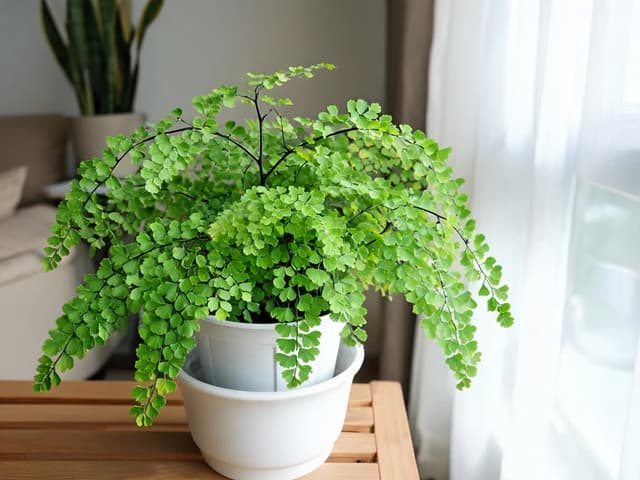
How to Care for a Maidenhair Fern: Light, Water, and Revival Tips
Learn how to care for a maidenhair fern indoors: bright indirect light, consistently moist soil, high humidity, and how to revive it if it dries out completely.
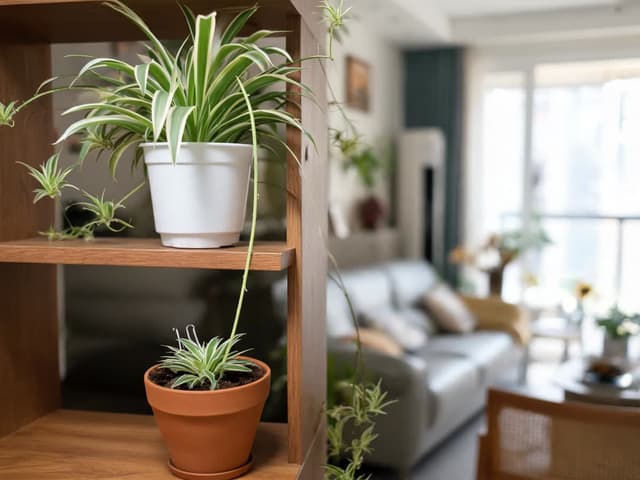
How to Propagate Spider Plants: Root the Pup Before Cutting
The safest spider plant cutting comes from a pup still attached to the mother plant: rest the plantlet on soil in a small pot, wait for roots to establish, and only then cut the stolon. Learn when the pup is ready, whether rooting in water is worth it, how to divide the clump, and why plants fail to produce babies.
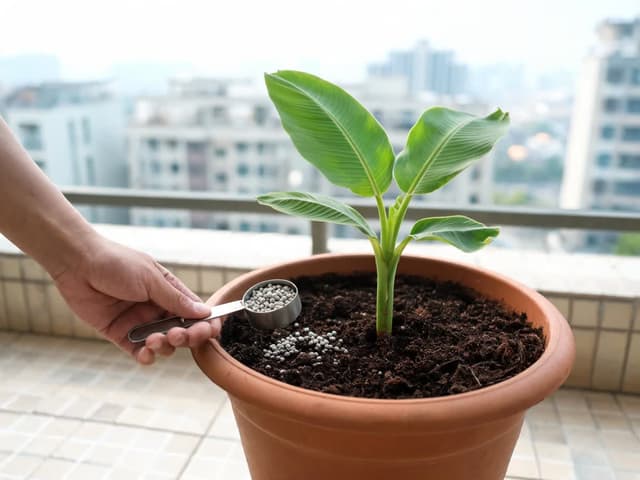
Banana plant fertilizer: fertilizing potted and backyard plants
Banana plant fertilizer needs more potassium than nitrogen, in a 3-1-6 ratio. For a potted plant on a balcony, use the label dose in spring and summer. In the backyard, fertilize every 2 months, adjusting the amount by mat age. Learn the formula, timing in Brazil, and signs of deficiency or excess.