Philodendron Care: Vining, Upright, and Collector Types
Philodendron is a plant group with three growth habits, and each habit requires different care. Learn how to identify yours, when to water using the finger test, where to place the pot, and what to do with aerial roots.
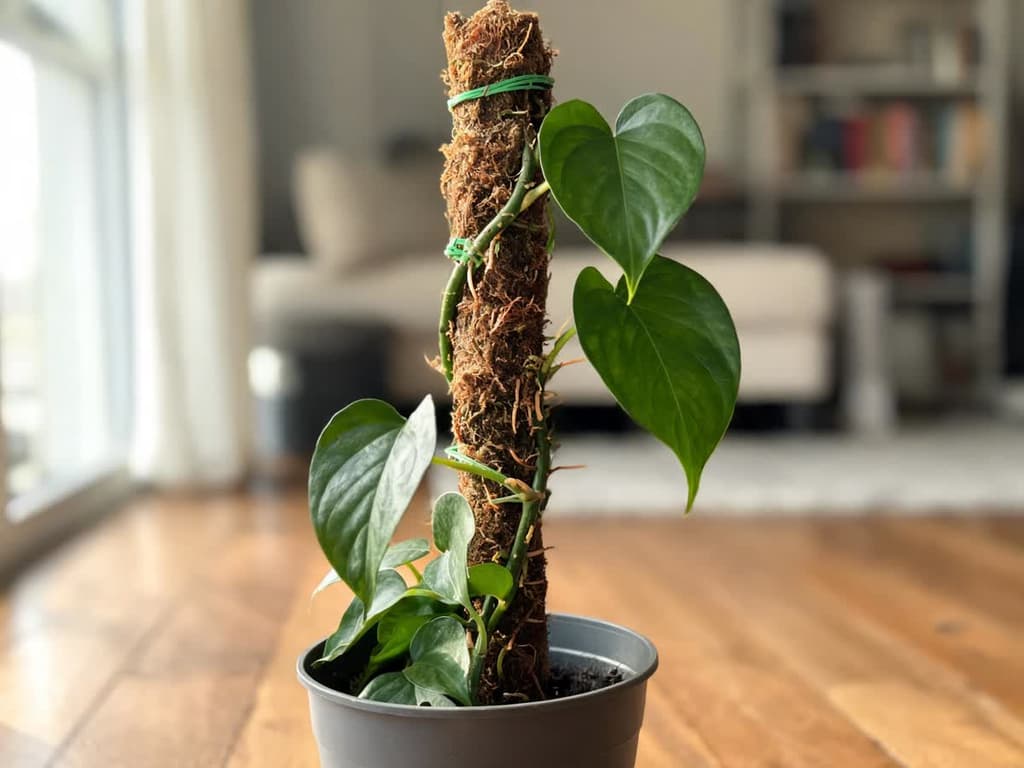
Philodendron care in short: bright light without direct midday sun and watering when the top inch of soil dries out. The pot needs a drainage hole for water to drain. These three rules apply to almost all philodendrons. The rest depends on a question that comes first: which philodendron do you have.
Philodendron (Philodendron) is the name of an entire genus, with species that grow in very different ways. There is the heartleaf vine trailing down a bookshelf and there is the massive split-leaf plant occupying a corner of the living room. And there are collector species, sold by name. The climber wants a pole to climb. The upright plant wants space and more light. The collector plant wants humidity in the air.
Quick summary:
Find out your philodendron's growth habit before changing any care routine: climbing, upright, or collector.
Water using the finger test, not the calendar. The soil dries in the top inch and stays moist deeper down.
A climber that climbs up a moss pole produces larger leaves. Trailing, it keeps its leaves small.
Aerial roots do not need to be cut. Pressed against a pole, they help the plant climb.
Every philodendron contains calcium oxalate crystals, which irritate the mouth, and harms cats and dogs that chew the leaf.
Which is your philodendron: climbing, upright, or collector?
Philodendron (Philodendron) is a genus of tropical plants in the arum family, native to Central and South America. Indoors, it appears in three forms: the heartleaf climber, the upright type with large lobed leaves, and collector species. The form determines the support, space, and humidity the plant requires.
The University of Florida (UF/IFAS) divides the genus into three groups in its philodendron production guide. These are: climbers, non-stemmed philodendrons that grow in a rosette, and those with a shrub- or tree-like growth habit. Iowa State University simplifies it into two, climbing and non-climbing, and treats collector species separately. For home care, three groups are enough:
Growth habit | How to recognize | Examples | What changes in care |
|---|---|---|---|
Climber | thin, long stems, small heart-shaped leaves, brown roots emerging from nodes | heartleaf philodendron (P. hederaceum), including the lime-green variegated variety 'Brasil' | pole for climbing or hanging pot |
Upright | short, thick stem, all leaves emerging from the same point, large split leaves | tree philodendron (P. bipinnatifidum), xanadu | space around it and more light |
Collector | sold by species or cultivar name, leaves with unusual shape or color | silver sword (P. hastatum), pink princess | humidity in the air and steady warmth |
Two very similar plants are not philodendrons. Pothos belongs to the genus Epipremnum and the Swiss cheese plant belongs to the genus Monstera. All three are in the same family and care is similar, but not all information about one applies to the others.
If your philodendron arrived without a label, a photo in the Bloom app identifies the species. Photo identification is included in the free tier, which offers 2 identifications per month.
The care profiles for each species below provide a watering interval in days. This number is a reference average. The soil finger test, explained later on, decides the actual watering day.
Climbing philodendron: moss pole and larger leaves
The climbing philodendron produces larger leaves when it has something to climb. UF/IFAS notes that the heartleaf philodendron, when climbing a tree or other vertical support, produces leaves 30 cm (12 inches) long or more. The same page states that, indoors, the size of the plant depends on the height of the support and how it is trained.
The explanation lies in the family's botany. A 1990 study published in the American Journal of Botany described that, in aroids, each new leaf tends to emerge larger than the previous one. In some groups, including a section of the genus Philodendron, this change responds to the stem's contact with a support surface.
Hanging in a pot, the heartleaf philodendron grows downward and keeps its leaves small, the size they were when purchased. It is one of the trailing plants most tolerant of sunless corners. If you want larger leaves, give it a support pole.
A moss pole is a stake wrapped in moss, inserted into the pot. To set it up:
Insert the pole deep into the pot, close to the stem, until it stands upright firmly.
Place the longest stem against the pole and secure it with plant ties, a soft tape designed for plants, every 2 or 3 leaves, without tying too tightly.
Direct the aerial roots of that stem toward the moss.
As the stem grows, secure the new growth. Unattached stems can be cut and used as cuttings.
NC State Extension states that the silver sword, which also climbs, needs a moss pole or trellis.
Philodendron aerial roots: prune or guide?
Aerial roots do not need to be cut. Iowa State explains that most philodendrons produce these roots to climb trees in nature. Indoors, they help the vine climb the pole and help support the plant. The same extension gives three options:
leave the roots as they are;
guide each root toward the pole, or insert the tip into the potting soil, where it will root and anchor the plant;
cut flush with the stem using sharp shears if you dislike the appearance. According to Iowa State, removing aerial roots does not harm the plant.
For a climber on a pole, guiding is the best choice. Roots anchored in the moss keep the stem in contact with the support.
Upright philodendron (tree philodendron): space and more light
The tree philodendron (Philodendron bipinnatifidum) is the large, split-leaf philodendron that many people recognize from gardens. It is native to Brazil. NC State records its origin in Southeast and South Brazil, eastern Bolivia, and northeastern Argentina.
It needs space before anything else. NC State describes the plant as 1.2 to 3 m tall and 1.8 to 3 m wide. Iowa State warns that non-vining philodendrons can grow twice as wide as they are tall. In an apartment, set aside a corner for the tree philodendron with 2 m of clear width, away from doors and hallways.
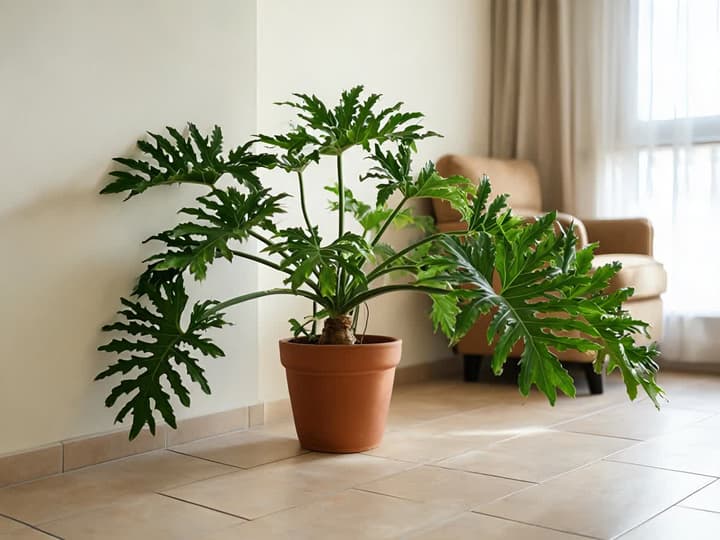
Tree philodendron also requires more light than a climber. NC State says it prefers bright light and tolerates low light. In commercial production, UF/IFAS grows tree philodendron under more light than other philodendrons. Under low light and overwatering, according to NC State, new leaves emerge smaller and with fewer splits, or without any splits at all.
In 2018, a study published in the journal PhytoKeys proposed moving tree philodendron and xanadu to another genus, Thaumatophyllum. NC State still uses the name Philodendron and lists Thaumatophyllum as a previous name. If you come across both names, it is the same plant.
Xanadu is the compact version of the group. NC State gives 0.9 to 1.5 m in height and width and says the leaves turn yellow with overwatering.
Collector philodendrons: humidity in the air and steady warmth
Collector philodendrons demand the most from their environment. NC State describes the silver sword (P. hastatum) as native to southeastern Brazil, growing in the humid shade beneath forest trees. The fact sheet calls for bright indirect light, high humidity, and an average temperature between 18 and 29 °C, with no cold drafts.
The pink princess is a cultivar of P. erubescens, a species from Colombia. For it, NC State gives the same range of 18 to 29 °C, high humidity, and no direct sun. Colorful leaves require more light than green leaves: UF/IFAS says that colorful-leaved philodendrons need more light to maintain their color.
The difference compared to the common climber is humidity. NC State says that heartleaf philodendron tolerates dry air. For silver sword, the same extension recommends a humidifier or a tray with pebbles and water under the pot in dry climates. In Brazil, dry air means running air conditioning and the dry winter of the Central-West.
To make a humidity tray, fill a wide saucer with pebbles and water up to just below the top of the stones. Rest the pot on the pebbles. The bottom of the pot must not sit in the water.
Where to place your philodendron: light
The best spot for a philodendron is near a bright window, outside the reach of direct sun. Iowa State explains that philodendrons come from tropical forest understories and prefer indirect or filtered light. NC State warns that direct sunlight scorches the foliage of silver sword and pink princess.
In Brazil, an east-facing window is the safest because it receives only weak morning sun. A north-facing window receives sun most of the day. There, the philodendron does well behind a sheer curtain or in a spot in the room where the sun does not hit the leaf. A south-facing window receives almost no direct sun and works for the climber.
UF/IFAS measured how much light philodendrons tolerate. Most tolerate 75 foot-candles, around 800 lux. At 150 foot-candles or more, around 1,600 lux, the plant maintains leaf color and size. Foot-candles and lux are units of light intensity, and a light meter app on a phone provides an approximate reading.
With light below that, each leaf stem stretches out and the plant becomes sparse, with empty space between leaves. UF/IFAS describes this symptom as a result of low light. Heartleaf philodendron handles dark corners best. On the list of low-light plants, it is the common climber most tolerant of staying far from a window.
How to water a philodendron
Water your philodendron when the top 2.5 cm (1 inch) of soil is dry to the touch. This measurement comes from UF/IFAS for heartleaf philodendron and appears again on the university's page about upright philodendrons. Stick your finger in up to the second knuckle. If it comes out dry, water; if it comes out moist or with soil clinging to it, wait another day or two and test again.
Iowa State notes that philodendrons like "evenly moist" soil. NC State recommends keeping the soil slightly moist. Both instructions apply together. The surface dries out, but the middle and bottom of the pot remain moist. Constantly waterlogged soil is what harms the plant.
When watering, soak all the soil until water runs out the drainage hole of the pot. After 15 minutes, empty any water left in the saucer. Iowa State recommends not leaving the plant in waterlogged soil or in a saucer with standing water.
Frequency changes with heat, light, and pot size, which is why there is no set number of days. NC State instructs to reduce watering in winter, which in Brazil runs from June to August. The finger test already accounts for this change, because soil takes longer to dry out in cold weather.
Overwatering rots roots. The plant wilts even in wet soil, leaves turn yellow, and the base of the stem turns dark.
Soil, pots, and repotting philodendrons
Standard, well-draining potting soil works well for philodendrons. That is Iowa State's recommendation. UF/IFAS adds that a light soil mix prevents the plant from becoming waterlogged. The pot must have a drainage hole in the bottom.
Philodendrons like to be slightly root-bound in their pots. Iowa State explains that this allows soil to dry out faster between waterings. Repot when roots emerge through the drainage hole or when soil dries out so fast that you cannot keep up. Use a pot only one size larger than the current one, with fresh soil.
The tree philodendron requires an extra care step. NC State states that it does not tolerate salt buildup in the soil. The factsheet instructs to flush the soil with plenty of water, let the plant sit in the rain, or water with distilled water.
Fertilizing philodendrons: how much and when
Fertilize the philodendron only when it is putting out new leaves. In Brazil, this is in spring and summer, from September to March. In winter, do not fertilize.
Two universities differ on frequency. Iowa State suggests light feeding once or twice a month with balanced fertilizer. UF/IFAS suggests fertilizing every 3 to 4 months. Follow UF/IFAS, the less frequent schedule, because UF/IFAS also notes that excess fertilizer causes brown, curling leaf tips. Indoor plants grow more slowly than greenhouse plants and use less fertilizer.
The three numbers on the label represent the proportions of nitrogen, phosphorus, and potassium. What each does for the plant is detailed in how to fertilize houseplants.
Temperature: when cold weather harms philodendrons
Below 10 °C, heartleaf philodendron already suffers, according to UF/IFAS. In its production guide, the same university notes that a few hours between 0.5 and 4.5 °C turn lower leaves yellow.
For collector varieties, NC State's range is 18 to 29 °C. According to NC State, potted tree philodendrons kept on a porch or balcony should be brought indoors when nighttime temperatures drop below 15 °C. In southern Brazil, this happens through much of the winter.
Open windows on cold nights and direct blasts of air conditioning have the same effect. Move the pot away from both.
Yellow leaves, brown tips, and spots on philodendrons
Each symptom points to a different cause. The table gathers what UF/IFAS lists for philodendrons:
What you see | Probable cause | What to do |
|---|---|---|
Yellow leaf, moist soil | overwatering | wait for top inch of soil to dry before watering again |
Yellow leaf, plant in a dark corner | low light | move closer to a bright window |
Brown, curling leaf tip | excess fertilizer | stop fertilizing and flush soil thoroughly with water |
Burn mark in the center or tip of the leaf | direct sunlight | move out of direct sunlight |
Dry leaf edges in irregular patches | underwatering combined with intense light | water using the finger test and reduce the light |
Lower leaves yellow after a cold night | cold | move away from windows and air conditioning |
A single yellow leaf here and there at the bottom of a long stem is usually just an older leaf reaching the end of its life cycle. If the plant continues putting out new leaves at the top, there is no issue.
On anthurium, which is in the same family, brown tips with yellowing leaves are also usually caused by fertilizer. The remedy is the same: flush the soil. To distinguish the causes of yellow leaves on any plant, the yellow leaves on houseplants guide works through targeted questions. If your philodendron's symptoms do not match the table, what is wrong with my plant begins with plant triage.
A plant that has yellowed, dried up, and lost nearly all its leaves can still be saved if a section of the stem remains green and firm. Cut that section and propagate it, as described in the propagation section below.
Mealybugs on philodendrons when you have cats at home
White, cottony bugs on stems and sticky foliage signal mealybugs. UF/IFAS lists mealybugs among the pests targeting heartleaf philodendron, alongside aphids, scales, and mites.
Iowa State recommends starting with mechanical control. Remove each mealybug and egg sac by hand, or touch each one with a cotton swab dipped in alcohol. Then, spray the plant with a strong stream of lukewarm water to dislodge any remaining insects.
This method leaves no product in the pot or in the air, which matters if you have cats or dogs. Repeat once a week until no new pests appear, checking nodes and leaf undersides carefully. Before using any product, including neem oil and other plant-derived products, consult your pet's veterinarian.
Iowa State also warns that heavily infested houseplants are difficult to clean. In that case, take cuttings from a clean section and discard the rest. How to tell mealybugs and scales apart is covered in scale insects, and other common indoor pests are detailed in houseplant pests.
How to propagate philodendrons
The vine roots easily from cuttings, which are stem sections. Iowa State recommends 8 to 15 cm (3 to 6 inch) pieces:
Cut a stem section with at least one node, the point on the stem where leaves and aerial roots emerge.
Remove lower leaves, leaving one or two leaves at the top.
Place in water or moist perlite. Perlite is a porous mineral granule sold in garden centers that holds water without becoming waterlogged. In water, change the liquid whenever it turns cloudy.
When new roots reach a few centimeters long, plant in standard potting soil.
Upright philodendrons propagate differently. Iowa State suggests carefully separating side offsets that form at the base and potting each individually. Another option is rooting a stem cutting with at least two nodes. A cutting that already carries an aerial root roots more easily, according to the same extension.
Are philodendrons toxic to cats and dogs?
Yes. The ASPCA, an animal poison control center in the United States, lists heartleaf philodendron as toxic to dogs, cats, and horses. The toxic principle is insoluble calcium oxalate, a crystal present in all parts of the plant.
The ASPCA describes oral pain and swelling of the mouth, tongue, and lips. Excessive drooling, vomiting, and difficulty swallowing also occur. For tree philodendron, NC State notes the same crystals and adds that sap can irritate the skin of anyone pruning the plant. Iowa State notes that philodendrons are also harmful to humans.
If your pet chewed a leaf, call your veterinarian. Keep the pot out of reach, and keep in mind that the tip of a trailing vine can hang down within a cat's reach.
Frequently asked questions
How often should you water a philodendron?
There is no set number of days. Water when the top 2.5 cm (1 inch) of soil feels dry to the touch, based on UF/IFAS guidelines. In summer, in a bright spot, that can take just a few days. In winter, from June to August in Brazil, soil takes longer to dry and watering is spaced further apart.
Where does a philodendron do best indoors?
Near a bright window, without direct sun hitting the leaves. In Brazil, an east-facing window is the safest. For a north-facing window, keep the pot behind a sheer curtain. Heartleaf philodendron tolerates darker corners than the others; tree philodendron needs the brightest spot in the house.
Is a philodendron good for beginners?
Heartleaf philodendron is. NC State describes the species as tolerant of low light and dry air. That is why it appears on our list of easy-care plants. Tree philodendron is easy to maintain, but requires substantial space. Collector varieties require steady humidity and warmth and demand more effort.
Do philodendrons purify the air?
Not in a way that makes a difference in a home. The idea comes from sealed-chamber tests. A 2020 review in the Journal of Exposure Science & Environmental Epidemiology ran the numbers for a home. It would take between 10 and 1,000 plants per square meter of floor space to match the air exchange of a typical building.
Should I cut yellow leaves off my philodendron?
You can cut them off. A completely yellow leaf will not turn green again. Cut the petiole flush with the stem using clean shears. First, diagnose the underlying cause using the symptom table: if the issue stems from watering or lighting, future leaves will also turn yellow.
Conclusion
Take a look at your philodendron and answer three questions. Does it have long stems that climb or trail? Does it have a short stem with large leaves emerging from a central point? Did it come with a specific species name on the label? The answers tell you whether it needs a support pole, floor space, or extra humidity.
Then, insert your finger an inch into the soil. If it feels dry, water until it drains out the bottom hole. If it feels damp, wait.
To confirm which philodendron you have, Bloom identifies the species from a photo of the leaf and sets up watering reminders. The app is available on iOS.
Related articles
How to Care for a Maidenhair Fern: Light, Water, and Revival Tips
Learn how to care for a maidenhair fern indoors: bright indirect light, consistently moist soil, high humidity, and how to revive it if it dries out completely.
How to Propagate Spider Plants: Root the Pup Before Cutting
The safest spider plant cutting comes from a pup still attached to the mother plant: rest the plantlet on soil in a small pot, wait for roots to establish, and only then cut the stolon. Learn when the pup is ready, whether rooting in water is worth it, how to divide the clump, and why plants fail to produce babies.
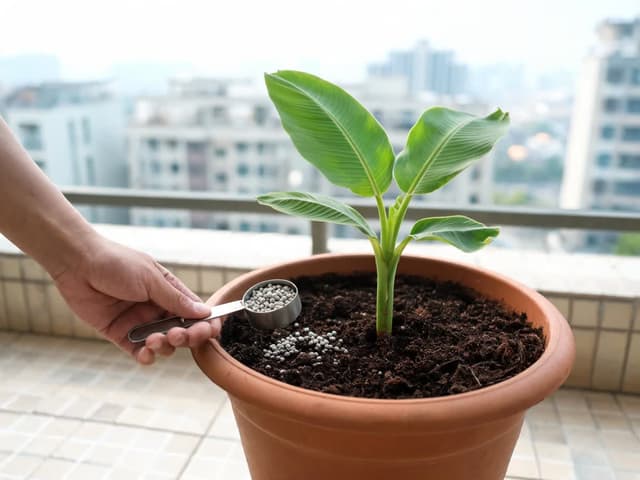
Banana plant fertilizer: fertilizing potted and backyard plants
Banana plant fertilizer needs more potassium than nitrogen, in a 3-1-6 ratio. For a potted plant on a balcony, use the label dose in spring and summer. In the backyard, fertilize every 2 months, adjusting the amount by mat age. Learn the formula, timing in Brazil, and signs of deficiency or excess.