How to Make Rosemary Bloom: When It Flowers and Why Yours Doesn't
In Brazil, rosemary blooms mainly from August to December, and no source shows it needs cold. Discover 5 reasons for bloomless rosemary, when to prune, and more.
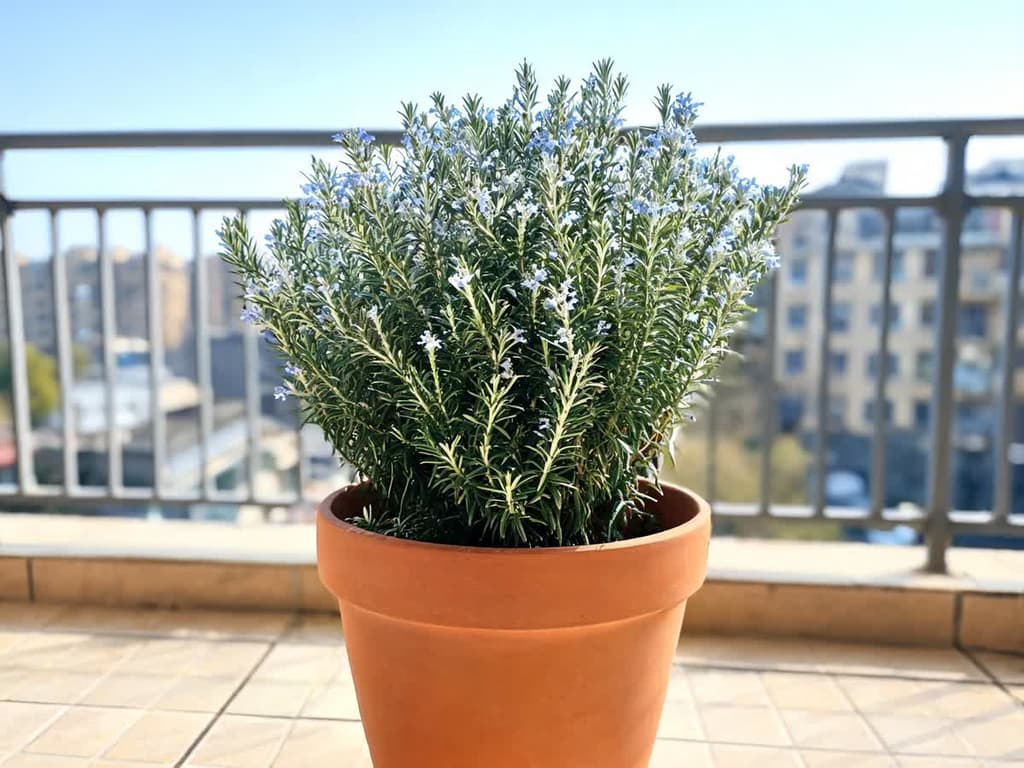
To make rosemary bloom, give it full sun, little fertilizer, and a pot that fits the root ball snugly. Prune only after the flowers fade. No source shows that it needs a cold winter. In Brazil, rosemary can bloom year-round, with more flowers from August to December. The data comes from Epagri, the agricultural research agency of Santa Catarina.
Rosemary (Salvia rosmarinus, formerly called Rosmarinus officinalis) that stays green and never blooms usually has one of five causes. Sources point to low light, too much fertilizer, an oversized pot, a young plant, or pruning at the wrong time. Each one has a fix, and none of them requires moving the pot to a freezing spot.
Quick summary:
Season in Brazil: rosemary can bloom year-round, peaking from August to December, according to Epagri.
Cold is not a proven requirement: no one has measured this, and rosemary blooms in Florida and along the coast of Santa Catarina, places with mild winters.
Too much fertilizer stops blooms: University of Wisconsin Extension (the university's growing advisory service) warns that excess fertilizer reduces flowering and fragrance.
Prune after flowering: the RHS, the UK's Royal Horticultural Society, instructs you to lightly trim right after the flowers fade, never cutting into woody parts without leaves.
Rosemary flowers are edible: only eat flowers from plants you know have not received pesticides.
When rosemary blooms in Brazil
Rosemary blooms in Brazil mainly from August to December, and flowering can continue through summer and fall. The plant can flower in any month of the year and lives for 8 to 10 years. Both data points come from Epagri, in Santa Catarina.
Calendars from Northern Hemisphere sources fall six months later in Brazil and align closely with Epagri's. In the Southern Hemisphere, winter runs from June to September.
Where | When it blooms | The same period in Brazil | Source |
|---|---|---|---|
Santa Catarina, Brazil | year-round, with most flowers from August to December | August to December | Epagri |
Florida, US (subtropical climate) | winter and spring | June to November | |
Pennsylvania, US (garden plant) | January to April | July to October | |
Southern Italy (native range) | winter and early spring | June to October |
The rosemary flower is small, two-lipped, and grows in clusters along the branches and at the tips. The most common color is light blue. There are varieties with purple, pink, or white flowers, according to the RHS. A purple or pink flower is a characteristic of the variety, not a sign of disease.
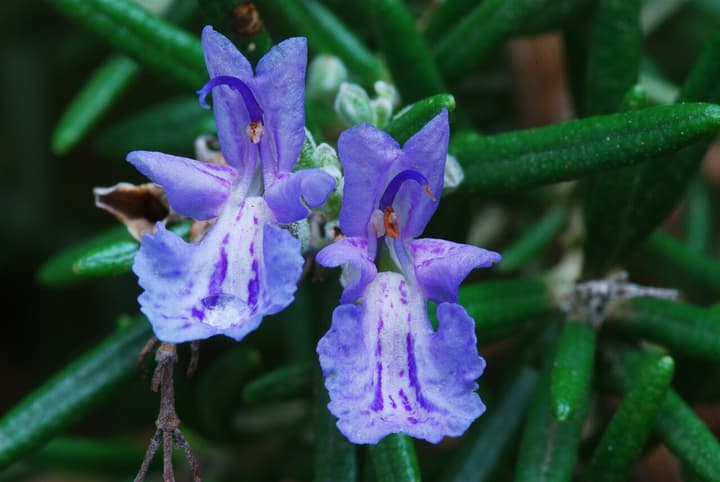
The rosemary care card summarizes light, watering, and plant size:
Does rosemary need cold to bloom?
No published study we found shows that rosemary needs cold to bloom. Three German gardening guides claim otherwise. The retailer Lubera mentions winter at a maximum of 12 °C (54 °F), the website Gartenrat cites 10 °C (50 °F), and the retailer Plantura speaks of a cold stimulus. Without this cold, all three say the plant will not set flowers, and none of them cites research.
Two sources document blooming in mild-winter regions: Epagri in Santa Catarina, year-round, and UF/IFAS in Florida, in winter and spring. In its native region in southern Italy, rosemary blooms in winter and early spring. The study by Aronne and colleagues shows that rosemary pollen stays viable at low temperatures, which does not prove that the plant requires cold to flower.
This guide follows the mild-climate records, because they come from field research and the retailers cite no research. Since no one has measured the chilling requirement, the safest option is to leave the pot where it gets sun and wait for the August to December window. Anyone living in Brazil does not need to move rosemary to a cold spot for it to bloom. Cold only matters in the South and in the mountains: the RHS warns that frost mainly damages young shoots and flowers.
Why rosemary doesn't bloom: 5 causes and what to do
Compare what you see on your rosemary with the first column and start with light, the easiest cause to check.
What you see | Likely cause | What to do |
|---|---|---|
Pot far from the window or getting fewer than 6 hours of direct sun | Low light | Move the pot to the sunniest spot in the house |
You fertilize frequently and the plant does not bloom | Too much fertilizer | Stop fertilizing in the ground; in pots for over a year, give only a pinch of general-purpose granular fertilizer in November or December, following package directions |
Healthy plant in a pot much larger than its roots | Oversized pot | Next time you repot, choose a container only slightly larger than the root ball |
Rosemary in the same spot for under 3 years | Young plant | Wait; keep it in full sun and water only when the soil feels dry to the touch |
You constantly harvest or prune the branch tips | Pruning or harvesting removes the flower buds | Prune only after flowering and harvest no more than 20% of the plant at once |
Low light
Rosemary is a full-sun plant: it needs 6 hours or more of direct sun per day, according to the NC State Extension. NC State is the agricultural extension service of North Carolina State University. Direct sun means sun rays hitting the plant, not room brightness. In Brazil, the window that gets the most sun is almost always the north-facing one.
The 6-hour requirement applies to healthy rosemary growth; no source measures how much sun flowers specifically require. NC State, Penn State, the RHS, and Wisconsin Extension all call for full sun. Indoors, keeping rosemary is tougher: Penn State warns that low light and improper watering hinder cultivation.
Too much fertilizer
Too much fertilizer reduces rosemary blooming and fragrance, according to the University of Wisconsin Extension.
The RHS says rosemary planted in the ground does not need fertilizer and grows well even in poor soil. Rosemary kept in the same pot for more than a year can receive a small amount of general-purpose granular fertilizer. The timing is late spring or early summer. In Brazil, this timing is November and December. Lavender follows the same low-fertilizer rule, because it belongs to the same family and comes from the same region as rosemary.
Oversized pot
A pot slightly snug on the root system helps rosemary bloom, according to Wisconsin Extension. A pot much larger than the root ball also holds more water for longer. The RHS warns that rosemary soil should never sit waterlogged.
Do not repot into a larger container just because the plant will not bloom. If you do repot, pick a container only slightly larger than the current root ball, with drainage holes at the bottom.
Young plant
According to the RHS, an established plant has been in the same location for 2 or 3 years. Only then does it have a well-formed root system to support healthy foliage and flowers. Rosemary grown from seed takes longer: up to 3 years to grow large enough for a decent harvest, according to Wisconsin Extension.
If your cutting is only a few months old, a lack of flowers is not a problem yet. Keep it in full sun, water only when the soil is dry to the touch, and wait for the next blooming period from August to December.
Pruning or harvesting at the wrong time
Rosemary flowers grow along the branches and at the tips, according to Epagri. Anyone who cuts the tips year-round for cooking removes the buds that would have formed along with them. That is why the RHS and Penn State direct you to prune rosemary after flowering, not before it. NC State also leaves hard pruning for after blooming.
The RHS says rosemary can be harvested year-round. Wisconsin Extension recommends taking small amounts and never more than 20% of the plant at once. If you want flowers, consistently harvest from the same few branches and leave the others uncut until blooming.
How to prune rosemary without losing the next bloom
Prune rosemary right after the flowers fade. The RHS recommends a light annual trim at this stage to keep the plant compact and producing fresh growth. Cut only the leafy green sections. Do not cut into leafless woody parts (old wood, which is brown and hard): the RHS directs gardeners to avoid this cut.
Heavy pruning divides sources. NC State says a hard pruning is an option after flowering to thicken the plant. The RHS recommends light pruning and instructs never to cut into old wood. NC State does not mention old wood, so both recommendations can align: hard pruning on the green growth only. This guide follows that combination because it avoids risking the plant. Lubera and Plantura promise a second bloom after radical pruning, without citing research.
If your rosemary is in bloom and you do not know what to do, do not prune anything yet. Wait for the flowers to fade and then trim only the green tips. Unsure if the plant is rosemary? Before making any cut, Bloom (available for iOS) identifies the species from a photo.
Are rosemary flowers edible?
Yes, rosemary flowers are edible. University of Arizona Extension includes rosemary on its list of edible flowers. Wisconsin Extension states that both rosemary flowers and leaves work in the kitchen. In most edible flowers, the part you eat is the petal.
The same Arizona Extension source provides the safety rule: never eat flowers treated with pesticides, such as those from florist shops. If you do not know whether the plant was sprayed, do not eat the flowers. This applies to rosemary purchased as an ornamental plant in florist or garden shop pots. Wash the flowers thoroughly before using them.
Arizona Extension suggests using edible flowers as a garnish on salads, drinks, soups, or desserts. Separate the petals from the flower when using them.
Does a flowering stem lose its flavor?
For fresh use, no extension source states that a flowering stem worsens, and one German gardening guide (24garten) notes that blooming does not alter leaf flavor. For drying, Penn State and Wisconsin Extension recommend harvesting stems before the plant blooms. If you plan to dehydrate rosemary, harvest before flowering. If using it fresh, you can harvest flowering stems as usual.
Rosemary flowers attract bees
Rosemary flowers attract bees, butterflies, and hummingbirds, according to NC State. Epagri classifies rosemary as a melliferous plant, meaning a plant from which bees collect nectar to make honey. A blooming rosemary plant on a balcony provides a food source for pollinators from August to December.
Rosemary bloomed and the bottom leaves are drying out
No source in this guide links flowering to drying leaves, so the primary suspect is water. Potted rosemary dries out fast in warm, sunny weather, according to the RHS, and the same RHS warns that soil should never stay soggy.
Stick your finger into the pot's soil down to your first knuckle. If the soil feels moist, you are overwatering or the pot does not drain: let it dry before watering again and confirm that water exits through the bottom drainage hole. If the soil feels dry and crumbly, water until it drains from the bottom hole.
If the soil remains wet for days, the suspect shifts to root rot (roots rotting from excess water):
Frequently asked questions
Is it a good sign when rosemary blooms?
Yes. Blooming is part of the normal life cycle for mature rosemary, and the plant can produce flowers in any month of the year, according to Epagri. No source links flowering to disease or the end of its life: rosemary lives for 8 to 10 years.
Can I let rosemary bloom and keep harvesting?
Yes. The leaves stay good for fresh use during flowering, and the RHS notes that rosemary can be harvested year-round. Harvest no more than 20% of the plant at once. If you plan to dry the leaves, harvest before flowering, as recommended by Penn State and Wisconsin Extension.
Does rosemary bloom in pots?
It does. Wisconsin Extension notes that a pot slightly snug on the root system even helps it bloom. The pot must sit in your home's sunniest spot, have drainage holes at the bottom, and receive water only when the soil feels dry to the touch. Far from a window, rosemary suffers from lack of sunlight.
Should I cut off rosemary flowers?
You do not need to. Leave the flowers until they fade: they feed bees and work in cooking. After flowering, lightly trim the green tips, as recommended by the RHS. The RHS advises this light pruning once a year, right after flowers fade.
Where to start
Look first at where your pot sits. If your rosemary gets fewer than 6 hours of direct sun, relocate the pot before tweaking fertilizer or pruning. Next, stop fertilizing (for pots over a year old, give just a pinch of granular fertilizer in November or December). Always harvest from the same few stems and wait for blooms between August and December.
Related articles
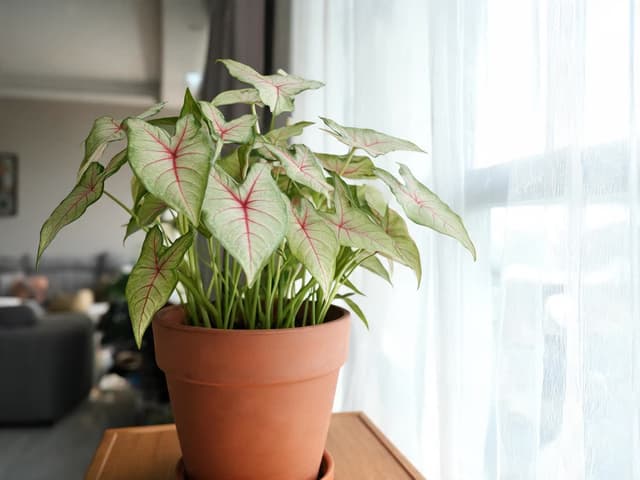
How to Care for Syngonium: Light, Watering, Cuttings, and Pests
How to care for syngonium indoors: bright indirect light, watering when the soil surface dries, 64 to 81°F (18 to 27°C), and 40 to 60% humidity. Also cover water cuttings, thrips, yellow leaves, and pet toxicity.
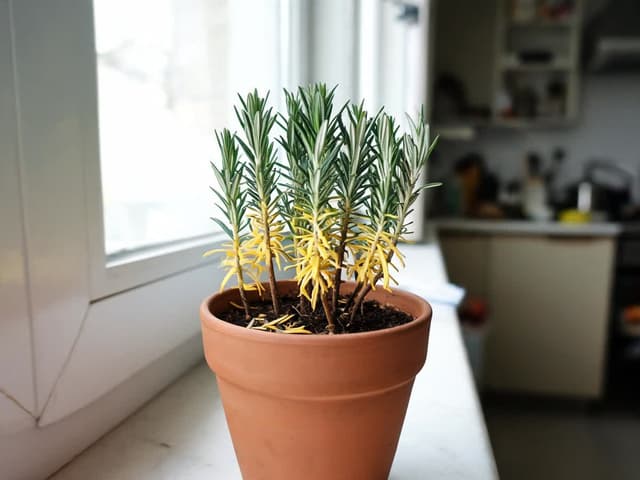
Rosemary Leaves Turning Yellow: Causes and Solutions
Rosemary with yellow leaves usually has overly wet roots. Check where the yellowing appears to see if it stems from wet roots, low light, spider mites, powdery mildew, or normal leaf shed, and learn how to save the plant.
Is Your Rosemary Dying? How to Save Soap-Burned Rosemary
Rosemary with soap-burned leaves can usually be saved: the damage stays on the affected needles. Rinse the leaves, wait a week, scrape the stems, and prune only what is brown inside.