Brown Spots on Monstera Leaves: How to Find the Cause
Dry, crispy tips on a monstera come from dry air, inconsistent watering, or fertilizer salt buildup in the soil. A soft, dark spot in the middle of the leaf with a yellow ring calls for checking the soil and roots. Here is how to test each cause and what to do.
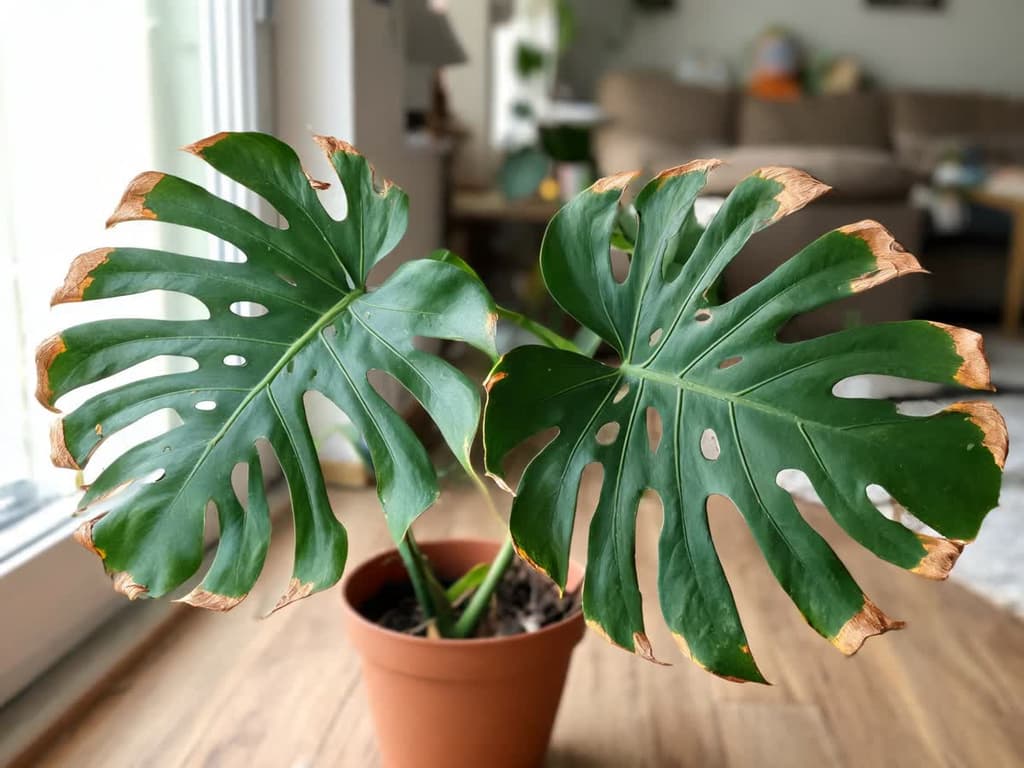
Brown spots and brown tips on a monstera (Monstera deliciosa) are two different symptoms with different causes. A brown, dry, and crispy tip or margin comes from the environment (dry air, inconsistent watering, or fertilizer salt accumulated in the soil) or leaf age. A brown spot in the center of the leaf requires a different assessment, made by touch and the surrounding color.
A soft, dark spot with a yellow ring around it points to waterlogged soil or leaf disease: inspect the soil and roots today. A dry, pale spot found only on leaves facing the window is sunburn. No brown part will turn green again. Once you fix the cause, new leaves emerge without brown marks.
Quick summary:
Dry air is the most common cause of brown tips on houseplants, according to the Iowa State Extension. The same source cites soil that dries out too much between waterings and fertilizer salt.
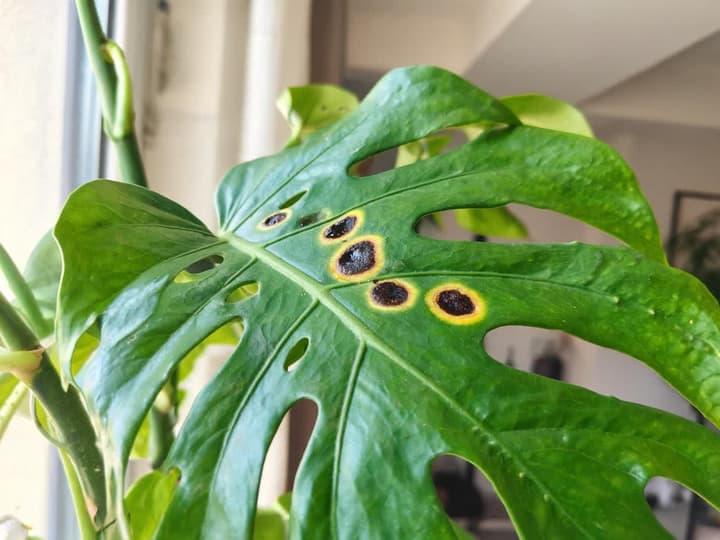
Bacterial leaf spot on a monstera is dark brown with a yellow border, and the spots are similar in size (UConn).
Wet leaves encourage disease spots. Because of this, do not mist the leaves with water.
Fungicide does not work against a disease caused by bacteria (Iowa State Extension).
Sunburn is permanent damage: the leaf stays marked, and new ones emerge normal if you move the plant out of direct sun.
Dry tip or spot in the center of the leaf: how to tell them apart on a monstera
Two questions distinguish the causes of brown spots on a monstera: where the brown is located and how it feels to the touch. Answer both before changing watering, light, or fertilizer.
What you see | Where it appears | One-minute test | Likely cause | What to do |
|---|---|---|---|---|
Brown, dry, and crispy tip or margin, without a yellow band | Tips and margins, mostly on older leaves | Is the indoor air dry? Does the soil dry out all the way to the bottom between waterings? | Dry air or inconsistent watering | Humidifier near the plant to exceed 50% relative humidity, and watering when the top 1 to 2 inches (2.5 to 5 cm) of soil dry out |
Brown margin or large, dry, brown patch | Margins or middle of the leaf | Do you fertilize often? Is there a white crust on the soil or on the pot rim? | Fertilizer salt | Fertilize less and flush the soil: water slowly with clean water until it drains out the bottom hole and let the pot drain |
Margin that yellows first and then darkens, advancing inward | Margins | Is there a yellow band between the green and brown? Does it grow from one week to the next? | Anthracnose (fungus) | Prune the leaf and stop getting the leaves wet |
Dark brown, soft spot with a yellow ring | Center of the leaf, lower leaves first | Is the soil moist 2 inches (5 cm) below the surface? Is there standing water in the saucer? | Root rot from waterlogged soil (or leaf disease, see the next row) | Remove the plant from the pot and inspect the roots today |
Dark spots of similar sizes, with yellow margins and sometimes sticky | Scattered across the leaf | Do the spots appear on multiple leaves? Is there a sticky liquid on the spot? | Bacterial leaf spot | Prune the spotted leaves and isolate the plant from others |
Dry, pale, or straw-brown spot | Leaves facing the window | Does direct sun hit this leaf at any time of day? | Sunburn | Move away from direct sun or acclimate the plant gradually over several weeks |
Dark spots that appear a few days after a cold night | Leaves near the window or air conditioner | Did the plant stay below 45°F (7°C) for an extended period or catch a cold draft? | Cold damage | Move away from open windows and drafts |
Small pale specks, silvery streaks, or small brown bumps | Underside of the leaf and stem | Can you scrape the bump off with a fingernail? Is there fine webbing? | Pests (scale, spider mites, or thrips) | Isolate the plant and treat the pest |
Iowa State notes that multiple causes often act together and instructs you to correct all of them, starting with the primary one. Observe the new leaves in the following weeks.
Brown, crispy tips and margins: dry air, inconsistent watering, or salts
Iowa State points to three causes for brown tips and margins on houseplants, and none of them is overwatering. The first, and most common, is dry air. The other two are soil that stays dry for too long between waterings and fertilizer salt accumulated in the soil (Iowa State Extension).
Dry air
The University of Wisconsin says that monstera leaf margins turn brown when air humidity is low (Wisconsin Horticulture). Penn State prefers humidity above 50% and recommends a humidifier near the plant (Penn State Extension). A hygrometer (humidity meter) shows this number. Iowa State notes that indoor humidity is usually low, especially in the winter.
Misting the leaves is not the solution. Iowa State links disease spots to wet foliage, "usually from misting or watering" (Iowa State Extension). UConn instructs you to avoid misting monstera because it spreads anthracnose. To raise humidity, use a humidifier. Iowa State also suggests grouping pots together, but the university itself links disease spots to crowded plants. If you group them, keep the leaves from touching; no source has measured which option is best for monstera, and a humidifier is the safest choice.
Inconsistent watering
Iowa State explains that letting the soil dry out too much between waterings causes brown tips and margins. This happens when someone forgets the plant for weeks and then waters heavily to compensate. Penn State suggests watering when the top 1 to 2 inches (2.5 to 5 cm) of soil dry out, without waiting for the pot to dry to the very bottom. The right interval for your home is in the guide on how often to water monstera.
Watering in small amounts only wets part of the soil and leaves dry pockets, explains the Houseplant Journal, a guide specializing in houseplants. A dry pocket is soil that is too dry, the cause that Iowa State links to brown tips. Water until water drains through the pot's drainage hole and discard any water left in the saucer.
Fertilizer salt in the soil
According to UConn, monstera suffers leaf scorch when the soil has too much salt (UConn). The salt comes from fertilizer the plant did not use and accumulates with each watering. In severe cases, a white crust appears on the soil surface or the rim of the pot. Houseplant Journal links large, dry, brown spots in the middle of the leaf to this same salt accumulation.
To remove salt, water slowly with clean water until it runs out the drainage hole and let the pot drain thoroughly. Iowa State recommends flushing the soil this way and reducing fertilizer, both in dose and frequency. Houseplant Journal notes that flushing also leaches nutrients from the soil and advises resuming fertilization afterward. Resume with the lower dose and longer intervals that Iowa State calls for. Soil that drains poorly retains salt: find the right mix in the guide on monstera potting soil.
No source has measured the effect of tap water on monstera. Iowa State cites chlorine and fluoride in water as a cause of brown tips only in sensitive plants. The list includes spider plants, dracaenas, cordylines, prayer plants, and calatheas, and does not include monstera.
Brown tips on old leaves
The oldest monstera leaf can develop a brown tip even with good care. The Houseplant Journal reports that, on the author's plants, leaves last about 2 years before browning at the tip and then yellowing (Houseplant Journal). No university has measured this. If the brown tip is only on the old leaves and new ones come out clean, the plant is probably doing fine.
Margins that yellow before turning brown: anthracnose
A brown margin with a yellow band between the brown and the green has another cause: anthracnose, a fungal disease. According to UConn, anthracnose on monstera begins as yellowing along the margin, turns light brown, and then dark brown. The spots advance inward and can kill the entire leaf.
Dry tips from dry air lack this yellow band and stop expanding once the environment improves. If the yellow band progresses from one week to the next, treat it as a leaf disease and follow the steps in "What to do today for disease spots."
Soft, dark brown spots with a yellow halo: check the soil and roots
A soft, dark brown spot with a yellow halo (a yellow ring around it) has two probable causes. One is root rot from waterlogged soil; the other is leaf disease. Start with the soil, which shows whether the roots are at risk. Iowa State describes rotted roots as dark, soft, and easily broken. The same source states that a plant with root rot rarely recovers (Iowa State Extension). A chance remains when firm, light-colored roots are still left.
Insert your finger 2 inches (5 cm) into the soil. Under Penn State's guideline, moist soil at 2 inches alone is normal. Moist soil at that depth paired with soft leaves and standing water in the saucer points to overwatering. Soil dry all the way to the bottom paired with crispy leaves points to underwatering. The complete signs for each condition are in the guide on monstera with yellow leaves.
If the soil is waterlogged, remove the plant from its pot today. Cut away dark, soft roots using clean shears and repot into fresh, fast-draining potting mix in a pot with drainage holes. That same guide on yellow leaves provides the step-by-step rescue.
Reducing watering will not save roots that have already rotted. Anyone who cut back on water and saw the spot keep growing needs to inspect the roots before waiting any longer.
Bacteria or fungus: how to tell apart spots with a yellow halo on monstera
In a leaf photo, bacteria and fungus look alike, and only a laboratory test provides certainty. Some signs help distinguish between the two. UConn describes monstera leaf diseases and separates the two most common ones (UConn):
Bacterial leaf spot: dark brown spots with yellow borders, similar in size to one another, which often release a sticky liquid. Dry air slows disease spread but can turn the spots reddish-brown.
Anthracnose (fungus): begins by yellowing the leaf margin, turns light brown, then dark brown, and advances inward.
Dumb cane belongs to the same family as monstera, and the University of Florida describes two more diseases on it. A rot bacterium causes soft, water-soaked spots with a rotten fish odor. With leaf spot caused by another bacterium, Xanthomonas, the spots are nearly black, with a yellow halo, and start at the leaf margin (UF/IFAS). The source discusses dumb cane, not monstera; the guide to brown tips and spots on dumb cane details these diseases.
Iowa State links disease spots to wet leaves, stagnant air, and crowded plants. A spot that spreads across multiple leaves under these conditions requires the treatment in the section below. Anyone wanting a second opinion can photograph the leaf in the Bloom app, which diagnoses plant disease from photos on the Premium plan (iPhone only).
What to do today for disease spots
At home, the effective steps are the same for bacteria and fungi:
Cut off the spotted leaves flush with the stem using clean shears. Discard the leaves in the trash, not in the pot or compost bin.
Separate the plant from others until new leaves emerge clean.
Water directly into the soil without wetting the foliage, and stop misting.
Leave space between pots so air can circulate. UConn recommends improved air circulation, less crowding, and no cold temperatures. While spots are spreading, keep humidifiers away from diseased leaves.
Fungicide does not resolve bacterial leaf spot. Iowa State explains that fungicide does not control disease caused by bacteria. Against fungus, most fungicides only stop the spread, without curing the spot that already exists (Iowa State Extension). UConn does not recommend chemical products against bacterial leaf spot on monstera. The University of Florida mentions copper-based products, but for commercial greenhouses. Against soft rot bacteria, they only slow the disease down. Against Xanthomonas, they work as a preventative measure, applied regularly before the spot appears.
Dry, pale spot on the window side: sunburn
Sunburn on a monstera leaves dry, light, or straw-brown spots on leaves that receive direct sun. Iowa State compares this damage to a sunburn on skin and says it is permanent (Iowa State Extension). UConn warns that the large monstera leaf burns easily when the plant moves to a brighter spot.
Sunburn usually appears after a change: a pot moved to the balcony, a curtain removed, a new plant brought home from the store. Iowa State instructs you to make the light change gradually, over several weeks. In Brazil, a north-facing window is the one that receives the most sun throughout the day.
Extension services differ on direct sun. UConn cites 3 to 6 hours per day as the plant's preference; Penn State and NC State call for bright light without direct sun. Because sunburn is permanent, bright indirect light is the safer choice for the leaves. If your plant already receives a few hours of sun without developing spots, no change is necessary.
On variegated monstera (leaves with white or cream sections, such as 'Albo' and 'Thai Constellation'), the white is natural to the plant and is not a symptom. NC State states that variegated varieties need more light than solid green ones (NC State Extension). Even so, keep variegated monstera in bright light, without direct sun on the leaves.
Dark spots after a cold night
UConn states that temperatures below 45°F (7°C) for prolonged periods cause damage to monstera. The University of Wisconsin notes that the plant stops growing below 50°F (10°C). Penn State warns that the plant does not tolerate cold drafts.
The University of Florida measured cold damage on aglaonema, a plant in the same family. Dark, greasy-looking spots appeared two days after the plant spent 24 hours at 2, 7, or 13°C (UF/IFAS). In Brazil, the risk runs from June to August, mainly in the South and in the mountains of the Southeast. Indoors, cold enters through open windows at night and drafts from air conditioners.
Small brown, silvery, or raised specks: pests
Numerous tiny specks on a monstera usually indicate pests. Inspect the undersides of leaves and stems under good light:
Small brown or beige bumps that scrape off with a fingernail: scale insects. UConn describes scale as small brown bumps on leaves and stems. Crush or scrape off the bumps with a fingernail, or use horticultural oil formulated for houseplants. See how to treat them in the guide on scale insects.
Tiny white specks, sometimes with webbing between leaves: spider mites. UConn notes that mites suck plant juices, leaving tiny white specks, and can be removed with a water spray or insecticidal soap, checking the leaf undersides carefully. See the guide on spider mites.
Silvery streaks that later turn brown and dry out: thrips. The University of Maryland describes thrips this way and warns that the damage can be confused with mite damage (University of Maryland Extension).
Should I cut off leaves with brown spots?
The brown portion of the leaf will not turn green again, so trimming is an aesthetic choice, with one exception. Leaves with disease spots should be removed entirely and promptly so the infection does not spread to others. A leaf with just a dry tip can stay on the plant, as the green tissue remains alive and carries out photosynthesis.
To remove only the dry tip, cut the brown part following the natural contour of the leaf. Houseplant Journal recommends cutting away the damaged part and leaving the green tissue (Houseplant Journal). To remove the entire leaf, cut the petiole close to the stem with clean scissors.
Wear gloves: Penn State warns that monstera sap can irritate skin. The plant is toxic to dogs and cats, according to the ASPCA. Throw trimmed leaves away from animals.
Frequently asked questions
Do brown spots on monstera turn green again?
No. Brown tissue is dead tissue and cannot recover, whether from dry tips, sunburn, or disease spots. Iowa State refers to sunburn as permanent damage. The sign that you resolved the underlying cause appears on new growth. If new leaves emerge clean and normal in size, the plant has recovered, even if old leaves remain marked.
Does misting help brown tips on monstera?
It is not recommended. Iowa State links disease spots to foliage wetted by misting or watering. UConn instructs you to avoid misting monstera because it spreads anthracnose. For dry tips caused by low humidity, run a humidifier near the plant; Penn State prefers humidity above 50%.
Do brown spots spread to other plants?
It depends on the cause. Dry tips, fertilizer salts, sunburn, and cold damage do not spread between plants. Bacterial spots spread through splashing water, hands, and pruning shears, according to the University of Florida in research on dumb cane, a relative of monstera. In that scenario, cut off spotted leaves, isolate the plant from others, and sanitize pruning shears after cutting.
Can a monstera with brown spots be saved?
Almost always. Dry tips, salts, sunburn, and mild cold mark leaves but do not kill the plant: once the cause is addressed, new leaves emerge clean. Frost kills the plant, according to the University of Wisconsin. The severe scenario is root rot. Iowa State states that plants with root rot rarely recover; a chance remains as long as firm, pale roots survive for repotting.
The first step with your monstera
Touch the spot and insert your finger 2 inches (5 cm) into the soil today. A crispy tip with dry soil calls for a humidifier near the plant and watering until water drains from the pot hole. A soft spot with waterlogged soil calls for inspecting the roots. For the full routine covering light, watering, and feeding, see the guide on how to care for monstera.
Related articles
How to Care for a Maidenhair Fern: Light, Water, and Revival Tips
Learn how to care for a maidenhair fern indoors: bright indirect light, consistently moist soil, high humidity, and how to revive it if it dries out completely.
How to Propagate Spider Plants: Root the Pup Before Cutting
The safest spider plant cutting comes from a pup still attached to the mother plant: rest the plantlet on soil in a small pot, wait for roots to establish, and only then cut the stolon. Learn when the pup is ready, whether rooting in water is worth it, how to divide the clump, and why plants fail to produce babies.
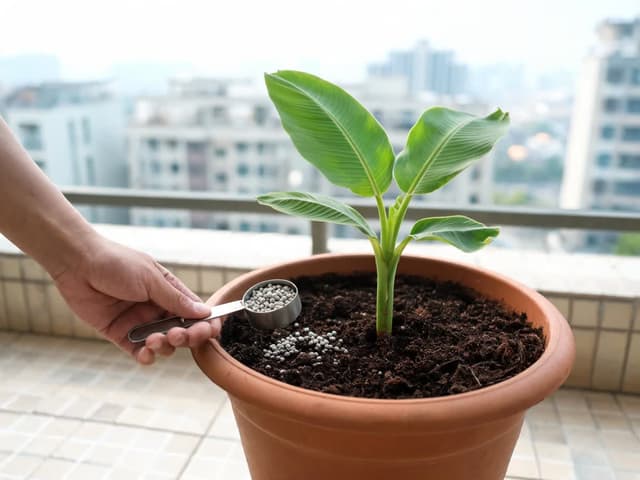
Banana plant fertilizer: fertilizing potted and backyard plants
Banana plant fertilizer needs more potassium than nitrogen, in a 3-1-6 ratio. For a potted plant on a balcony, use the label dose in spring and summer. In the backyard, fertilize every 2 months, adjusting the amount by mat age. Learn the formula, timing in Brazil, and signs of deficiency or excess.