Damping Off: Fungal Disease | Treatment Guide
Damping off is a soil-borne fungal disease that affects seeds and young seedlings, causing rotting of stem and root tissues at and below the soil line. It is caused by several fungi including Pythium, Rhizoctonia, Fusarium, and Phytophthora. The disease thrives in cold, wet conditions with poor air circulation.
Fast
21 days
What is Damping Off?
Damping Off is a fungal condition with high severity that affects plants. Damping off is a soil-borne fungal disease that affects seeds and young seedlings, causing rotting of stem and root tissues at and below the soil line. It is caused by several fungi including Pythium, Rhizoctonia, Fusarium, and Phytophthora. The disease thrives in cold, wet conditions with poor air...
Damping Off is a fungal disease with high severity that spreads at a fast rate. Recovery typically takes approximately 21 days with proper treatment. It affects 10 plant species in our database. This condition is contagious and can spread between plants.
Unlike bacterial infections, Damping Off spreads slowly but is harder to eradicate. Without treatment, affected leaves won't recover. Not recommended to ignore early signs. Without early intervention, recovery can take twice as long. Without isolation, nearby plants can become infected within days.
🔍 What Are the Symptoms of Damping Off?
TLDR: Damping Off presents 8 main symptoms. Early identification is crucial for effective treatment.
Main Symptoms
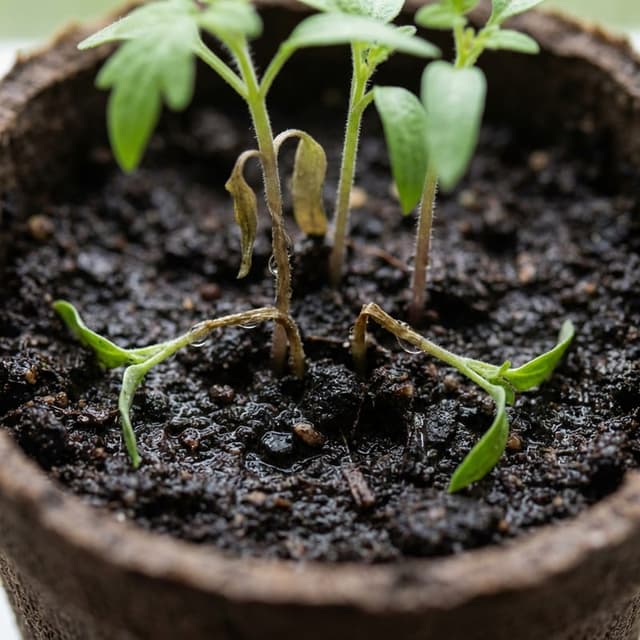
- ! Seedlings collapse and fall over at stem base
- ! Water-soaked, thin, thread-like stems
- ! White cobweb-like fungal growth on soil surface
- ! Gray to brown stem discoloration
- ! Soft, mushy stem tissue
- ! Rotted roots with grayish-brown sunken spots
- ! Seeds fail to germinate or emerge from soil
- ! Wilting of young leaves
Visual Signs
❓ What Causes Damping Off in Plants?
- → Soil-borne fungi: Pythium, Rhizoctonia, Fusarium, Phytophthora
- → Cold, wet soil temperatures (below 68°F/20°C)
- → Poor soil drainage
- → High humidity and poor air circulation
- → Planting seeds too deeply or too densely
- → Overwatering
- → Reusing contaminated soil or pots
- → Using untreated rainwater
- → Low light conditions
- → Over-fertilization
💊 How to Treat Damping Off?
TLDR: Treat Damping Off with 11 days of quick treatment or 21 days of organic treatment. Full recovery takes approximately 21 days.
Quick Fixes
~11 days
Immediate Discard
Remove and discard all infected seedlings immediately. Do not attempt to save - no cure available.
Dry Environment
Stop watering. Turn on fan for maximum air circulation. Remove tray covers. Let soil surface dry completely.
Increase Temperature and Light
Raise room temperature to 70-75°F (21-24°C). Provide maximum lighting (12-16h artificial light if needed).
Cinnamon Application
Generously sprinkle cinnamon powder on soil surface of all remaining seedlings as emergency preventive measure.
Isolate Healthy Plants
Separate healthy seedlings from affected areas. Use new soil and sterilized pots for transplanting if seedlings are large enough.
Materials needed:
Organic Treatment
~21 days
Immediate Removal
Remove all infected seedlings immediately and discard them away from healthy plants. There is no cure for infected plants.
Improve Conditions
Reduce humidity by increasing air circulation with a fan. Allow soil surface to dry completely between waterings. Increase temperature and lighting.
Cinnamon Treatment
Sprinkle cinnamon powder on soil surface around healthy seedlings. Cinnamon has natural antifungal properties.
Biological Fungicide
Apply Mycostop or Actinovate to remaining seedlings following manufacturer instructions for preventive protection.
Future Prevention
Always use new sterilized potting mix, sterilize pots with 10% bleach, sow thinly, water in morning, and maintain good air circulation.
Materials needed:
Expert Treatment
~32 days
Assessment and Quarantine
Identify all infected seedlings. Remove and discard immediately. Isolate affected tray/area from other plants. Document environmental conditions (temperature, humidity, watering frequency).
Strict Environmental Control
Soil temperature: constant 70-75°F (21-24°C) with heating mat. Relative humidity: maximum 60%. Air circulation: continuous fan on low speed. Photoperiod: 14-16h light at 10,000-15,000 lux.
Professional Biological Treatment
Apply Mycostop (Streptomyces griseoviridis) as soil drench at recommended concentration. Follow with Actinovate (Streptomyces lydicus) applied 48h later. Both create protective microbial barrier.
Precise Irrigation Management
Implement bottom watering system with fixed schedule only in morning. Monitor pot weights. Maintain soil moisture at 60-70% field capacity. Use warm (68-72°F/20-22°C) dechlorinated water.
Complete Sanitation
Sterilize all pots, trays, and tools in 10% sodium hypochlorite solution for 30 minutes. Clean work surfaces with quaternary ammonium. Replace 100% of potting mix with commercial sterilized mix.
Reseeding Protocol
Wait 7 days after sanitation. Use fresh seeds treated with Mycostop. Sow 50% thinner than normal. Cover soil surface lightly with sterilized vermiculite. Maintain temperature at 73°F (23°C).
Monitoring and Adjustments
Daily inspection of all seedlings. Record temperature, humidity, and growth. Adjust ventilation as needed. Remove any suspicious seedlings immediately. Continue preventive regime for 21 days after last infection.
Step by Step
- 1
Remove all infected seedlings immediately and discard them
- 2
Do not attempt to save infected plants - there is no cure
- 3
Reduce humidity and improve air circulation
- 4
Allow soil surface to dry between waterings
- 5
Increase soil temperature if possible
- 6
Increase lighting
- 7
Apply biological fungicide to remaining healthy seedlings
- 8
Do not reuse contaminated potting mix
- 9
Sterilize all pots and tools before reuse
- 10
Start fresh with new seeds and sterilized potting mix
🧪 Natural vs Chemical: Which Treatment Works for Damping Off?
🌱 Natural Solutions
- ✓ Biological fungicide Mycostop (seed treatment)
- ✓ Actinovate (contains beneficial soil bacteria)
- ✓ Organocide Plant Doctor (systemic fungicide)
- ✓ Cinnamon powder sprinkled on soil surface (natural antifungal properties)
- ✓ Chamomile tea used as soil drench
- ✓ Remove infected seedlings immediately to prevent spread
💉 Chemical Solutions
- ✓ No chemical fungicides available for home gardeners
- ✓ Prevention is the only effective strategy
- ✓ Commercial fungicides containing metalaxyl or mefenoxam (professional use only)
Treatment Comparison
| Type | Estimated time | Steps | Difficulty | Best For |
|---|---|---|---|---|
| ⚡Quick | ~11 days | 5 | Advanced | Urgent cases |
| 🌿Organic | ~21 days | 5 | Advanced | Indoor plants |
| 🔬Expert | ~32 days | 7 | Advanced | Severe infections |
🛡️ How to Prevent Damping Off?
TLDR: Prevent Damping Off with 13 essential care practices. Regular monitoring is key for early detection.
- ✓ Use sterilized commercial potting mix, never reuse soil
- ✓ Sterilize used pots and trays with 10% bleach solution for 30 minutes
- ✓ Sow seeds thinly to prevent overcrowding
- ✓ Maintain soil temperature between 70-75°F (21-24°C) using heating mats
- ✓ Provide 12-16 hours of light daily
- ✓ Use pots with drainage holes
- ✓ Water only in the morning so soil dries by evening
- ✓ Avoid overwatering - keep soil moist but not waterlogged
- ✓ Use warm water (68-77°F/20-25°C) for watering
- ✓ Ensure good air circulation with fans or by cracking lids
- ✓ Do not plant seeds too deeply
- ✓ Wait until true leaves develop before fertilizing
- ✓ Keep hoses off the floor to prevent contamination
🔗Related Diseases
Rust
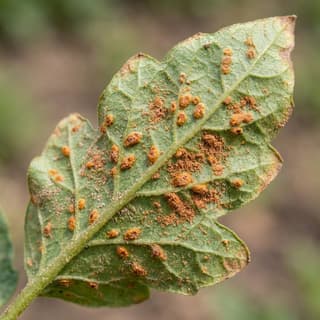
Rust fungi (Pucciniales) are fungal diseases that form rust-colored, usually orange to brown pustules with powdery spore dust on leaves, stems, or fruits. Typical symptoms include small spots that develop into cushions or rings; leaves turn yellow, curl, and drop prematurely. The fungi spread primarily in damp weather and dense foliage. Many ornamental and crop plants are affected, frequently including roses, mallows (hollyhocks), pears (pear rust), and currants. Some rust fungi require two host plants for their life cycle, such as pear and certain juniper species.
Cherry Witches' Broom
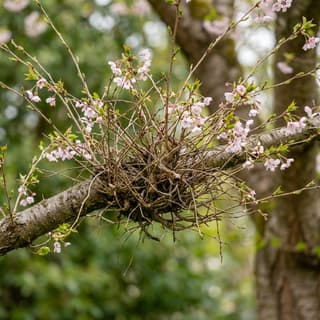
Taphrina wiesneri is a fungal disease affecting cherry trees (Prunus species, including sweet, sour, and ornamental varieties). The fungus overwinters in buds and bark, infecting young leaves and shoots during cool, wet spring weather. Infected leaves become thickened, puckered, and curled, often displaying reddish or yellow blotches and a fine whitish bloom on the surface. Severely affected leaves may drop prematurely. Small twigs can develop 'witches' brooms,' which are dense clusters of weak, distorted shoots.
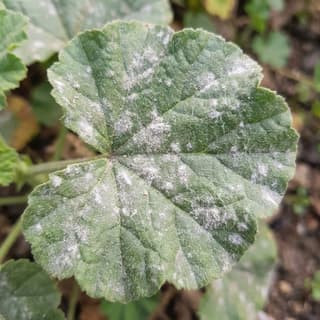
Powdery Mildew
MediumPowdery mildew is a common fungal disease caused by various fungi species including Erysiphe, Podosphaera, Oïdium, and Leveillula. It affects over 10,000 plant species worldwide. The disease thrives in warm, dry climates with high humidity and appears as a distinctive white powdery coating on plant surfaces.

Root Rot
HighRoot rot is a serious fungal disease that affects the root system of plants, causing them to decay and die. It is primarily caused by overwatering, poor drainage, or soil-borne fungi such as Pythium, Phytophthora, Rhizoctonia, and Fusarium. The disease thrives in waterlogged conditions where roots are deprived of oxygen, making them susceptible to fungal infection.