Fabaceae
Tipu tree: Full Sun Plant
Tipuana tipu
An extremely hardy and low-maintenance tree, ideal for large open spaces with full sun.
Every 14 days
Direct sun
5° - 35°C
30% - 60%
Categories
What is Tipu tree?
Tipu tree (Tipuana tipu) is a easy-care plant from the Fabaceae family. The Tipu tree (Tipuana tipu) is a majestic, fast-growing tree native to South America. Known for its broad, leafy umbrella-shaped canopy, it provides dense and refreshing shade. During spring and early summer, the tree is covered in clusters of vibrant yellow flowers that, when they fall, create a b...
Tipu tree grows up to 15.0m, with spread of 1200cm, watering every 14 days, 5°C – 35°C, 30–60% humidity. It is not suitable for indoor environments and safe for pets.
Unlike many tropical plants, Tipu tree tolerates watering mistakes. Best for beginners. Unlike many popular species, Tipu tree is safe to keep around pets.
How to Care for Tipu tree?
TLDR: Tipu tree needs Direct sun, watering every 14 days, and temperatures between 5-35°C with 30-60% humidity.
How Often Should You Water Tipu tree?
Water young saplings deeply. Mature trees are drought-tolerant but benefit from occasional watering during the summer.
How Much Light Does Tipu tree Need?
This species requires full sun to develop properly and produce abundant blooms.
What Is the Best Soil for Tipu tree?
It adapts to almost all soil types but prefers deep, well-drained soils.
What Pot Should You Use for Tipu tree?
Not recommended for container gardening due to its aggressive root system and large size.
Care Schedule
Fertilize
Every 90 days
What Is Tipu tree and Where Does It Come From?
The Tipu tree (Tipuana tipu) is a majestic, fast-growing tree native to South America. Known for its broad, leafy umbrella-shaped canopy, it provides dense and refreshing shade. During spring and early summer, the tree is covered in clusters of vibrant yellow flowers that, when they fall, create a beautiful golden carpet on the ground. Its leaves are compound and light green, and its fruits are winged samaras, similar to those of a maple.
How to Propagate Tipu tree?
Seed Sowing
- Germination is generally fast and does not require breaking dormancy.
- 1 Seed Collection
Collect the samaras (winged fruits) when they are dry and brown.
- 2 Preparation
It is not necessary to remove the seed wing, but it can help with planting.
- 3 Planting
Sow in a light substrate and maintain constant moisture until germination.
Materials needed:
Stem Cuttings
- Keep the cutting protected from strong winds and excessive direct sun initially.
- 1 Cutting
Cut semi-hardwood cuttings approximately 20cm long.
- 2 Rooting Hormone
Apply rooting hormone to the base of the cutting to increase the chances of success.
- 3 Planting
Insert into sandy soil and keep in a protected location until rooted.
Materials needed:
How Big Does Tipu tree Grow?
TLDR: Tipu tree can reach up to 15.0m tall with Fast growth rate.
Max height
15.0m
Spread
12.0m
Growth rate
Fast
Foliage
Deciduous
Plant Uses
Ornamental
Great for decoration
Is your plant showing symptoms?
Click on the symptom to discover possible causes:
What Diseases Commonly Affect Tipu tree?
TLDR: Tipu tree is susceptible to 11 known diseases. Monitor regularly for early detection.
Powdery Mildew
Powdery mildew is a common fungal disease caused by various fungi species including Erysiphe, Podosphaera, Oïdium, and Leveillula. It affects over 10,000 plant species worldwide. The disease thrives in warm, dry climates with high humidity and appears as a distinctive white powdery coating on plant surfaces.
Rust
Rust is a common fungal disease caused by fungi in the order Pucciniales that affects a wide variety of plants. The disease gets its name from the characteristic orange, yellow, or reddish-brown pustules that appear on leaves, resembling metal rust. This obligate fungal parasite requires living plants to survive and can cause significant economic losses in agricultural crops.
Root Rot
Root rot is a serious fungal disease that affects the root system of plants, causing them to decay and die. It is primarily caused by overwatering, poor drainage, or soil-borne fungi such as Pythium, Phytophthora, Rhizoctonia, and Fusarium. The disease thrives in waterlogged conditions where roots are deprived of oxygen, making them susceptible to fungal infection.
Sooty Mold
Sooty mold is a fungal disease that develops on surfaces coated with honeydew, a sticky sweet substance secreted by sap-sucking insects like aphids, scale insects, and whiteflies. While it does not directly infect plant tissue, it reduces photosynthetic capacity by blocking sunlight and diminishes the plant's aesthetic appearance.
Meaning & Symbolism
Represents protection, hospitality, and the strength of nature in urban environments.
Compare with similar plants
| Attribute | Difficulty | Light | Watering | Pet Safe |
|---|---|---|---|---|
| Peace Lily | Easy | Low light | 4d | ⚠️ |
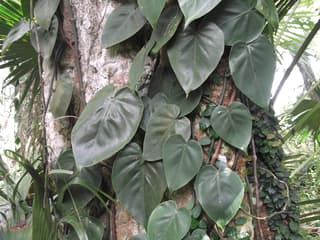
| Swiss Cheese Plant | Easy | Partial shade | 10d | ⚠️ |
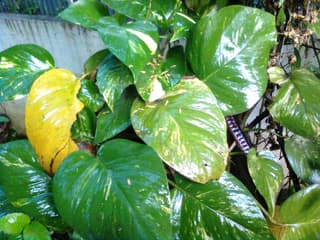
| Golden Pothos | Easy | Low light | 8d | ⚠️ |
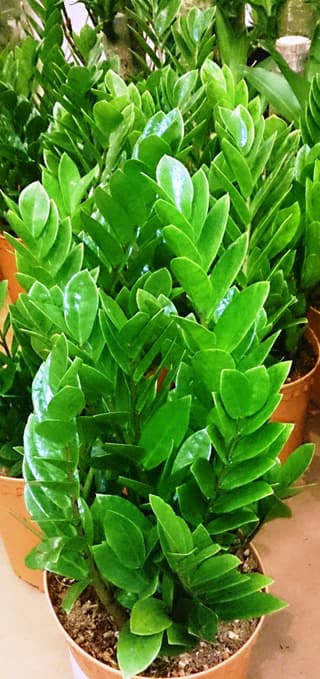
| ZZ Plant | Easy | Low light | 18d | ⚠️ |