The Best Plant Identification Apps of 2026
Bloom uses Plant.id, a search engine with university-tested 93% accuracy, to identify your plants and immediately give you a care plan. Here is how the top apps compare in independent tests.
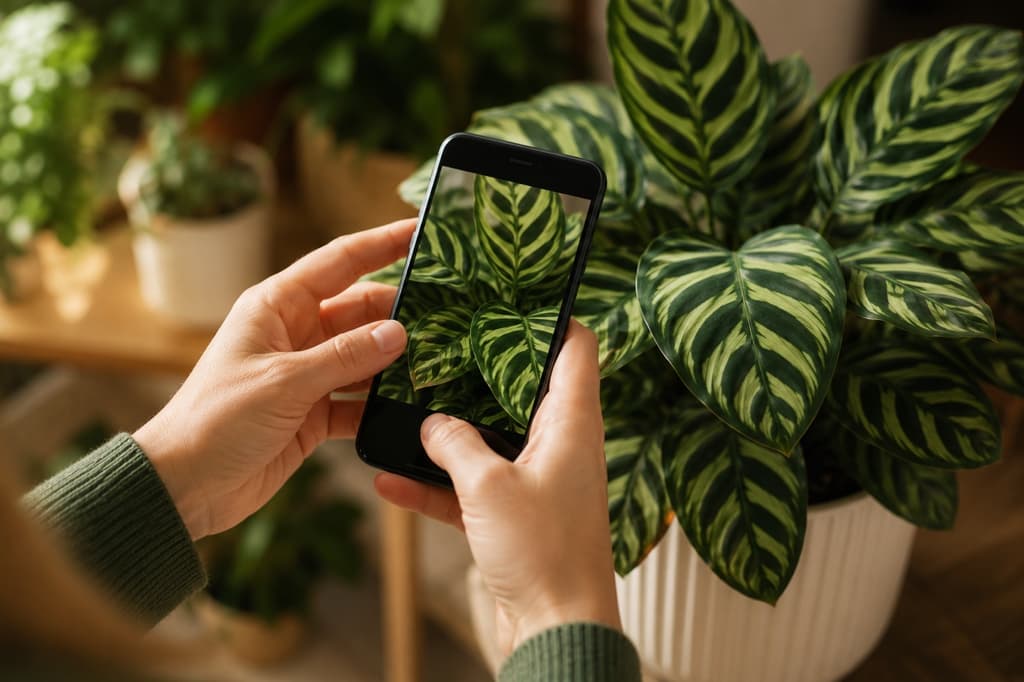
Yes, you can identify a plant just by taking a picture of it. Bloom is the most complete option on this list: it runs on Plant.id, an identification engine with a university-tested 93% accuracy rate, and goes beyond just naming your plant by giving you a customized watering and light schedule. It also has a free tier, which most competitors do not. If you just want a quick name and nothing else, PlantNet is completely free and got 9.7 out of 10 species right in the most recent independent test.
The long answer is more interesting. There are two major public tests of plant identification apps, they crown different winners, and neither of them tested houseplants, which is probably what you are growing. Below are the scorecards, the reason the results don't align, and what this actually means for your indoor plants.
Quick Answer: Which App to Install
You want the name and a care plan: Bloom. Identifying a plant and caring for it are two different problems, and apps that are good at one usually fail at the other. Bloom offers a free tier so you can start without paying a dime.
You want just the name, no sign-up, and no limits: PlantNet. It was the top-performing free app in both independent tests.
You have an iPhone and only need it occasionally: Don't install anything. iOS has a built-in identifier in the Photos app. It is only moderately accurate, but it is free and requires no sign-up.
Wildflowers, trees, and weeds: PlantNet or Flora Incognita. Both started as academic projects focused on wild flora, and that is where they shine.
The Quick List:
# | App | Best For | Model |
|---|---|---|---|
1 | Bloom | Anyone who wants the name and a care plan in one place | Free tier, optional subscription |
2 | PlantNet | Highly accurate identification with zero paywalls | Free |
3 | PictureThis | The largest database of plant species | Free with paid subscription options |
4 | Flora Incognita | Seeing how confident the app is in its guess | Free |
5 | Seek (iNaturalist) | Kids, wildlife, and general curiosity | Free |
6 | Google Lens and iPhone Visual Look Up | Occasional questions without installing an app | Free |
7 | LeafSnap and PlantSnap | Two cases where you need to be careful about what you download | Free with paid subscription options |
What Two Independent Tests Discovered
Accuracy in plant identification apps is measured by the percentage of photos where the app suggests the correct species as its first choice. This number depends heavily on what you photograph: an app that gets a perfect score on a bright flower will struggle on a flowerless blade of grass. This is why isolated numbers do not tell the whole story, and testing methodology matters more than the final scoreboard.
The two public tests available today:
Common By Nature | MSU Extension | |
|---|---|---|
Conducted By | British botany blog | Michigan State University |
When | May 2025 | Fall 2025, published in May 2026 |
What Was Photographed | 10 British wild species, including ferns, rushes, and grasses | Agricultural weeds and ornamental plants on campus at various growth stages |
Number of Evaluations | 1 photo per plant, 8 apps | 136 to 203 evaluations per app, using undergraduate students |
Winner | LeafSnap 9.9 and ObsIdentify 9.9, followed by PlantNet 9.7 and PictureThis 9.0 | PictureThis, with 76% exact species accuracy |
The complete score of the Common By Nature test, published on May 15, 2025: LeafSnap 9.9, ObsIdentify 9.9, PlantNet 9.7, PictureThis 9.0, Flora Incognita 8.9, Google Lens 6.7, Seek 6.2, and PlantSnap 0.1.
In the MSU Extension survey, updated on May 4, 2026, PictureThis got 76% of the identifications correct at the exact species level and reached 88% when including cases where it only got the genus right. After it came ChatGPT, with 54%. Google Lens, Gemini, CoPilot, and Seek scored between 28% and 48%. The university has been evaluating these apps since 2018 and has already tested 17 of them.
Why the results differ: The British test used wild plants in full bloom, which is the easiest scenario. The American test used weeds in vegetative stages, which is much harder. An app trained on herbarium flower photos will shine in the first test and struggle in the second. MSU itself pointed out this limitation: for grasses, the top-performing app only scored between 36% and 57%, because the features that distinguish grasses are microscopic details like ligules and auricles, which you cannot capture in a standard phone photo.
The accuracy of PictureThis has improved by about 11 percentage points since 2021, according to MSU's historical data. In a market moving this fast, a review from 2022 is completely outdated in 2026.
Houseplants Are a Different Story
Both university tests focused on wild flora, but your houseplants are a completely different category. This changes the results in three ways.
First, almost every houseplant is a cultivar or a hybrid. A database designed to recognize Viola riviniana in an English field is not built to distinguish a standard Monstera deliciosa from a variegated cultivar. The app might get the genus right but fail on the specific variety, which is the exact detail that determines how much light the plant actually needs.
Second, houseplants rarely bloom indoors. Without flowers, the app only has leaves to go on, and isolated leaves provide very little data for these models.
Third, common names are confusing. The same plant can be called a Swiss cheese plant, split-leaf philodendron, or Monstera deliciosa depending on who you ask. You should always verify the scientific name, not the common name.
In practice, for common indoor plants, almost any app on this list will get you to the correct genus. If you just want to know if a plant is a pothos or a philodendron, a free app is plenty. If you are going to base your watering schedule on the identification, double-check the scientific name with a reliable source first.
For step-by-step instructions on each app, see our guide on identificar planta pela foto.
The Apps, One by One
The apps below are organized by use case. The tests mentioned above evaluated specific apps in the field, showing PlantNet leading with wild flora and PictureThis with weeds, but neither evaluated the engine behind Bloom.
Ratings and review counts are from the public App Store API, aggregated across 31 countries, as of August 22, 2026.
Bloom: When the Name Is Just the Beginning
Most apps on this list answer "what plant is this" and stop there. Bloom is built for what comes next: identifying the plant by photo and immediately generating a care plan with watering, light, and safety information for cats, dogs, and children.
The identification runs on Plant.id, the same engine that powers top search results for plant identification, with a 93% accuracy rate tested by independent universities. It holds a 4.8 rating with over a thousand reviews.
It also includes a free tier, which is rare for care-planning apps, as most require a subscription upfront. With Bloom's free version, you can identify 2 plants per month and use the watering schedule.
Cons: Disease diagnosis by photo requires a subscription, and the app is currently iOS-only, so Android users will need to choose another option from this list.
PlantNet: Highly Accurate and Completely Free
PlantNet is maintained by CIRAD, a French public agricultural research center, alongside other scientific institutes. It has no paid version, no ads, and works offline, making it great for hikes. It holds a 4.7 rating with over 42,000 reviews.
It has a regional flora filter that the others do not: you say you are in Europe and it stops suggesting North American species. It scored 9.7 out of 10 in the British test. The weak point is the same as all the others: grasses and ferns.
Cons: The interface feels like an academic project rather than a consumer app. Once you identify the plant, the interaction ends, without any care instructions.
PictureThis: The Top Performer in Large-Scale Tests
This is the market leader by a wide margin, holding a 4.8 rating with over 1.7 million reviews, which is more than ten times its closest competitor. It won first place in the MSU study with 76% exact accuracy and was the only app the university noted as showing steady year-over-year improvement. Out of 19 student groups, 17 chose it as their favorite.
Cons: The MSU report noted that the app pushes its paid subscription so aggressively that it frustrated students, and users of the free version must be careful to close the correct screens. If you find this annoying, there is an existe alternativa ao PictureThis.
Flora Incognita: The App That Admits When It Is Unsure
This is a free German academic project with a 4.8 rating and over 36,000 reviews. It scored 8.9 out of 10 in the British test, successfully identifying two species that stumped its larger competitors.
It offers two unique features: it lets you classify the plant type before taking a photo (wildflower, shrub, grass, fern) to narrow the search, and it shows a confidence level for each guess. Knowing the app is only 40% confident is much more useful than receiving an uncertain answer presented as fact.
Cons: It has a smaller user base and focuses primarily on European flora, making it less effective outside that region.
Seek by iNaturalist: Great for Wildlife, Average for Plants
This free, sign-up-free app has a 4.7 rating with over 42,000 reviews. It identifies plants and wildlife in real-time as you point your camera, which is great for kids. It also works for insects, birds, and fungi.
Cons: It performed poorly in both plant tests, scoring 6.2 in the British test and landing in the bottom tier of the MSU study. If your primary goal is plant identification, this is not the best choice.
Google Lens and iPhone Visual Look Up: Already in Your Pocket
Neither of these tools is highly accurate, but both are free and already on your phone. Google Lens scored 6.7 in the British test and between 28% and 48% in the MSU study. The built-in iOS tool, Visual Look Up, scored 36% in the 2024 MSU test, and you can access it by tapping the info icon on any photo in your gallery.
Cons: Neither tool indicates uncertainty. They display their guesses with the same level of confidence whether they are correct or completely wrong.
LeafSnap and PlantSnap: Read Before You Download
These are two cases where names can be misleading.
LeafSnap scored 9.9 in the British test, the highest on the board. However, the app currently using that name on the US App Store is published by APPIXI COMPANY LIMITED, with a 4.5 rating and around 6,800 reviews, and is not the original leaf-recognition project developed by Columbia and the Smithsonian. Check the developer before downloading.
PlantSnap is the opposite: it has a 4.5 rating with over 137,000 reviews but had the worst performance in the tests, scoring 0.1 out of 10 in the British study, where the tester eventually stopped counting. It also limits free identifications and forces a 12-hour wait once you hit the limit.
How to Take a Photo the App Can Actually Identify
This photo protocol from PlantNet works for any identification app:
Move your camera close to a single feature of the plant: a flower, a leaf, a fruit, or the stem. A photo of the entire plant often confuses the engine.
Tap your screen on the specific feature to make sure your phone focuses on it.
Center the feature in the frame against a neutral or blurred background, keeping your fingers out of the shot.
Take a second photo of a different feature on the same plant and compare the results. Two matching guesses are much more reliable than one.
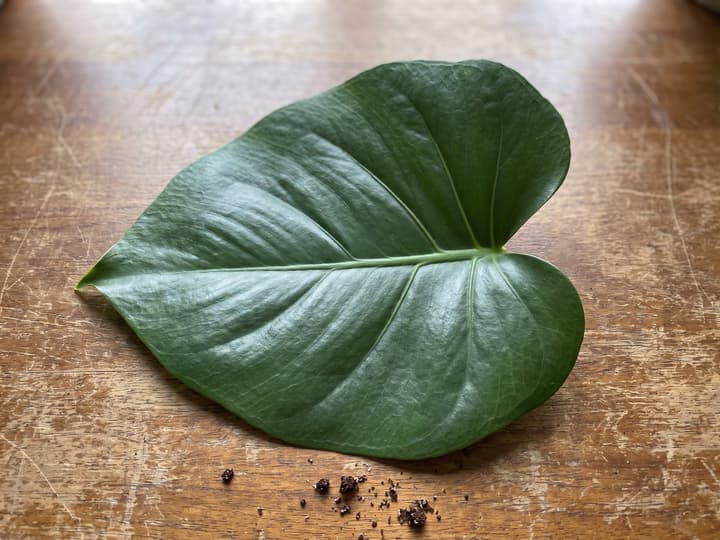
For grasses, rushes, and ferns, even a perfect photo might not work. Identification relies on microscopic structures at the base of the leaf, and neither test found any app to be reliable with these plants.
When the App Isn't Enough
Three situations where you should not rely solely on an app's answer.
Mushrooms. None of these apps identify fungi reliably, and neither study included them. You should never identify mushrooms by photo.
Plants you plan to eat or touch. If you need to know if a plant is edible or toxic to pets, always verify with a second source. MSU Extension recommends checking the identification on a university or government website using the scientific name, since common names vary wildly by region.
Sick plants. Identifying a species is not the same as diagnosing a disease. If your plant has spots or is wilting, apps para diagnosticar planta doente are much better suited for the job.
To check if the identified species actually occurs in your region, the USDA PLANTS database is free and open.
Frequently Asked Questions
Is there a free app to identify plants by photo?
Yes, there are several. Bloom has a free tier that includes 2 identifications per month and a watering schedule. PlantNet, Flora Incognita, and Seek are completely free with no limits, run by scientific research institutes. PictureThis, PlantSnap, and LeafSnap are free to download but limit free usage and prompt you to subscribe.
Can Google identify a plant from a picture?
Yes, using Google Lens, though its accuracy is average. In a 2025 British test, it scored 6.7 out of 10, and in the Michigan State University study, its exact species accuracy was between 28% and 48%. It is fine for quick curiosity, but not for decisions that require an exact match.
Which plant identification app is the most accurate?
It depends on what you are photographing. For wild flora in bloom, LeafSnap, ObsIdentify, and PlantNet led the 2025 Common By Nature test with scores above 9.7. For agricultural weeds, PictureThis won the MSU Extension study with 76% accuracy. Bloom uses the Plant.id engine, which has a university-tested 93% accuracy rate.
Is PlantNet completely free?
Yes. It has no paid version, no limits on identifications, and no ads. It is a citizen science project funded by French public research institutions, and the photos uploaded by users help build an open biodiversity database.
Can you identify houseplants by photo?
Yes, you can easily identify the genus. Pinpointing the exact species is harder because indoor plants are often cultivars or hybrids and rarely flower indoors. If you are using the identification to decide on light or watering, double-check the scientific name with a second source first.
The Verdict
If your ultimate goal is learning how to keep your plant alive, Bloom is the easiest path: it uses the Plant.id engine, which has a university-tested 93% accuracy rate, and immediately gives you a watering and light schedule, along with safety information for pets and children. You can start using the free tier on iOS.
If you just want the name with no sign-up and no limits, PlantNet is your best option and works offline. If you find yourself identifying weeds, PictureThis is the most accurate in that category. If you only have an occasional question and use an iPhone, try the built-in tool in your Photos app first.
Related articles
The 5 Best Apps to Remember to Water Your Plants
Always forgetting to water your plants? Here are the 5 best apps that remember for you, tested for smart reminders that actually fit your routine.
The 6 Best Plant Apps for Beginners
New to plants and worried you'll kill them? Here are the six best plant apps for beginners, tested for how easy they make identifying and caring for your first plants.
The 7 Best Apps for People Who Always Kill Their Plants
If your plants keep dying no matter how hard you try, these 7 apps were made for you. Here are the ones that actually help keep a plant alive.