White Mold: Fungal Disease | Treatment Guide
White mold (Sclerotinia sclerotiorum) is a devastating fungal disease affecting over 400 plant species worldwide. The fungus produces black, seed-like structures (sclerotia) that can survive in soil for 5 or more years. The disease is favored by cool, moist weather (50-68°F/10-20°C), especially during flowering.
Fast
21 days
What is White Mold?
White Mold is a fungal condition with high severity that affects plants. White mold (Sclerotinia sclerotiorum) is a devastating fungal disease affecting over 400 plant species worldwide. The fungus produces black, seed-like structures (sclerotia) that can survive in soil for 5 or more years. The disease is favored by cool, moist weather (50-68°F/10-20°C), especially duri...
White Mold is a fungal disease with high severity that spreads at a fast rate. Recovery typically takes approximately 21 days with proper treatment. It affects 10 plant species in our database. This condition is contagious and can spread between plants.
Unlike bacterial infections, White Mold spreads slowly but is harder to eradicate. Without treatment, affected leaves won't recover. Not recommended to ignore early signs. Without early intervention, recovery can take twice as long. Without isolation, nearby plants can become infected within days.
🔍 What Are the Symptoms of White Mold?
TLDR: White Mold presents 7 main symptoms. Early identification is crucial for effective treatment.
Main Symptoms
- ! Sudden wilting and yellowing of leaves
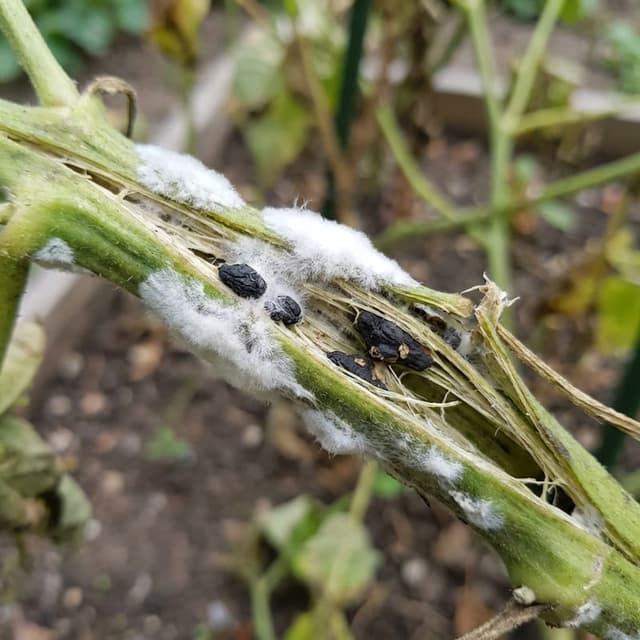
- ! Fluffy white mold growth on stems and leaves
- ! Water-soaked lesions expanding irregularly
- ! Soft, watery rot near soil level
- ! Black sclerotia (0.5-1cm) in white fungal mass
- ! Grayish-green appearance before wilting
- ! Infected stem sections become brittle and tan-colored
Visual Signs
❓ What Causes White Mold in Plants?
- → Fungus Sclerotinia sclerotiorum surviving in soil via sclerotia
- → Prolonged cool, moist conditions (50-68°F/10-20°C)
- → High humidity during flowering period
- → Poor air circulation from dense planting
- → Wind-borne spores from germinated sclerotia
- → Direct contact with contaminated soil
- → Fungus survival on plant debris for 5+ years
💊 How to Treat White Mold?
TLDR: Treat White Mold with 11 days of quick treatment or 21 days of organic treatment. Full recovery takes approximately 21 days.
Quick Fixes
~11 days
Immediate removal
Remove and completely destroy all infected plants. Burn or bag and dispose in trash.
Apply fungicide
Apply systemic fungicide (SDHI or DMI) to neighboring healthy plants preventively.
Reduce moisture
Stop all overhead watering. Use drip only. Improve ventilation/drainage.
Isolate area
Create buffer zone by removing plants within 20-inch radius of infection.
Intensive monitoring
Inspect remaining plants 2x daily for 14 days.
Materials needed:
Organic Treatment
~21 days
Remove infected plants
Carefully remove entire plant without spreading sclerotia. Burn or bury deeply (24+ inches). Do not compost.
Apply biocontrol
Apply Coniothyrium minitans to soil per instructions. This fungus parasitizes Sclerotinia sclerotia.
Improve circulation
Thin adjacent plants to improve airflow. Space plants 12-18 inches apart.
Adjust irrigation
Switch to drip irrigation. Water early morning. Avoid wetting foliage.
Soil solarization
If possible, cover soil with clear plastic for 4-6 weeks in summer (kills sclerotia).
Monitoring
Inspect plants daily for 3 weeks. Remove any new infection immediately.
Materials needed:
Expert Treatment
~32 days
Assessment and removal
Identify all symptomatic plants. Remove with 12-inch safety margin. Document infection locations.
Soil analysis
Collect soil samples from affected areas. Test sclerotia population (<1 sclerotia/100g soil = low risk).
Biocontrol + chemical
Apply Coniothyrium minitans to soil (10-20g/m²). Apply preventive foliar fungicide (azoxystrobin or boscalid) to healthy plants.
Environmental optimization
Reduce planting density to ≥16-inch spacing. Install subsurface drip irrigation. Maintain pH 6.0-6.5.
Rotation program
Plan 3-year rotation: Years 1-2 cereals/grasses, Year 3 return of susceptible crops.
Professional solarization
In affected beds, solarize for 6-8 weeks (June-August). Soil temperature must reach >113°F (45°C).
Monitoring and prevention
Implement weekly monitoring system. Apply preventive fungicides at early flowering. Maintain infection records.
Step by Step
- 1
Remove and destroy all infected plants immediately (burn or bury deep)
- 2
Do not compost infected material - destroy completely
- 3
Improve air circulation by reducing planting density
- 4
Apply preventive fungicide to neighboring healthy plants
- 5
Reduce irrigation and humidity around plants
- 6
Apply biocontrol agent Coniothyrium minitans to soil
- 7
Monitor neighboring plants daily for 2-3 weeks
🧪 Natural vs Chemical: Which Treatment Works for White Mold?
🌱 Natural Solutions
- ✓ Apply Coniothyrium minitans (biocontrol agent) reducing sclerotia by 95%
- ✓ Use well-composted material at 148-158°F (65-70°C) for 21+ days
- ✓ Apply potassium bicarbonate or sulfur as preventive
- ✓ Soil solarization in affected areas during summer
- ✓ Plant resistant species like ornamental grasses
💉 Chemical Solutions
- ✓ Methyl benzimidazole carbamate fungicides
- ✓ Succinate dehydrogenase inhibitors (SDHI)
- ✓ Demethylation inhibitors (DMI/azoles)
- ✓ Apply preventively at early flowering
- ✓ Repeat applications per label instructions
Treatment Comparison
| Type | Estimated time | Steps | Difficulty | Best For |
|---|---|---|---|---|
| ⚡Quick | ~11 days | 5 | Advanced | Urgent cases |
| 🌿Organic | ~21 days | 6 | Advanced | Indoor plants |
| 🔬Expert | ~32 days | 7 | Advanced | Severe infections |
🛡️ How to Prevent White Mold?
TLDR: Prevent White Mold with 8 essential care practices. Regular monitoring is key for early detection.
- ✓ Plant with proper spacing to promote air circulation
- ✓ Avoid excessive irrigation during and after flowering
- ✓ Use drip irrigation instead of overhead sprinklers
- ✓ Remove and destroy infected plants immediately
- ✓ Implement crop rotation with 2-3 years of non-host crops (cereals, corn)
- ✓ Water early in day so foliage dries before nightfall
- ✓ Clean up all crop debris after harvest
- ✓ Avoid planting susceptible species in areas with disease history
🔗Related Diseases
Rust
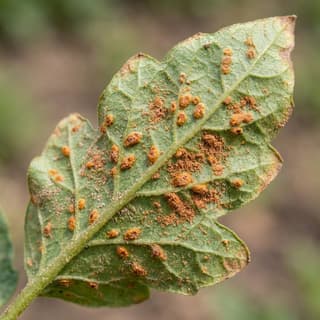
Rust fungi (Pucciniales) are fungal diseases that form rust-colored, usually orange to brown pustules with powdery spore dust on leaves, stems, or fruits. Typical symptoms include small spots that develop into cushions or rings; leaves turn yellow, curl, and drop prematurely. The fungi spread primarily in damp weather and dense foliage. Many ornamental and crop plants are affected, frequently including roses, mallows (hollyhocks), pears (pear rust), and currants. Some rust fungi require two host plants for their life cycle, such as pear and certain juniper species.
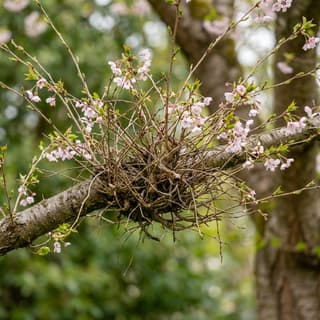
Cherry Witches' Broom
Taphrina wiesneri is a fungal disease affecting cherry trees (Prunus species, including sweet, sour, and ornamental varieties). The fungus overwinters in buds and bark, infecting young leaves and shoots during cool, wet spring weather. Infected leaves become thickened, puckered, and curled, often displaying reddish or yellow blotches and a fine whitish bloom on the surface. Severely affected leaves may drop prematurely. Small twigs can develop 'witches' brooms,' which are dense clusters of weak, distorted shoots.
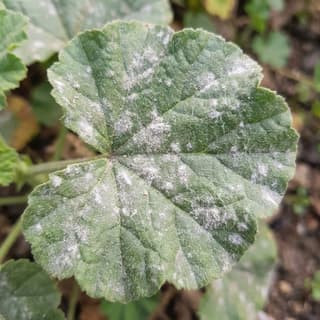
Powdery Mildew
MediumPowdery mildew is a common fungal disease caused by various fungi species including Erysiphe, Podosphaera, Oïdium, and Leveillula. It affects over 10,000 plant species worldwide. The disease thrives in warm, dry climates with high humidity and appears as a distinctive white powdery coating on plant surfaces.

Root Rot
HighRoot rot is a serious fungal disease that affects the root system of plants, causing them to decay and die. It is primarily caused by overwatering, poor drainage, or soil-borne fungi such as Pythium, Phytophthora, Rhizoctonia, and Fusarium. The disease thrives in waterlogged conditions where roots are deprived of oxygen, making them susceptible to fungal infection.