Sulfur Deficiency: How to Identify & Treat Fast
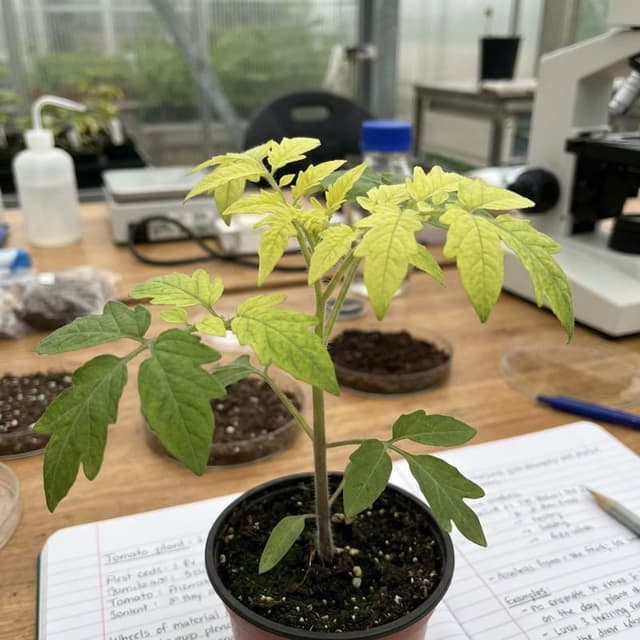
Sulfur deficiency is a nutrient disorder that occurs when plants lack adequate sulfur for normal growth and development. Unlike nitrogen deficiency which affects older leaves first, sulfur deficiency primarily manifests in younger leaves because sulfur is not mobile within the plant. Sulfur is essential for protein synthesis, enzyme function, and chlorophyll formation. This deficiency is more common in sandy soils, soils low in organic matter, and in high-rainfall areas where sulfur can be leached away.
Slow
28 days
What is Sulfur Deficiency?
Sulfur Deficiency is a nutrient_deficiency condition with moderate severity that affects plants. Sulfur deficiency is a nutrient disorder that occurs when plants lack adequate sulfur for normal growth and development. Unlike nitrogen deficiency which affects older leaves first, sulfur deficiency primarily manifests in younger leaves because sulfur is not mobile within the plant. Sulfur is essen...
Sulfur Deficiency is a nutrient_deficiency disease with moderate severity that spreads at a slow rate. Recovery typically takes approximately 28 days with proper treatment. It affects 3 plant species in our database.
Unlike many common diseases, Sulfur Deficiency is not contagious between plants.
🔍 What Are the Symptoms of Sulfur Deficiency?
TLDR: Sulfur Deficiency presents 10 main symptoms. Early identification is crucial for effective treatment.
Main Symptoms
- ! Yellowing (chlorosis) of younger leaves starting at tips and edges
- ! Uniform pale yellow to yellowish-green coloration on new growth
- ! Chlorosis progresses inward from leaf margins
- ! Young upper leaves more affected than older lower leaves
- ! Thin, hard, and elongated stems
- ! Stunted overall growth and reduced plant vigor
- ! Smaller leaves than normal size
- ! Delayed flowering and fruiting
- ! Reduced plant height and slower growth rate
- ! Lower overall yield and productivity
Visual Signs
❓ What Causes Sulfur Deficiency in Plants?
- → Low sulfur content in soil
- → Sandy soils with poor sulfur retention
- → Low organic matter content in soil
- → High rainfall causing sulfur leaching
- → Over-irrigation washing away sulfur
- → Using sulfur-free fertilizers exclusively
- → High soil pH reducing sulfur availability
- → Poor soil structure limiting root access to sulfur
💊 How to Treat Sulfur Deficiency?
TLDR: Treat Sulfur Deficiency with 14 days of quick treatment or 28 days of organic treatment. Full recovery takes approximately 28 days.
Quick Fixes
~14 days
Identify deficiency
Confirm yellowing on young upper leaves (not older lower leaves). This distinguishes sulfur from nitrogen deficiency.
Epsom salt foliar spray
Mix 1-2 teaspoons Epsom salts per gallon of water. Spray entire plant focusing on affected leaves.
Soil drench
Apply same Epsom salt solution directly to soil around base of plant. Use 1-2 cups per plant.
Fast-acting fertilizer
Apply water-soluble fertilizer containing sulfur (ammonium sulfate or potassium sulfate) per label instructions.
Immediate watering
Water thoroughly to help nutrients reach root zone quickly. Ensure good soil penetration.
Repeat foliar spray
Apply Epsom salt foliar spray again after 7 days if yellowing persists.
Observe new growth
Monitor new leaves emerging after treatment. They should show healthy green color within 10-14 days.
Materials needed:
Organic Treatment
~28 days
Soil testing
Conduct soil test to confirm sulfur deficiency and determine soil pH. This guides treatment approach.
Prepare organic amendments
Gather well-aged compost, composted manure, and gypsum. These provide natural sulfur sources.
Apply gypsum
Apply agricultural gypsum (calcium sulfate) at 1-2 pounds per 100 sq ft, working into top 2-3 inches of soil.
Add compost
Incorporate 2-3 inches of sulfur-rich compost or aged manure into soil around affected plants.
Epsom salt drench
Dissolve 1 tablespoon Epsom salts per gallon of water. Apply as soil drench around root zone.
Foliar application
Spray diluted Epsom salt solution (1 tsp per gallon) on leaves in early morning or evening.
Water management
Water deeply but reduce frequency to prevent sulfur leaching. Allow topsoil to dry between waterings.
Monitor recovery
Check new growth weekly for greening. Healthy green leaves indicate successful treatment.
Materials needed:
Expert Treatment
~42 days
Comprehensive soil analysis
Conduct complete soil test including sulfur, pH, organic matter, and related nutrients. Document baseline levels.
Calculate sulfur requirement
Based on soil test, calculate precise sulfur application rate. Typical range: 10-40 lbs sulfur per acre or 0.25-1 lb per 100 sq ft.
Adjust soil pH
If pH is above 7.5, apply elemental sulfur to gradually lower pH and improve sulfur availability. Use 1-2 lbs per 100 sq ft.
Apply base sulfur amendment
Incorporate gypsum (5-10 lbs per 100 sq ft) or elemental sulfur into soil to depth of 4-6 inches for long-term correction.
Immediate foliar treatment
Apply foliar sulfur spray using calcium thiosulfate or Epsom salts (2 tsp per gallon) for rapid symptom relief while soil amendments work.
Integrate organic matter
Add 3-4 inches of sulfur-rich compost or aged manure. Work into top 6 inches of soil to improve sulfur retention.
Apply fertigation
If using irrigation system, inject ammonium thiosulfate or calcium thiosulfate solution for uniform distribution.
Implement nutrient monitoring
Use tissue testing at 2-week intervals to track sulfur uptake. Adjust applications based on plant response.
Optimize irrigation
Reduce irrigation frequency by 20-30% to minimize sulfur leaching. Increase depth per watering instead.
Follow-up soil test
Retest soil after 4-6 weeks. Verify sulfur levels have increased to optimal range (10-20 ppm minimum).
Establish maintenance program
Create annual sulfur application schedule. Include sulfur in regular fertilization with 10-20 lbs per acre annually.
Step by Step
- 1
Test soil to confirm sulfur deficiency and pH levels
- 2
Remove any severely affected yellowed leaves
- 3
Apply sulfur-containing fertilizer according to soil test results
- 4
Water thoroughly after soil application to help sulfur penetrate
- 5
For quick response, apply foliar spray with Epsom salts (1-2 tsp per gallon)
- 6
Incorporate compost or aged manure into top 2-4 inches of soil
- 7
Add gypsum at recommended rates for soil type
- 8
Maintain consistent watering without over-irrigation
- 9
Monitor new growth for improvement over 2-3 weeks
- 10
Retest soil after 4-6 weeks to verify correction
- 11
Adjust long-term fertilization plan to include sulfur
🧪 Natural vs Chemical: Which Treatment Works for Sulfur Deficiency?
🌱 Natural Solutions
- ✓ Apply well-aged compost rich in organic sulfur
- ✓ Use composted manure as soil amendment
- ✓ Add gypsum (calcium sulfate) to soil
- ✓ Apply elemental sulfur for gradual release
- ✓ Use Epsom salts (magnesium sulfate) solution
- ✓ Incorporate sulfur-rich organic mulch
- ✓ Add bone meal which contains some sulfur
- ✓ Use fish emulsion as foliar feed
💉 Chemical Solutions
- ✓ Apply ammonium sulfate fertilizer
- ✓ Use potassium sulfate (sulfate of potash)
- ✓ Apply calcium thiosulfate solution
- ✓ Use ammonium thiosulfate as fertigation
- ✓ Apply sulfur-coated urea for slow release
- ✓ Use foliar sulfur sprays for quick correction
- ✓ Apply superphosphate containing sulfur
Treatment Comparison
| Type | Estimated time | Steps | Difficulty | Best For |
|---|---|---|---|---|
| ⚡Quick | ~14 days | 7 | Advanced | Urgent cases |
| 🌿Organic | ~28 days | 8 | Advanced | Indoor plants |
| 🔬Expert | ~42 days | 11 | Advanced | Severe infections |
🛡️ How to Prevent Sulfur Deficiency?
TLDR: Prevent Sulfur Deficiency with 9 essential care practices. Regular monitoring is key for early detection.
- ✓ Regular soil testing to monitor sulfur levels
- ✓ Add organic matter (compost, manure) to improve sulfur retention
- ✓ Use balanced fertilizers containing sulfur
- ✓ Maintain optimal soil pH (slightly acidic to neutral)
- ✓ Practice crop rotation to prevent sulfur depletion
- ✓ Avoid over-irrigation that leaches nutrients
- ✓ Apply gypsum to soils deficient in sulfur
- ✓ Mulch to reduce nutrient leaching from rainfall
- ✓ Monitor young plant growth for early symptoms
🔗Related Diseases
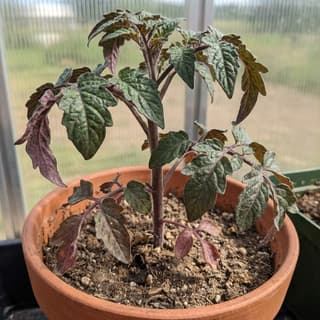
Phosphorus Deficiency
MediumPhosphorus deficiency is a common nutritional problem that hinders healthy plant growth. Phosphorus is essential for root development, flowering, fruiting, and energy metabolism. When deficient, plants exhibit stunted growth and leaves with purple or reddish coloration, especially on older leaves.
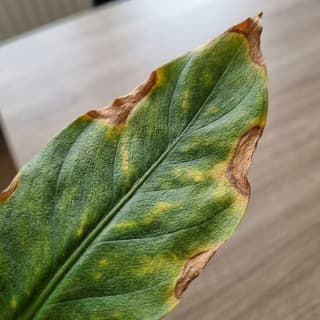
Potassium Deficiency
MediumPotassium deficiency is a nutritional disorder that affects a plant's ability to regulate stomatal opening and closing, resulting in characteristic leaf edge burn. Potassium is a mobile nutrient, so symptoms first appear on older, lower leaves.
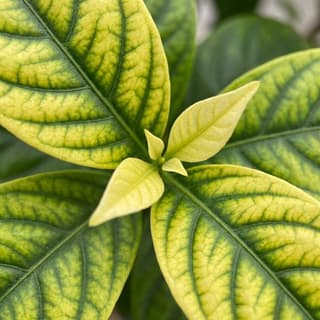
Iron Deficiency
MediumIron deficiency, commonly known as iron chlorosis, is a nutrient deficiency disorder where plants cannot access sufficient iron from the soil. While iron is typically abundant in soil, various soil conditions can limit plant uptake, resulting in characteristic yellowing of leaves while veins remain green.
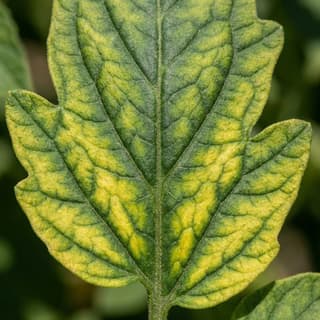
Magnesium Deficiency
MediumMagnesium deficiency is a nutrient disorder characterized by interveinal chlorosis, where leaf tissue between veins turns yellow while the veins remain green. This deficiency affects older leaves first as magnesium is a mobile nutrient that plants relocate to support new growth. Magnesium is essential for chlorophyll production and photosynthesis, making this deficiency critical for plant health.