Septoria Leaf Spot: Fungal Disease | Treatment Guide
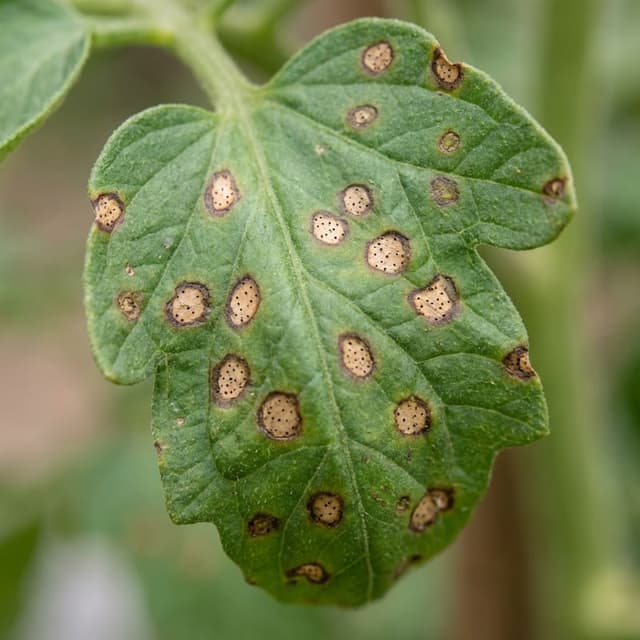
Septoria leaf spot is a destructive fungal disease caused by Septoria lycopersici, particularly devastating during seasons of moderate temperature and abundant rainfall. The disease starts on lower leaves and progresses upward, causing small circular spots with tan to gray centers and dark brown margins. If left untreated, it can dramatically reduce plant yields and cause complete leaf blight.
Medium
21 days
What is Septoria Leaf Spot?
Septoria Leaf Spot is a fungal condition with high severity that affects plants. Septoria leaf spot is a destructive fungal disease caused by Septoria lycopersici, particularly devastating during seasons of moderate temperature and abundant rainfall. The disease starts on lower leaves and progresses upward, causing small circular spots with tan to gray centers and dark brown mar...
Septoria Leaf Spot is a fungal disease with high severity that spreads at a moderate rate. Recovery typically takes approximately 21 days with proper treatment. It affects 10 plant species in our database. This condition is contagious and can spread between plants.
Unlike bacterial infections, Septoria Leaf Spot spreads slowly but is harder to eradicate. Without treatment, affected leaves won't recover. Not recommended to ignore early signs. Without early intervention, recovery can take twice as long. Without isolation, nearby plants can become infected within days.
🔍 What Are the Symptoms of Septoria Leaf Spot?
TLDR: Septoria Leaf Spot presents 0 main symptoms. Early identification is crucial for effective treatment.
Visual Signs
❓ What Causes Septoria Leaf Spot in Plants?
- → Fungal pathogen Septoria lycopersici
- → Spores survive up to 2 years in infected plant debris
- → Spread through water splash from rain or overhead irrigation
- → High humidity and moderate temperatures (60-80°F) favor disease development
- → Poor air circulation and wet foliage conditions
- → Infected seeds or transplants
- → Solanaceous weeds acting as disease reservoirs
💊 How to Treat Septoria Leaf Spot?
TLDR: Treat Septoria Leaf Spot with 11 days of quick treatment or 21 days of organic treatment. Full recovery takes approximately 21 days.
Quick Fixes
~11 days
Step 1
At first sign of symptoms, apply chlorothalonil-based fungicide
Step 2
Spray thoroughly to cover all leaf surfaces, especially undersides
Step 3
Repeat application every 7 days during favorable disease conditions
Step 4
Remove heavily infected leaves to reduce spore load
Step 5
Ensure good spray coverage on lower canopy where disease starts
Materials needed:
Organic Treatment
~21 days
Step 1
Remove and destroy infected lower leaves carefully while preserving adequate canopy
Step 2
Apply copper-based fungicide (copper diammonia diacetate complex preferred) at early symptom appearance
Step 3
Spray neem oil as foliar application every 7-10 days during wet weather
Step 4
Use baking soda solution (1 tbsp soda + 2.5 tbsp oil per gallon water) as preventative spray
Step 5
Apply compost tea as foliar treatment to boost plant immunity
Step 6
Maintain strict sanitation by removing fallen leaves weekly
Materials needed:
Expert Treatment
~32 days
Step 1
Implement comprehensive field scouting weekly to detect early symptoms
Step 2
Begin preventative fungicide applications before disease appears if conditions favor infection
Step 3
Rotate fungicide modes of action (Group M, Group 11) to prevent resistance
Step 4
Apply azoxystrobin or chlorothalonil on 7-10 day schedule during flowering and fruit set
Step 5
Combine chemical control with cultural practices: improve spacing, prune excess foliage, ensure proper irrigation timing
Step 6
Remove infected plant debris and sanitize equipment between uses
Step 7
Monitor disease pressure and adjust spray intervals based on weather conditions
Step 8
Cease applications based on pre-harvest intervals (PHI): 0-7 days depending on product
Treatment Comparison
| Type | Estimated time | Steps | Difficulty | Best For |
|---|---|---|---|---|
| ⚡Quick | ~11 days | 5 | Advanced | Urgent cases |
| 🌿Organic | ~21 days | 6 | Advanced | Indoor plants |
| 🔬Expert | ~32 days | 8 | Advanced | Severe infections |
🛡️ How to Prevent Septoria Leaf Spot?
TLDR: Prevent Septoria Leaf Spot with 10 essential care practices. Regular monitoring is key for early detection.
- ✓ Rotate crops away from tomatoes and related plants for at least 2 years
- ✓ Remove and destroy all infected plant debris at season end
- ✓ Use disease-free certified seeds and transplants
- ✓ Space plants adequately for good air circulation
- ✓ Stake or trellis plants to keep foliage off ground
- ✓ Apply mulch to prevent soil-to-leaf contact
- ✓ Water at plant base early morning using drip irrigation
- ✓ Avoid overhead watering and working with wet plants
- ✓ Control solanaceous weeds like horsenettle
- ✓ Sanitize tools and equipment between uses
🔗Related Diseases
Rust
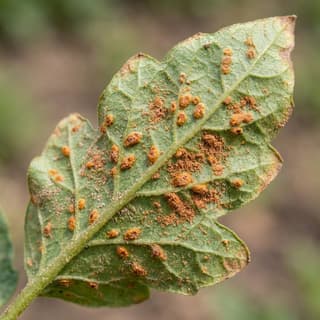
Rust fungi (Pucciniales) are fungal diseases that form rust-colored, usually orange to brown pustules with powdery spore dust on leaves, stems, or fruits. Typical symptoms include small spots that develop into cushions or rings; leaves turn yellow, curl, and drop prematurely. The fungi spread primarily in damp weather and dense foliage. Many ornamental and crop plants are affected, frequently including roses, mallows (hollyhocks), pears (pear rust), and currants. Some rust fungi require two host plants for their life cycle, such as pear and certain juniper species.
Cherry Witches' Broom
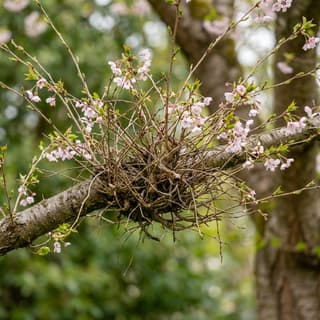
Taphrina wiesneri is a fungal disease affecting cherry trees (Prunus species, including sweet, sour, and ornamental varieties). The fungus overwinters in buds and bark, infecting young leaves and shoots during cool, wet spring weather. Infected leaves become thickened, puckered, and curled, often displaying reddish or yellow blotches and a fine whitish bloom on the surface. Severely affected leaves may drop prematurely. Small twigs can develop 'witches' brooms,' which are dense clusters of weak, distorted shoots.
Powdery Mildew
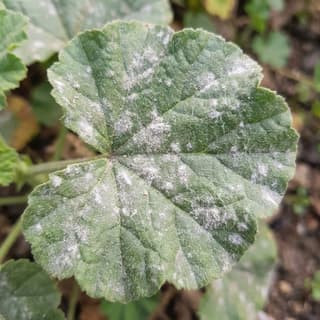
MediumPowdery mildew is a common fungal disease caused by various fungi species including Erysiphe, Podosphaera, Oïdium, and Leveillula. It affects over 10,000 plant species worldwide. The disease thrives in warm, dry climates with high humidity and appears as a distinctive white powdery coating on plant surfaces.

Root Rot
HighRoot rot is a serious fungal disease that affects the root system of plants, causing them to decay and die. It is primarily caused by overwatering, poor drainage, or soil-borne fungi such as Pythium, Phytophthora, Rhizoctonia, and Fusarium. The disease thrives in waterlogged conditions where roots are deprived of oxygen, making them susceptible to fungal infection.