Areca Palm Prone to Salt Buildup: How to Protect
Dypsis lutescens
Salt Buildup on Areca Palm: What to Know?
Salt Buildup on Areca Palm (Dypsis lutescens) is a environmental condition with moderate severity. Areca Palm has high susceptibility to this disease. Salt buildup (also called salt accumulation or fertilizer salt deposits) is an environmental condition where mineral salts accumulate in the soil over time, creating a toxic environment for plant root...
Areca Palm is a medium-care plant. Recovery from Salt Buildup takes approximately 14 days with proper treatment. As an indoor plant, ensure good ventilation to aid recovery.
Areca Palm is highly susceptible to Salt Buildup, unlike most plants in the same family. Without early intervention, recovery takes 21 days instead of 14 days.
🔍 What Does Salt Buildup Look Like on Areca Palm?
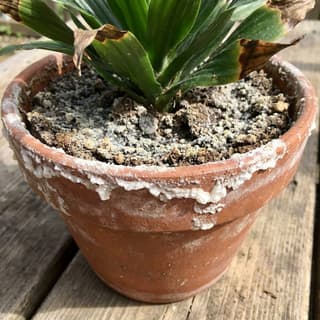
- • White crusty deposits on soil surface
- • White or yellow crystalline buildup around pot edges
- • Brown or burned leaf tips and edges
- • Yellowing leaves (chlorosis)
- • Wilting despite adequate watering
- • Stunted growth, especially in new growth
- • Premature leaf drop
- • Dead root tips
- • Reduced flowering or bud abortion
❓ What Causes Salt Buildup on Areca Palm?
- → Frequent shallow watering that does not flush salts through drainage
- → Over-fertilization or too frequent fertilization
- → Tap water high in dissolved minerals and salts
- → Poor drainage preventing salt leaching
- → Underwatering that concentrates salts in remaining water
- → Low-quality potting soil with high salt content
- → Hard water with high mineral content
- → Lack of flushing between fertilizer applications
💊 How to Treat Salt Buildup on Areca Palm?
TLDR: Treat Salt Buildup on Areca Palm with quick treatment (~7 days) or organic (~14 days). Areca Palm has high susceptibility to this disease.
Quick Fixes
Step 1
Take plant to sink, bathtub, or outdoors where water can drain freely
Step 2
Water soil thoroughly as normal, wait 5 minutes
Step 3
Water again heavily - pour twice the pot volume slowly through soil
Step 4
Let water drain completely through bottom holes
Step 5
Remove any visible white crust from soil surface and pot rim
Step 6
Do not let pot sit in drainage tray during process
Organic Treatment
Step 1
Remove visible white salt crust from soil surface (up to 0.25 inches deep)
Step 2
Use only rainwater or distilled water for leaching to avoid adding more minerals
Step 3
Slowly pour water through soil until it drains freely - use 3-4 times the pot volume
Step 4
Allow excess water to drain completely, never let pot sit in drained water
Step 5
Incorporate organic compost or worm castings to buffer future salt accumulation
Step 6
Repeat leaching every 4-6 months as preventive maintenance
🛡️ How to Prevent Salt Buildup on Areca Palm?
TLDR: Prevent Salt Buildup on Areca Palm with 8 essential preventive care practices.
- ✓ Water thoroughly until water drains from the bottom to flush salts
- ✓ Leach container soil every 3-6 months as preventive maintenance
- ✓ Use distilled, filtered, or rainwater instead of tap water
- ✓ Use slow-release fertilizers instead of frequent liquid feeding
- ✓ Apply fertilizer at half the recommended strength
- ✓ Ensure pots have adequate drainage holes
- ✓ Avoid over-fertilizing, follow package instructions
- ✓ Choose organic fertilizers which have lower salt content
🌱 How to Care for Areca Palm to Prevent Salt Buildup?
💧 How to Water
Keep the soil consistently moist but never waterlogged. Water when the top inch of soil dries out. Use filtered or rainwater to prevent brown tips caused by chlorine and minerals in tap water.
☀️ Lighting
Place in bright indirect light, near windows with sheer curtains. Avoid direct sunlight which can scorch the leaves. Tolerates lower light conditions but will grow more slowly.
🪴 Ideal Soil
Use well-draining, slightly acidic potting mix (pH 5.5-7.0). Mix equal parts potting soil, perlite, and peat moss. Ensure good drainage at the bottom of the pot.