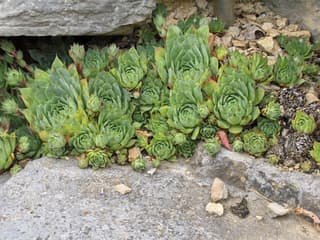

Common Houseleek with Edema? Rare but Treatable
Sempervivum tectorum
Edema on Common Houseleek: What to Know?
Edema on Common Houseleek (Sempervivum tectorum) is a environmental condition with low severity. Common Houseleek has low susceptibility to this disease. Edema (also spelled oedema) is a non-infectious physiological disorder caused by an imbalance between water uptake and transpiration. When roots absorb water faster than leaves can release it through...
Common Houseleek is a easy-care plant. Recovery from Edema takes approximately 35 days with proper treatment. As an indoor plant, ensure good ventilation to aid recovery.
Unlike most plants, Common Houseleek has natural resistance to Edema. Best treated with preventive measures rather than reactive treatment.
🔍 What Does Edema Look Like on Common Houseleek?
- • Small translucent fluid-filled blisters appear on leaf undersides
- • Wart-like bumps primarily affect older leaves, starting at margins
- • Blisters may increase in size, merge together, then burst
- • Ruptured blisters leave tan or brown corky scars
- • Leaves may curl or show minor distortion
- • Occasionally affects stems with raised corky lesions
- • No yellowing, wilting, or plant decline (distinguishes from disease)
❓ What Causes Edema on Common Houseleek?
- → Excessive water uptake by roots exceeding transpiration capacity
- → High relative humidity (above 70%) reducing moisture loss through stomata
- → Low light conditions (below 2,500 lux) limiting photosynthesis and transpiration
- → Cool air temperatures combined with warm root zones
- → Poor air circulation preventing water vapor dispersal
- → Overwatering or waterlogged soil conditions
- → Cool, cloudy weather during winter months
- → Sudden environmental changes (greenhouse to home transition)
💊 How to Treat Edema on Common Houseleek?
TLDR: Treat Edema on Common Houseleek with quick treatment (~18 days) or organic (~35 days). Common Houseleek has low susceptibility to this disease.
Quick Fixes
Step 1
Stop watering immediately and let soil dry out
Step 2
Move plant to area with better air circulation and lower humidity
Step 3
Remove all heavily blistered or damaged leaves
Step 4
Ensure drainage holes are clear and functioning
Step 5
Place container on pot feet to improve drainage
Step 6
Reduce ambient humidity if growing indoors
Organic Treatment
Step 1
Reduce watering frequency immediately - allow soil to dry between waterings
Step 2
Improve soil drainage by incorporating organic matter (leaf mould, well-rotted compost)
Step 3
Apply foliar spray of compost tea weekly to strengthen plant immune system
Step 4
Increase air circulation around affected plants
Step 5
Remove severely affected leaves to prevent further stress
Step 6
Apply organic silica supplements to strengthen cell walls
Step 7
Introduce mycorrhizal fungi to enhance nutrient uptake
🛡️ How to Prevent Edema on Common Houseleek?
TLDR: Prevent Edema on Common Houseleek with 8 essential preventive care practices.
- ✓ Water only when top 1-2 inches of soil feel dry to touch
- ✓ Ensure proper drainage with well-draining soil and pots with holes
- ✓ Maintain humidity below 60% using dehumidifiers if needed
- ✓ Provide adequate spacing between plants (6+ inches minimum)
- ✓ Ensure good air circulation with fans running 4-6 hours daily
- ✓ Provide sufficient light (6+ hours direct sun or grow lights)
- ✓ Avoid temperature extremes between soil and air
- ✓ Empty plant saucers 30 minutes after watering
🌱 How to Care for Common Houseleek to Prevent Edema?
💧 How to Water
Water sparingly, allowing soil to dry completely between waterings. In summer, water once every 2-3 weeks. Reduce to monthly or less in winter. Overwatering is the main killer - when in doubt, do not water.
☀️ Lighting
Requires full sun for best coloration and compact growth. At least 6 hours of direct sunlight daily. Can tolerate partial shade but may become leggy and lose vibrant colors. Provide afternoon shade in extremely hot climates.
🪴 Ideal Soil
Requires excellent drainage - use sandy, gravelly, or gritty soil. A cactus/succulent mix works well. Tolerates poor, rocky soils. Never use moisture-retentive potting mixes.