Caterpillars: Pest Control | Identify & Treat
Caterpillars are the larval stage of moths and butterflies that feed voraciously on plant foliage, stems, flowers, and fruits. Common species include cabbage loopers, tomato hornworms, armyworms, and cutworms. These pests can cause extensive damage by consuming large amounts of plant tissue in a short time. They vary in size from small (1/4 inch) to large (5 inches), with colors ranging from green to brown, often featuring stripes or spots. Caterpillars are highly mobile and can quickly spread throughout gardens, making them one of the most destructive common pests.
Fast
21 days
What is Caterpillars?
Caterpillars is a pest condition with high severity that affects plants. Caterpillars are the larval stage of moths and butterflies that feed voraciously on plant foliage, stems, flowers, and fruits. Common species include cabbage loopers, tomato hornworms, armyworms, and cutworms. These pests can cause extensive damage by consuming large amounts of plant tissue in a sho...
Caterpillars is a pest disease with high severity that spreads at a fast rate. Recovery typically takes approximately 21 days with proper treatment. It affects 10 plant species in our database. This condition is contagious and can spread between plants.
Unlike fungal diseases, Caterpillars can be controlled quickly with integrated management. Without immediate action, the infestation spreads to nearby plants. Not recommended to ignore early signs. Without early intervention, recovery can take twice as long. Without isolation, nearby plants can become infected within days.
🔍 What Are the Symptoms of Caterpillars?
TLDR: Caterpillars presents 9 main symptoms. Early identification is crucial for effective treatment.
Main Symptoms
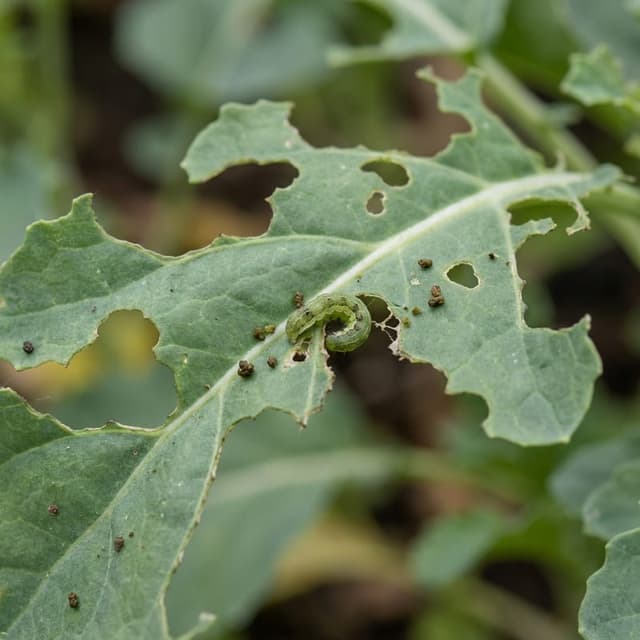
- ! Irregular holes and ragged edges on leaves
- ! Large portions of foliage completely consumed
- ! Dark cylindrical droppings (frass) on leaves and soil
- ! Visible caterpillars of various sizes on plant surfaces
- ! Skeletonized leaves with only veins remaining
- ! Bore holes in fruits, vegetables, and flowers
- ! Defoliation starting from leaf edges
- ! Stunted plant growth from severe feeding damage
- ! Presence of white cocoons or pupae on plants
Visual Signs
❓ What Causes Caterpillars in Plants?
- → Adult moths and butterflies laying eggs on host plants
- → Eggs hatching into hungry larvae seeking food
- → Warm weather accelerating reproduction cycles
- → Poor garden sanitation harboring overwintering pupae
- → Lack of natural predators in garden ecosystem
- → Dense plantings making detection difficult
- → Introduction from infected transplants
- → Nearby weeds serving as alternative host plants
💊 How to Treat Caterpillars?
TLDR: Treat Caterpillars with 11 days of quick treatment or 21 days of organic treatment. Full recovery takes approximately 21 days.
Quick Fixes
~11 days
Step 1
Hand-pick all visible caterpillars immediately and destroy in soapy water
Step 2
Mix emergency spray: 2 tablespoons dish soap + 1 quart water
Step 3
Add 1 teaspoon cayenne pepper or hot sauce to soap solution for added deterrent
Step 4
Spray solution directly on caterpillars and all leaf surfaces
Step 5
Use strong water spray from hose to physically dislodge caterpillars
Step 6
Remove severely damaged leaves and plant parts to eliminate hiding spots
Step 7
Repeat soap spray treatment every 2-3 days for one week
Step 8
Monitor plants twice daily and remove any new caterpillars immediately
Materials needed:
Organic Treatment
~21 days
Step 1
Inspect plants early morning or dusk when caterpillars are most active and visible
Step 2
Hand-pick caterpillars wearing gloves, placing them in jar of soapy water
Step 3
Check leaf undersides and stems for eggs (small clusters of white or yellow spheres) and crush them
Step 4
Mix Bacillus thuringiensis (Bt): 1-2 tablespoons per gallon of water in spray bottle
Step 5
Spray Bt solution thoroughly on all foliage, especially leaf undersides where caterpillars hide
Step 6
Apply Bt in late afternoon/evening when caterpillars are actively feeding for best results
Step 7
Reapply Bt every 5-7 days or immediately after rainfall
Step 8
Introduce beneficial insects: release ladybugs (1,500 per 1,000 sq ft), lacewings, or parasitic wasps
Step 9
Encourage natural predators by planting nectar-rich flowers (yarrow, dill, fennel) nearby
Step 10
Install bird feeders and water sources to attract insect-eating birds
Step 11
Apply diatomaceous earth around plant bases as physical barrier
Step 12
Continue monitoring and hand-picking for 3-4 weeks until no new caterpillars appear
Materials needed:
Expert Treatment
~32 days
Step 1
Identify caterpillar species using field guide or extension service for targeted treatment
Step 2
Document infestation severity: count caterpillars per plant, photograph damage
Step 3
Hand-pick and destroy all visible caterpillars and egg masses
Step 4
Apply professional-grade Bt (Bacillus thuringiensis var. kurstaki) at labeled rate
Step 5
Supplement with spinosad-based insecticide (organic option) if Bt alone is insufficient
Step 6
Deploy pheromone traps to monitor adult moth activity and predict egg-laying cycles
Step 7
Install floating row covers over crops to physically exclude adult moths
Step 8
Release commercially-reared parasitic wasps (Trichogramma) timed to egg-laying period
Step 9
Apply neem oil (azadirachtin) to disrupt molting and feeding behavior
Step 10
Implement trap cropping: plant sacrificial host plants away from main crops
Step 11
Use selective fast-acting insecticides (e.g., spinosad, indoxacarb) only for severe outbreaks
Step 12
Rotate insecticide modes of action to prevent resistance development
Step 13
Monitor weekly with systematic plant inspections and sticky traps
Step 14
Practice fall garden cleanup: remove plant debris, till soil to expose pupae
Step 15
Document treatment results and adjust integrated pest management (IPM) strategy
Step by Step
- 1
Identify caterpillar species if possible to target treatment
- 2
Hand-pick all visible caterpillars and drop into soapy water
- 3
Remove heavily damaged leaves and destroyed plant parts
- 4
Apply Bt (Bacillus thuringiensis) spray thoroughly to all foliage
- 5
Reapply Bt every 5-7 days or after rain for 3-4 weeks
- 6
Introduce or attract beneficial predators to garden
- 7
Monitor plants daily for new caterpillar activity
- 8
Use physical barriers like row covers to prevent reinfection
- 9
Continue monitoring for 2 weeks after last caterpillar sighting
🧪 Natural vs Chemical: Which Treatment Works for Caterpillars?
🌱 Natural Solutions
- ✓ Hand-pick caterpillars daily in early morning or dusk when most active
- ✓ Apply Bacillus thuringiensis (Bt) spray targeting young caterpillars
- ✓ Use insecticidal soap on small caterpillars and eggs
- ✓ Spray neem oil to disrupt feeding and growth cycles
- ✓ Release beneficial insects: ladybugs, lacewings, parasitic wasps, tachinid flies
- ✓ Encourage natural predators: birds, ground beetles, assassin bugs
- ✓ Apply diatomaceous earth around plant bases as barrier
- ✓ Use spinosad (organic bacterial insecticide) for severe infestations
- ✓ Deploy pheromone traps to monitor and reduce adult moth populations
- ✓ Apply garlic or hot pepper spray as natural feeding deterrent
💉 Chemical Solutions
- ✓ Fast-acting synthetic pyrethroids for immediate knockdown
- ✓ Carbaryl (Sevin) for broad-spectrum caterpillar control
- ✓ Permethrin or bifenthrin for persistent protection
- ✓ Systemic insecticides containing spinosad or chlorantraniliprole
- ✓ Follow label instructions carefully for application timing and rates
- ✓ Rotate chemical classes to prevent resistance development
- ✓ Apply in evening to minimize harm to beneficial pollinators
Treatment Comparison
| Type | Estimated time | Steps | Difficulty | Best For |
|---|---|---|---|---|
| ⚡Quick | ~11 days | 8 | Advanced | Urgent cases |
| 🌿Organic | ~21 days | 12 | Advanced | Indoor plants |
| 🔬Expert | ~32 days | 15 | Advanced | Severe infections |
🛡️ How to Prevent Caterpillars?
TLDR: Prevent Caterpillars with 9 essential care practices. Regular monitoring is key for early detection.
- ✓ Inspect plants regularly, especially leaf undersides, for eggs and young larvae
- ✓ Remove eggs and small caterpillars by hand before populations explode
- ✓ Use floating row covers to exclude adult moths from laying eggs
- ✓ Maintain diverse plantings to attract beneficial predators
- ✓ Plant aromatic herbs (rosemary, sage, thyme) as companion plants to repel moths
- ✓ Keep garden free of plant debris and weeds that harbor pupae
- ✓ Rotate crop locations annually to break pest cycles
- ✓ Encourage birds by providing water sources and nesting sites
- ✓ Till soil in fall to expose overwintering pupae to predators and cold
🔗Related Diseases
Whitefly
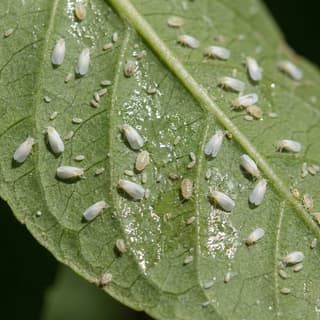
Whiteflies (family Aleyrodidae) are tiny, sap-sucking insects that thrive in warm, still air. They are common on houseplants, greenhouse crops, and garden plants such as tomatoes, peppers, cucumbers, fuchsias, hibiscus, poinsettias, citrus, and many herbs. You’ll often see small white adults flutter up when you touch the plant, sticky honeydew on leaves or nearby surfaces, black sooty mould growing on that honeydew, and leaves that yellow, curl, or drop. Check the undersides of leaves for pale, scale-like nymphs and tiny eggs laid in small arcs. Heavy infestations weaken plants and slow growth.

Woolly Beech Aphid
Phyllaphis is a genus of woolly aphids that primarily attack beech (Fagus), typically common beech and copper beech in hedges and as trees. They suck plant sap from young shoots and the undersides of leaves in spring and early summer. Signs of infestation include curled or rolled leaves, sticky honeydew, black sooty mold, and a white, cottony coating around the colonies. The plants usually survive, but heavy infestations can weaken new growth and make the hedge sticky and unsightly. The aphids often overwinter as eggs on thin twigs near buds.
Flea beetle damage
MediumFlea beetles are small, jumping insects that feed on the leaves of many vegetable crops. They chew numerous small, circular holes, creating a characteristic 'shothole' appearance. While established plants can often tolerate the damage, young seedlings are highly susceptible and can be stunted or killed if the infestation is severe.
Woolly Aphid
Prociphilus is a genus of woolly aphids that feed by sucking sap from plants. They produce a fluffy, white, cotton-like coating on leaves, shoots, or sometimes roots. Signs include sticky honeydew, black sooty mold growing on the honeydew, leaf curling or distortion, and clusters of tiny, soft-bodied insects hidden in the "wool." Ants are often active around them because they feed on the honeydew. These aphids commonly affect alder and maple (woolly alder aphid) and ash (woolly ash aphid). They rarely kill established trees, but they can stress young plants and create a messy, sticky problem.