
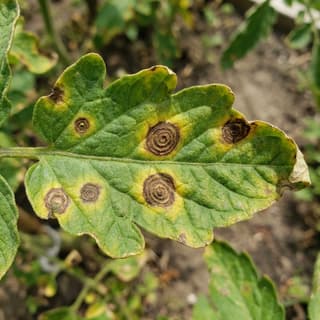
Sunflower with Alternaria Leaf Spot: Prevention & Cure
Helianthus annuus
Alternaria Leaf Spot on Sunflower: What to Know?
Alternaria Leaf Spot on Sunflower (Helianthus annuus) is a fungal condition with high severity. Sunflower has moderate susceptibility to this disease. Alternaria leaf spot is a common fungal disease caused by Alternaria solani and Alternaria alternata that affects a wide range of plants including tomatoes, potatoes, brassicas, and ornamentals. The d...
Sunflower is a easy-care plant. Recovery from Alternaria Leaf Spot takes approximately 28 days with proper treatment.
Unlike bacterial infections, Alternaria Leaf Spot on Sunflower can be managed with organic fungicides.
🔍 What Does Alternaria Leaf Spot Look Like on Sunflower?
- • Small dark circular spots (0.5-0.75 inches diameter) on leaves
- • Concentric rings forming target-like patterns
- • Spots change from black to tan/gray with yellow halos
- • Fuzzy texture develops as fungus produces spores
- • Premature leaf wilting and drop
- • Brown or black spots on fruits and stems
- • Weakened plants and reduced vigor
❓ What Causes Alternaria Leaf Spot on Sunflower?
- → Fungal pathogens Alternaria solani and Alternaria alternata
- → Warm temperatures (60-80°F) with high humidity
- → Overhead watering creating prolonged leaf wetness
- → Dense plant spacing limiting air circulation
- → Plant stress from nutrient deficiency or drought
- → Overwintering spores on plant debris
- → Contaminated seeds carrying fungal spores
💊 How to Treat Alternaria Leaf Spot on Sunflower?
TLDR: Treat Alternaria Leaf Spot on Sunflower with quick treatment (~14 days) or organic (~28 days). Sunflower has moderate susceptibility to this disease.
Quick Fixes
Step 1
Remove heavily infected leaves immediately
Step 2
Apply chlorothalonil or mancozeb protectant fungicide to all plant surfaces
Step 3
Ensure thorough coverage including leaf undersides
Step 4
Reapply every 7 days or after rain
Step 5
Switch to azoxystrobin systemic fungicide after 2 applications for resistance management
Step 6
Continue treatment for 2 weeks after symptoms clear
Organic Treatment
Step 1
Remove all visible infected leaves and plant debris, dispose in sealed bags
Step 2
Apply Bacillus subtilis biological fungicide spray, covering all leaf surfaces thoroughly
Step 3
Spray copper fungicide (organic-approved copper hydroxide or oxychloride) on remaining foliage
Step 4
Apply straw mulch around plant base to prevent soil splash
Step 5
Reapply biological spray every 5-7 days
Step 6
Reapply copper spray every 7-10 days
Step 7
Continue monitoring and treatment for 3-4 weeks
🛡️ How to Prevent Alternaria Leaf Spot on Sunflower?
TLDR: Prevent Alternaria Leaf Spot on Sunflower with 8 essential preventive care practices.
- ✓ Remove and destroy infected plant debris immediately
- ✓ Practice 3-4 year crop rotation with non-host plants
- ✓ Space plants properly for good air circulation
- ✓ Water at soil level, avoid overhead irrigation
- ✓ Apply straw mulch immediately after planting
- ✓ Use certified disease-free seeds and transplants
- ✓ Avoid working with wet plants to prevent spore spread
- ✓ Maintain plant health through proper fertilization
🌱 How to Care for Sunflower to Prevent Alternaria Leaf Spot?
💧 How to Water
Water deeply every 2-3 days, keeping the soil uniformly moist but not waterlogged. On very hot days, it may require daily watering. Avoid wetting the leaves to prevent fungal diseases.
☀️ Lighting
Requires direct full sun for at least 6-8 hours daily. It is a heliophilic plant that develops best with maximum sun exposure. It does not tolerate shade.
🪴 Ideal Soil
Prefers soil rich in organic matter, well-drained, with a pH between 6.0 and 7.5. Add compost or humus before planting for better development.