Fabaceae
White clover: Ground Cover Plant
Trifolium repens
White clover is a hardy, low-maintenance ground cover that thrives in full sun to partial shade and well-draining soil. Water regularly, especially during dry periods, and fertilize lightly in spring. It is generally pest and disease resistant.
Every 7 days
Bright indirect
5° - 25°C
30% - 50%
Categories
What is White clover?
White clover (Trifolium repens) is a easy-care plant from the Fabaceae family. Trifolium repens, commonly known as white clover, is a low-growing, perennial herbaceous plant in the pea family Fabaceae. It is native to Europe and Western Asia but has been widely naturalized throughout the world. It is characterized by its trifoliate leaves and dense heads of white flowers. It i...
White clover grows up to 15cm, spread of 45cm, watering every 7 days, 5°C – 25°C, 30–50% humidity. It is not suitable for indoor environments and safe for pets.
Unlike many tropical plants, White clover tolerates watering mistakes. Best for beginners. Unlike many popular species, White clover is safe to keep around pets.
How to Care for White clover?
TLDR: White clover needs Bright indirect, watering every 7 days, and temperatures between 5-25°C with 30-50% humidity.
How Often Should You Water White clover?
Water regularly to keep the soil consistently moist, especially during establishment and dry spells. Avoid waterlogged conditions, as this can lead to root rot. Drought tolerant once established but may become less vigorous without adequate water during prolonged dry periods.
How Much Light Does White clover Need?
Prefers full sun but tolerates partial shade. Insufficient light can lead to reduced flowering and a leggier appearance.
What Is the Best Soil for White clover?
Adaptable to various soil types but prefers well-draining, moderately fertile soil. It can tolerate poor soils and compacted conditions.
What Is White clover and Where Does It Come From?
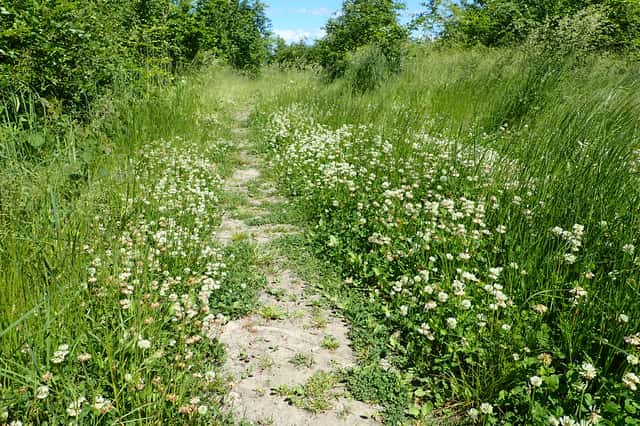
Trifolium repens, commonly known as white clover, is a low-growing, perennial herbaceous plant in the pea family Fabaceae. It is native to Europe and Western Asia but has been widely naturalized throughout the world. It is characterized by its trifoliate leaves and dense heads of white flowers. It is often found in lawns, pastures, and meadows, and is known for its ability to fix nitrogen in the soil.
How Big Does White clover Grow?
TLDR: White clover can reach up to 15cm tall with Fast growth rate.
Max height
15cm
Spread
45cm
Growth rate
Fast
Foliage
Deciduous
Plant Uses
Ground Cover
Soil coverage
Ornamental
Great for decoration
Edible
Can be consumed
Medicinal
Medicinal properties
Is your plant showing symptoms?
Click on the symptom to discover possible causes:
What Diseases Commonly Affect White clover?
TLDR: White clover is susceptible to 7 known diseases. Monitor regularly for early detection.
Powdery Mildew
Powdery mildew is a common fungal disease caused by various fungi species including Erysiphe, Podosphaera, Oïdium, and Leveillula. It affects over 10,000 plant species worldwide. The disease thrives in warm, dry climates with high humidity and appears as a distinctive white powdery coating on plant surfaces.
Root Rot
Root rot is a serious fungal disease that affects the root system of plants, causing them to decay and die. It is primarily caused by overwatering, poor drainage, or soil-borne fungi such as Pythium, Phytophthora, Rhizoctonia, and Fusarium. The disease thrives in waterlogged conditions where roots are deprived of oxygen, making them susceptible to fungal infection.
Leaf Spot
Leaf spot is a common fungal disease caused by various pathogens including Alternaria, Ascochyta, Colletotrichum, Septoria, and Venturia. It primarily affects leaves, causing discolored spots that can lead to premature leaf drop if left untreated.
Mosaic Virus
Mosaic virus is a group of plant viruses that cause mottled, patchy patterns on leaves and can affect a wide variety of plants. The virus creates characteristic yellow, white, and green mosaic patterns, often accompanied by stunted growth and deformed plant parts. This highly contagious disease spreads rapidly through insect vectors and contaminated tools.
Meaning & Symbolism
luck, good fortune, nitrogen fertility
Compare with similar plants
| Attribute | Difficulty | Light | Watering | Pet Safe |
|---|---|---|---|---|
| Field Maple | Easy | Bright indirect | 14d | ✓ |
| Silver Birch | Easy | Direct sun | 14d | ✓ |
| Common Blanketflower | Easy | Direct sun | 10d | ✓ |
| Cushion Bush | Easy | Direct sun | 14d | ✓ |





