Melastomataceae
Princess Flower: Full Sun Plant
Tibouchina granulosa
A low-maintenance tree in tropical climates, requiring full sun and well-fertilized soil to bloom intensely.
Every 7 days
Direct sun
13° - 30°C
50% - 70%
Categories
What is Princess Flower?
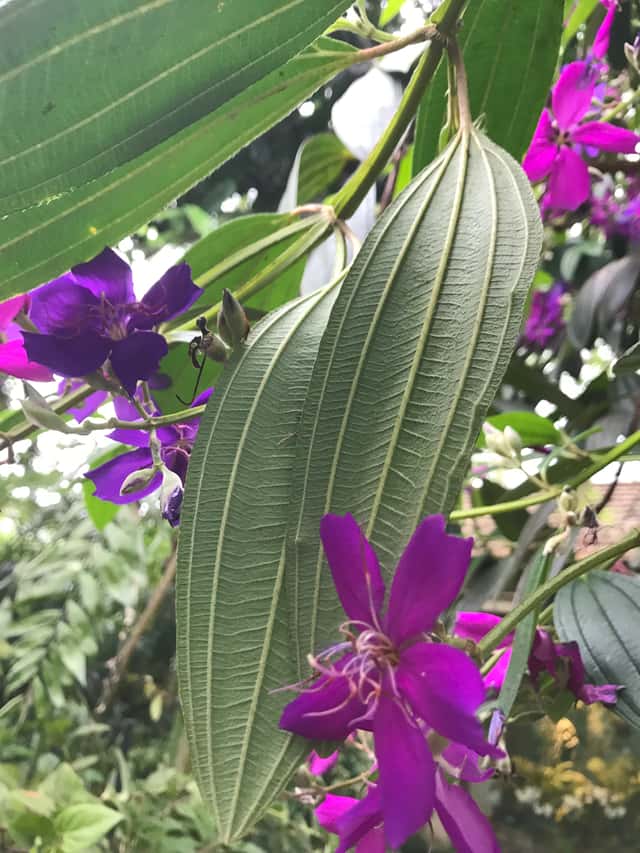
Princess Flower (Tibouchina granulosa) is a medium-care plant from the Melastomataceae family. Tibouchina granulosa, commonly known as the Princess Flower or Glory Bush, is a medium-sized tree native to the Brazilian Atlantic Forest. It is notable for its rounded crown and dark green foliage with a velvety texture. Its most striking feature is its exuberant flowering, which typically occurs t...
Princess Flower grows up to 6.0m, spread of 366cm, watering every 7 days, 13°C – 30°C, 50–70% humidity. It is suitable for indoor environments and safe for pets.
Unlike many popular species, Princess Flower is safe to keep around pets. Without adequate drainage, root rot can develop within 14 days.
How to Care for Princess Flower?
TLDR: Princess Flower needs Direct sun, watering every 7 days, and temperatures between 13-30°C with 50-70% humidity.
How Often Should You Water Princess Flower?
Water deeply twice a week during dry periods. Once established in the ground, it can tolerate short periods of drought.
How Much Light Does Princess Flower Need?
To ensure intense flowering, plant in a location that receives at least 6 hours of direct sunlight per day.
What Is the Best Soil for Princess Flower?
The Princess Flower thrives in slightly acidic soils. Add peat moss or organic compost to improve acidity and fertility.
What Pot Should You Use for Princess Flower?
Although it prefers the ground, it can be grown in large pots during its early years using a substrate rich in organic matter and good drainage.
Care Schedule
Fertilize
Every 30 days
Misting
Every 3 days
Repot
Every 730 days
What Is Princess Flower and Where Does It Come From?
Tibouchina granulosa, commonly known as the Princess Flower or Glory Bush, is a medium-sized tree native to the Brazilian Atlantic Forest. It is notable for its rounded crown and dark green foliage with a velvety texture. Its most striking feature is its exuberant flowering, which typically occurs twice a year, covering the tree with vibrant shades of purple or pink flowers.
How to Propagate Princess Flower?
Stem cuttings
- Keep a plastic cover over the cutting to increase humidity.
- Avoid direct sunlight on newly planted cuttings.
- 1 Cutting selection
Cut a semi-woody branch approximately 15-20 cm long.
- 2 Preparation
Remove the bottom leaves and dip the end in rooting hormone, if available.
- 3 Planting
Plant in a light substrate and maintain constant moisture under indirect light until rooted.
Materials needed:
Sowing
- The seeds are very small; do not cover them with too much soil.
- Germination is faster at temperatures above 20 degrees Celsius (68°F).
- 1 Seed collection
Harvest the dry fruits when they begin to open naturally.
- 2 Sowing
Scatter the tiny seeds over the surface of a fine, organic soil.
- 3 Maintenance
Keep the soil consistently moist with a spray bottle and protect from strong winds.
Materials needed:
How Big Does Princess Flower Grow?
TLDR: Princess Flower can reach up to 6.0m tall with Fast growth rate.
Max height
6.0m
Spread
3.7m
Growth rate
Fast
Foliage
Evergreen
Plant Uses
Ornamental
Great for decoration
Is your plant showing symptoms?
Click on the symptom to discover possible causes:
What Diseases Commonly Affect Princess Flower?
TLDR: Princess Flower is susceptible to 11 known diseases. Monitor regularly for early detection.
Powdery Mildew
Powdery mildew is a common fungal disease caused by various fungi species including Erysiphe, Podosphaera, Oïdium, and Leveillula. It affects over 10,000 plant species worldwide. The disease thrives in warm, dry climates with high humidity and appears as a distinctive white powdery coating on plant surfaces.
Root Rot
Root rot is a serious fungal disease that affects the root system of plants, causing them to decay and die. It is primarily caused by overwatering, poor drainage, or soil-borne fungi such as Pythium, Phytophthora, Rhizoctonia, and Fusarium. The disease thrives in waterlogged conditions where roots are deprived of oxygen, making them susceptible to fungal infection.
Leaf Spot
Leaf spot is a common fungal disease caused by various pathogens including Alternaria, Ascochyta, Colletotrichum, Septoria, and Venturia. It primarily affects leaves, causing discolored spots that can lead to premature leaf drop if left untreated.
Canker
Canker is a disease caused by various fungi and bacteria that create necrotic, sunken areas on bark of branches, stems, and trunks. Pathogens enter through wounds and natural openings, especially when plants are stressed. Canker can gradually weaken or kill branches by disrupting water and nutrient flow.
Meaning & Symbolism
It symbolizes faith and renewal, being an icon of the Brazilian urban landscape during the Lenten period.
Compare with similar plants
| Attribute | Difficulty | Light | Watering | Pet Safe |
|---|---|---|---|---|
| Dark Fieldcap | Medium | Low light | 2d | ⚠️ |
| Azalea | Medium | Partial shade | 3d | ⚠️ |
| Muriel's Bamboo | Medium | Partial shade | 3d | ✓ |
| Bougainvillea | Medium | Direct sun | 7d | ⚠️ |




