Apocynaceae
Oleander: Full Sun Plant
Nerium oleander
Oleander is easy to grow in full sun and well-drained soil. It requires minimal maintenance but must be handled with extreme care due to its high toxicity.
Every 10 days
Direct sun
-9° - 38°C
30% - 50%
Categories
What is Oleander?
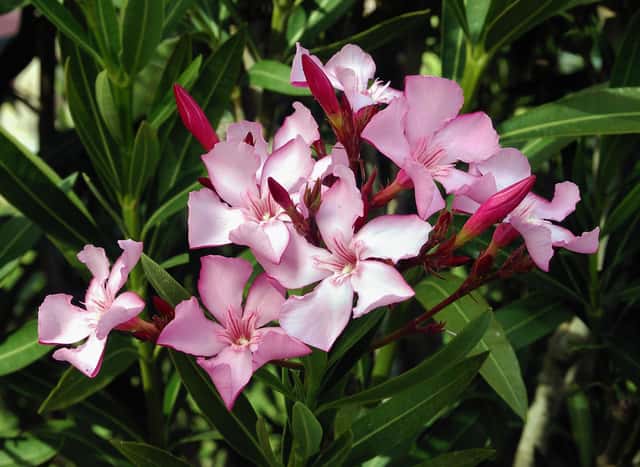
Oleander (Nerium oleander) is a easy-care plant from the Apocynaceae family. Nerium oleander is a vigorous, evergreen shrub or small tree valued for its abundant and long-lasting floral display. Native to the Mediterranean region, it features leathery, lance-shaped leaves and clusters of funnel-shaped flowers. It is exceptionally hardy, drought-tolerant, and salt-tolerant, t...
Oleander grows up to 4.0m, spread of 400cm, watering every 10 days, -9°C – 38°C, 30–50% humidity. It is not suitable for indoor environments and not safe for pets.
Unlike many tropical plants, Oleander tolerates watering mistakes. Best for beginners. Without precautions, ingestion can cause irritation in pets. Keep out of reach of cats and dogs.
How to Care for Oleander?
TLDR: Oleander needs Direct sun, watering every 10 days, and temperatures between -9-38°C with 30-50% humidity.
How Often Should You Water Oleander?
Water regularly during the first growing season to establish a deep root system. Once established, it is very drought-tolerant.
How Much Light Does Oleander Need?
Place in the sunniest spot possible; at least 6-8 hours of direct sunlight is necessary for prolific blooming.
What Is the Best Soil for Oleander?
While adaptable to most soils, it prefers a well-draining mix with a slightly alkaline to neutral pH.
What Pot Should You Use for Oleander?
Use a large, heavy ceramic or terracotta pot with excellent drainage to support its size and prevent tipping.
Care Schedule
Fertilize
Every 30 days
What Is Oleander and Where Does It Come From?
Nerium oleander is a vigorous, evergreen shrub or small tree valued for its abundant and long-lasting floral display. Native to the Mediterranean region, it features leathery, lance-shaped leaves and clusters of funnel-shaped flowers. It is exceptionally hardy, drought-tolerant, and salt-tolerant, though all parts of the plant contain cardiac glycosides and are extremely toxic if ingested.
How to Propagate Oleander?
Semi-hardwood Cuttings
- Always wear gloves and eye protection when cutting Oleander.
- Cuttings can also be rooted easily in a jar of water.
- 1 Take Cuttings
Cut a 15cm tip from a healthy, non-flowering stem. Wear gloves to avoid contact with toxic sap.
- 2 Prepare Stem
Remove the lower leaves, leaving only the top two or three leaves.
- 3 Planting
Dip the end in rooting hormone and plant in a moist mix of perlite and peat moss.
Materials needed:
How Big Does Oleander Grow?
TLDR: Oleander can reach up to 4.0m tall with Fast growth rate.
Max height
4.0m
Spread
4.0m
Growth rate
Fast
Foliage
Evergreen
Warning: Toxic Plant
This plant can be toxic if ingested. Keep out of reach of:
Plant Uses
Ornamental
Great for decoration
Medicinal
Medicinal properties
Is your plant showing symptoms?
Click on the symptom to discover possible causes:
What Diseases Commonly Affect Oleander?
TLDR: Oleander is susceptible to 12 known diseases. Monitor regularly for early detection.
Aphids
Aphids are small, soft-bodied, pear-shaped insects (1/16 to 1/8 inch long) that feed by sucking nutrient-rich sap from plants. They reproduce rapidly and can quickly weaken plants, causing distorted growth and transmitting plant viruses. Aphids come in various colors including green, black, red, yellow, brown, and gray. They secrete honeydew, a sticky substance that attracts ants and encourages sooty mold growth.
Mealybugs
Mealybugs are small, soft-bodied insects covered with a white, waxy, cottony material. They are common pests of houseplants and outdoor plants in mild climates. These sap-sucking insects feed on plant tissue, causing damage, stunted growth, and can lead to plant death if left untreated. They produce sticky honeydew which attracts sooty mold.
Scale Insects
Scale insects are small sap-sucking pests that appear as brown, shell-like bumps on plant stems and leaves. There are over 25 species, divided into armored (hard) and unarmored (soft) scales. They feed by piercing plant tissue and extracting sap, which weakens the plant and can lead to yellowing, stunted growth, and even death if left untreated. They also excrete honeydew, which attracts ants and promotes sooty mold growth.
Caterpillars
Caterpillars are the larval stage of moths and butterflies that feed voraciously on plant foliage, stems, flowers, and fruits. Common species include cabbage loopers, tomato hornworms, armyworms, and cutworms. These pests can cause extensive damage by consuming large amounts of plant tissue in a short time. They vary in size from small (1/4 inch) to large (5 inches), with colors ranging from green to brown, often featuring stripes or spots. Caterpillars are highly mobile and can quickly spread throughout gardens, making them one of the most destructive common pests.
Meaning & Symbolism
In the language of flowers, Oleander often symbolizes caution or complicated love, but it also represents resilience in harsh conditions.
Compare with similar plants
| Attribute | Difficulty | Light | Watering | Pet Safe |
|---|---|---|---|---|
| Field Maple | Easy | Bright indirect | 14d | ✓ |
| Silver Birch | Easy | Direct sun | 14d | ✓ |
| Common Blanketflower | Easy | Direct sun | 10d | ✓ |
| Cushion Bush | Easy | Direct sun | 14d | ✓ |





