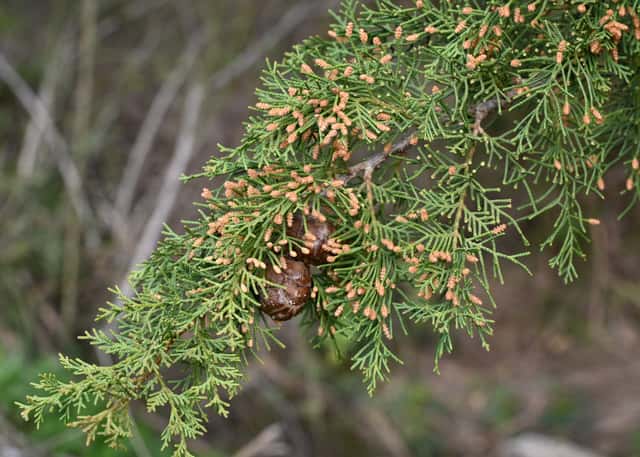
Cupressaceae
Italian Cypress: Full Sun Plant
Cupressus sempervirens
Requires full sun and soil with excellent drainage. Once established, it is extremely drought and wind resistant.
Every 14 days
Direct sun
-12° - 40°C
20% - 70%
Categories
What is Italian Cypress?
Italian Cypress (Cupressus sempervirens) is a easy-care plant from the Cupressaceae family. Cupressus sempervirens, known as the Italian Cypress, is a majestic evergreen conifer with a narrow columnar shape. Native to the Mediterranean region, it is famous for its longevity, capable of living for centuries. Its leaves are small and scale-like, exuding a characteristic resinous aroma when c...
Italian Cypress grows up to 21.0m, spread of 180cm, watering every 14 days, -12°C – 40°C, 20–70% humidity. It is not suitable for indoor environments and not safe for pets.
Unlike many tropical plants, Italian Cypress tolerates watering mistakes. Best for beginners. Without precautions, ingestion can cause irritation in pets. Keep out of reach of cats and dogs.
How to Care for Italian Cypress?
TLDR: Italian Cypress needs Direct sun, watering every 14 days, and temperatures between -12-40°C with 20-70% humidity.
How Often Should You Water Italian Cypress?
Water young plants regularly. Mature trees are drought-tolerant and only need water during prolonged dry spells.
How Much Light Does Italian Cypress Need?
Requires direct sun exposure for at least 6 to 8 hours daily to maintain its dense and healthy foliage.
What Is the Best Soil for Italian Cypress?
Adapts to various soils, including limestone, as long as water does not accumulate at the roots.
What Pot Should You Use for Italian Cypress?
Should preferably be planted in the ground; if in pots, use large ceramic containers with drainage holes.
Care Schedule
Fertilize
Every 90 days
What Is Italian Cypress and Where Does It Come From?
Cupressus sempervirens, known as the Italian Cypress, is a majestic evergreen conifer with a narrow columnar shape. Native to the Mediterranean region, it is famous for its longevity, capable of living for centuries. Its leaves are small and scale-like, exuding a characteristic resinous aroma when crushed. It is widely used in classical landscaping to create vertical lines and formal hedges.
How to Propagate Italian Cypress?
Seed Propagation
- Keep the substrate moist but never waterlogged during germination.
- 1 Stratification
Place seeds in moist sand in the refrigerator for 30 to 60 days to break dormancy.
- 2 Sowing
Plant seeds in a light, sandy substrate, covering lightly.
- 3 Transplanting
Move to individual pots when seedlings reach 10 cm in height.
Materials needed:
Stem Cuttings
- Using bottom heat can increase the chances of rooting success.
- 1 Cutting
Take semi-hardwood cuttings about 15 cm long.
- 2 Preparation
Remove the bottom leaves and dip in rooting hormone.
- 3 Planting
Insert into a peat and perlite compost under high humidity conditions.
Materials needed:
How Big Does Italian Cypress Grow?
TLDR: Italian Cypress can reach up to 21.0m tall with Medium growth rate.
Max height
21.0m
Spread
1.8m
Growth rate
Medium
Foliage
Evergreen
Warning: Toxic Plant
This plant can be toxic if ingested. Keep out of reach of:
Plant Uses
Ornamental
Great for decoration
Medicinal
Medicinal properties
Medicinal Uses
- Treatment of venous insufficiency
- Relief of hemorrhoids
- Respiratory antiseptic properties
Is your plant showing symptoms?
Click on the symptom to discover possible causes:
What Diseases Commonly Affect Italian Cypress?
TLDR: Italian Cypress is susceptible to 6 known diseases. Monitor regularly for early detection.
Canker
Canker is a disease caused by various fungi and bacteria that create necrotic, sunken areas on bark of branches, stems, and trunks. Pathogens enter through wounds and natural openings, especially when plants are stressed. Canker can gradually weaken or kill branches by disrupting water and nutrient flow.
Phytophthora Root Rot
Disease caused by fungus-like organisms (oomycetes) that live in soil and can survive for years. It affects roots, stem, and crown of plants, being especially severe in waterlogged or poorly drained soils. It is the second most common cause of root rot in trees and shrubs.
Root Rot
Root rot is a serious fungal disease that affects the root system of plants, causing them to decay and die. It is primarily caused by overwatering, poor drainage, or soil-borne fungi such as Pythium, Phytophthora, Rhizoctonia, and Fusarium. The disease thrives in waterlogged conditions where roots are deprived of oxygen, making them susceptible to fungal infection.
Spider Mites
Spider mites are tiny arachnids (less than 1/20 inch long) related to spiders and ticks that feed on plant sap. They thrive in hot, dry conditions and can cause significant damage to ornamental and vegetable plants. During severe infestations, crop losses can reach 14% or higher as these pests disrupt vital plant processes including photosynthesis, carbon dioxide absorption, and transpiration.
Meaning & Symbolism
Historically associated with immortality and eternal life due to its evergreen foliage and great longevity.
Compare with similar plants
| Attribute | Difficulty | Light | Watering | Pet Safe |
|---|---|---|---|---|
| Field Maple | Easy | Bright indirect | 14d | ✓ |
| Silver Birch | Easy | Direct sun | 14d | ✓ |
| Common Blanketflower | Easy | Direct sun | 10d | ✓ |
| Cushion Bush | Easy | Direct sun | 14d | ✓ |





