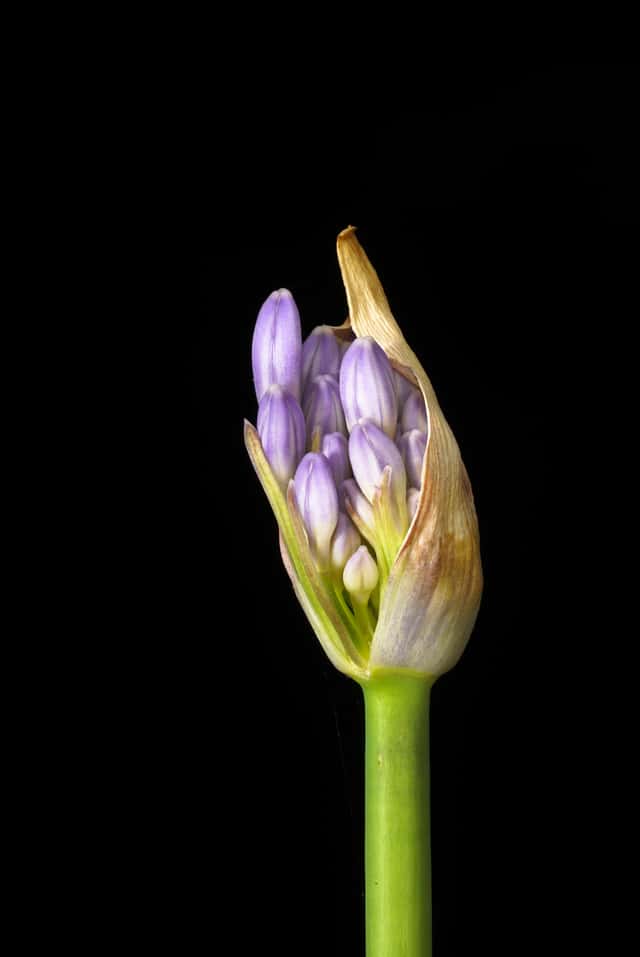
Amaryllidaceae
African Lily: Full Sun Plant
Agapanthus praecox
It is a low-maintenance plant that thrives in full sun and requires well-drained soil. It tolerates periods of drought once established.
Every 9 days
Direct sun
5° - 35°C
30% - 50%
Categories
What is African Lily?
African Lily (Agapanthus praecox) is a easy-care plant from the Amaryllidaceae family. Agapanthus praecox is an evergreen perennial plant native to South Africa. It is characterized by its long, strap-like green leaves and spectacular globular umbels of blue or white flowers that rise on tall, sturdy stems. It is an extremely hardy species and popular in Mediterranean landscaping.
African Lily grows up to 1.2m, spread of 60cm, watering every 9 days, 5°C – 35°C, 30–50% humidity. It is not suitable for indoor environments and not safe for pets.
Unlike many tropical plants, African Lily tolerates watering mistakes. Best for beginners. Without precautions, ingestion can cause irritation in pets. Keep out of reach of cats and dogs.
How to Care for African Lily?
TLDR: African Lily needs Direct sun, watering every 9 days, and temperatures between 5-35°C with 30-50% humidity.
How Often Should You Water African Lily?
Water regularly during spring and summer, but allow the soil to dry out between waterings. Drastically reduce watering in winter.
How Much Light Does African Lily Need?
For best flowering, place it in a location with direct sun. In extremely hot climates, it appreciates some afternoon shade.
What Is the Best Soil for African Lily?
It prefers fertile, well-drained soils. Excess clay can rot the rhizomes if there is too much moisture.
What Pot Should You Use for African Lily?
Deep and sturdy pots, preferably terracotta, as its fleshy roots are very vigorous and can deform lightweight containers.
Care Schedule
Fertilize
Every 14 days
Rotate
Every 90 days
Repot
Every 1460 days
What Is African Lily and Where Does It Come From?
Agapanthus praecox is an evergreen perennial plant native to South Africa. It is characterized by its long, strap-like green leaves and spectacular globular umbels of blue or white flowers that rise on tall, sturdy stems. It is an extremely hardy species and popular in Mediterranean landscaping.
How to Propagate African Lily?
Clump Division
- Perform division every 3 or 4 years to rejuvenate the plant.
- Avoid burying the rhizomes too deep.
- 1 Removal
Carefully remove the plant from the soil or pot, taking care not to excessively damage the fleshy roots.
- 2 Division
Cut the rhizome with a sharp, disinfected knife, ensuring each section has at least one leaf shoot.
- 3 Replanting
Plant the divisions immediately in new substrate and water generously.
Materials needed:
Seed Sowing
- Plants grown from seed may take 2 to 3 years to flower for the first time.
- Use fresh seeds for a higher success rate.
- 1 Collection
Collect the black, flat seeds from the dry capsules after flowering.
- 2 Sowing
Sow in a tray with light substrate and barely cover with a thin layer of soil.
- 3 Maintenance
Keep the substrate moist and in a warm place until sprouts appear.
Materials needed:
How Big Does African Lily Grow?
TLDR: African Lily can reach up to 1.2m tall with Medium growth rate.
Max height
1.2m
Spread
60cm
Growth rate
Medium
Foliage
Evergreen
Warning: Toxic Plant
This plant can be toxic if ingested. Keep out of reach of:
Plant Uses
Ornamental
Great for decoration
Medicinal
Medicinal properties
Is your plant showing symptoms?
Click on the symptom to discover possible causes:
What Diseases Commonly Affect African Lily?
TLDR: African Lily is susceptible to 11 known diseases. Monitor regularly for early detection.
Root Rot
Root rot is a serious fungal disease that affects the root system of plants, causing them to decay and die. It is primarily caused by overwatering, poor drainage, or soil-borne fungi such as Pythium, Phytophthora, Rhizoctonia, and Fusarium. The disease thrives in waterlogged conditions where roots are deprived of oxygen, making them susceptible to fungal infection.
Gray Mold (Botrytis Blight)
Gray mold, caused by the fungus Botrytis cinerea, is one of the most common fungal diseases in plants. It affects over 200 plant species, including ornamentals, vegetables, fruits, and houseplants. The disease thrives in cool, humid conditions with poor air circulation, causing grayish spots and soft rot on infected tissues.
Anthracnose
Anthracnose is a fungal disease caused by fungi in the genus Colletotrichum that affects many plants, including vegetables, fruits, and trees. The disease thrives in cool, wet conditions, causing dark, sunken lesions on leaves, stems, flowers, and fruits.
Powdery Mildew
Powdery mildew is a common fungal disease caused by various fungi species including Erysiphe, Podosphaera, Oïdium, and Leveillula. It affects over 10,000 plant species worldwide. The disease thrives in warm, dry climates with high humidity and appears as a distinctive white powdery coating on plant surfaces.
Meaning & Symbolism
Its name comes from the Greek 'agape' (love) and 'anthos' (flower), symbolizing pure love and fertility.
Compare with similar plants
| Attribute | Difficulty | Light | Watering | Pet Safe |
|---|---|---|---|---|
| Field Maple | Easy | Bright indirect | 14d | ✓ |
| Silver Birch | Easy | Direct sun | 14d | ✓ |
| Common Blanketflower | Easy | Direct sun | 10d | ✓ |
| Cushion Bush | Easy | Direct sun | 14d | ✓ |





