Apocynaceae
String of Hearts: Fast Growing
Ceropegia woodii
String of Hearts is an easy-care trailing succulent perfect for hanging baskets. It thrives in bright indirect light, tolerates drought well, and prefers infrequent watering. Allow soil to dry between waterings and avoid overwatering to prevent root rot. Ideal for beginners.
Every 10 days
Bright indirect
10° - 29°C
30% - 50%
Categories
What is String of Hearts?
String of Hearts (Ceropegia woodii) is a easy-care plant from the Apocynaceae family. Ceropegia woodii, commonly known as String of Hearts, is a charming trailing succulent native to South Africa. This elegant plant features delicate heart-shaped leaves with beautiful marbled patterns in shades of green and silver, growing on slender, cascading vines that can reach up to 4 meters in...
String of Hearts grows up to 4.0m, with spread of 90cm, watering every 10 days, 10°C – 29°C, 30–50% humidity. It is suitable for indoor environments and safe for pets.
Unlike many tropical plants, String of Hearts tolerates watering mistakes. Best for beginners. Unlike many popular species, String of Hearts is safe to keep around pets. Without adequate drainage, root rot can develop within 20 days.
How to Care for String of Hearts?
TLDR: String of Hearts needs Bright indirect, watering every 10 days, and temperatures between 10-29°C with 30-50% humidity.
How Often Should You Water String of Hearts?
Water sparingly, allowing the soil to dry 2/3 through the pot before watering again. In winter, let soil dry completely as the plant goes dormant. Watch for wilted or deflated leaves as a sign it needs water. When in doubt, let it drought.
How Much Light Does String of Hearts Need?
Place in bright indirect light with some direct morning sun. Avoid harsh afternoon direct sunlight which can scorch the leaves. Not suitable for low light conditions. Rotate the plant every few weeks for even growth.
What Is the Best Soil for String of Hearts?
Use well-draining soil mix. A cactus/succulent mix with added perlite works well. The soil should be light and airy to prevent water retention. pH between 6.0-7.0 is ideal.
What Pot Should You Use for String of Hearts?
Use a hanging basket or pot with drainage holes. Terra cotta pots work well as they allow soil to dry faster. Choose a pot only slightly larger than the root ball.
Care Schedule
Fertilize
Every 30 days
Rotate
Every 21 days
Repot
Every 540 days
What Is String of Hearts and Where Does It Come From?
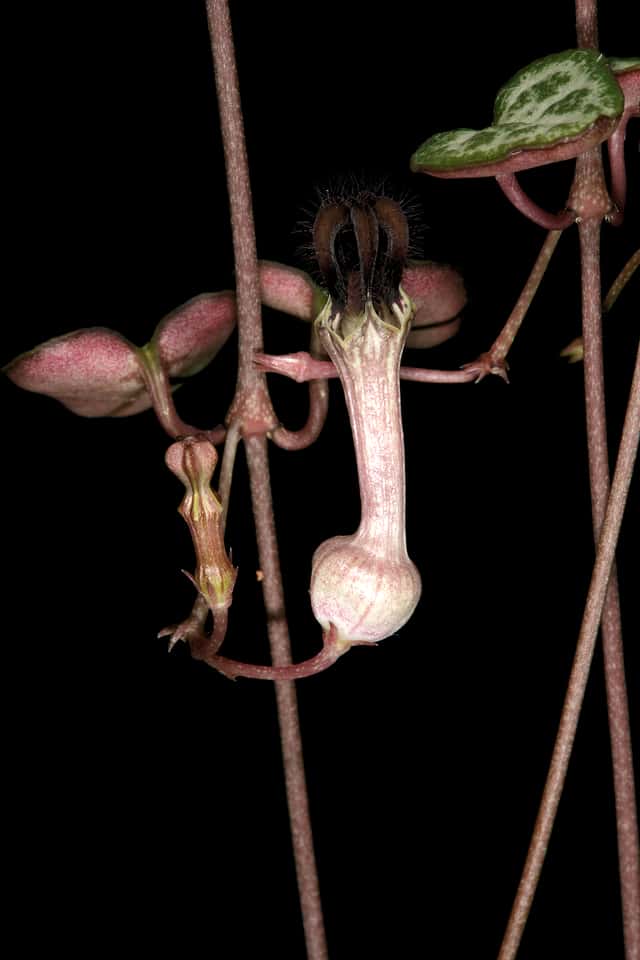
Ceropegia woodii, commonly known as String of Hearts, is a charming trailing succulent native to South Africa. This elegant plant features delicate heart-shaped leaves with beautiful marbled patterns in shades of green and silver, growing on slender, cascading vines that can reach up to 4 meters in length. It produces small, tube-shaped pink-purple flowers in summer and fall, and develops small aerial tubers along its stems.
How to Propagate String of Hearts?
Water propagation
- Use filtered or distilled water
- Keep in bright indirect light
- 1 Cut a healthy vine section with several nodes
- 2 Remove leaves from the bottom 2-3 nodes
- 3 Place cutting in water, ensuring nodes are submerged
- 4 Change water weekly to keep it fresh
- 5 Wait 3-4 weeks until roots are 2-3 inches long
- 6 Plant in well-draining soil
Materials needed:
Tuber division
- This is the easiest method
- Tubers can also be planted like seeds
- 1 Locate aerial tubers along the stem
- 2 Press tubers gently into moist soil while still attached to parent plant
- 3 Keep soil lightly moist until rooted
- 4 Once rooted, cut from parent plant if desired
Materials needed:
Leaf cuttings
- Creates many new plants from one vine
- Keep humidity high for best results
- 1 Cut strand between pairs of leaves creating single-node cuttings
- 2 Lay cuttings flat on pre-moistened soil
- 3 Place pot in a sealed plastic bag for humidity
- 4 Keep in bright indirect light
- 5 Wait for roots and new growth
Materials needed:
How Big Does String of Hearts Grow?
TLDR: String of Hearts can reach up to 4.0m tall with Fast growth rate.
Max height
4.0m
Spread
90cm
Growth rate
Fast
Foliage
Evergreen
Plant Uses
Ornamental
Great for decoration
Is your plant showing symptoms?
Click on the symptom to discover possible causes:
What Diseases Commonly Affect String of Hearts?
TLDR: String of Hearts is susceptible to 11 known diseases. Monitor regularly for early detection.
Powdery Mildew
Powdery mildew is a common fungal disease caused by various fungi species including Erysiphe, Podosphaera, Oïdium, and Leveillula. It affects over 10,000 plant species worldwide. The disease thrives in warm, dry climates with high humidity and appears as a distinctive white powdery coating on plant surfaces.
Root Rot
Root rot is a serious fungal disease that affects the root system of plants, causing them to decay and die. It is primarily caused by overwatering, poor drainage, or soil-borne fungi such as Pythium, Phytophthora, Rhizoctonia, and Fusarium. The disease thrives in waterlogged conditions where roots are deprived of oxygen, making them susceptible to fungal infection.
Scale Insects
Scale insects are small sap-sucking pests that appear as brown, shell-like bumps on plant stems and leaves. There are over 25 species, divided into armored (hard) and unarmored (soft) scales. They feed by piercing plant tissue and extracting sap, which weakens the plant and can lead to yellowing, stunted growth, and even death if left untreated. They also excrete honeydew, which attracts ants and promotes sooty mold growth.
Spider Mites
Spider mites are tiny arachnids (less than 1/20 inch long) related to spiders and ticks that feed on plant sap. They thrive in hot, dry conditions and can cause significant damage to ornamental and vegetable plants. During severe infestations, crop losses can reach 14% or higher as these pests disrupt vital plant processes including photosynthesis, carbon dioxide absorption, and transpiration.
Meaning & Symbolism
Symbolizes love, affection, and enduring bonds due to its distinctive heart-shaped leaves. Often given as a romantic gift.
Compare with similar plants
| Attribute | Difficulty | Light | Watering | Pet Safe |
|---|---|---|---|---|
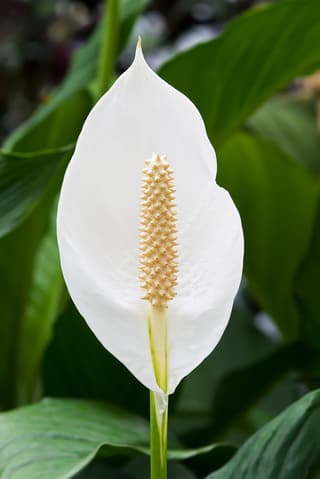
| Peace Lily | Easy | Low light | 4d | ⚠️ |
| Swiss Cheese Plant | Easy | Partial shade | 10d | ⚠️ |
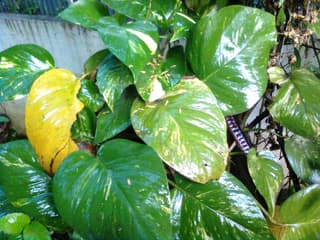
| Golden Pothos | Easy | Low light | 8d | ⚠️ |
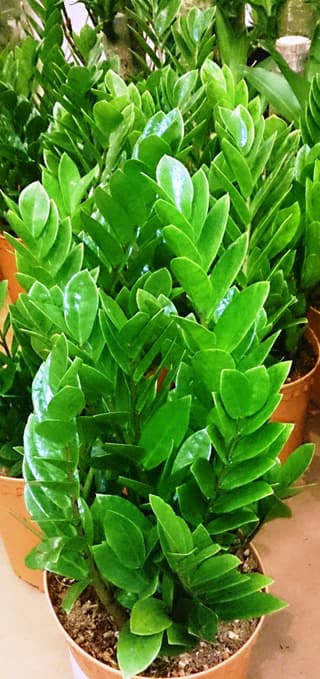
| ZZ Plant | Easy | Low light | 18d | ⚠️ |