Brassicaceae
Rock Cress (Aubretia deltoidea): The Complete Care Guide
Aubretia deltoidea
Rock Cress is an easy-care, drought-tolerant perennial that thrives in full sun and well-drained alkaline soil. Water sparingly once established, trim after blooming to maintain compact shape, and divide every 2-3 years to prevent centre die-out.
Every 10 days
Direct sun
-20° - 30°C
40% - 60%
Categories
What is Rock Cress?
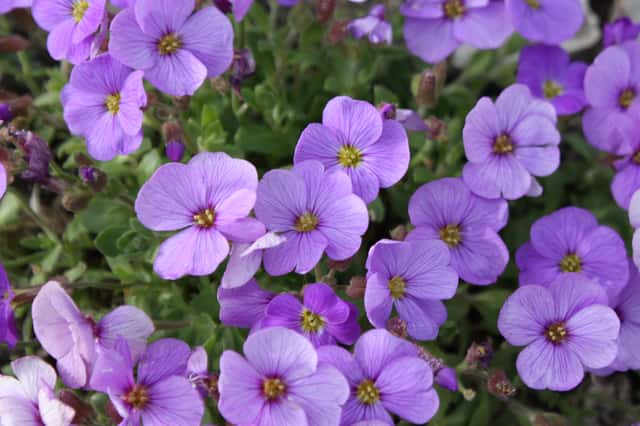
Rock Cress (Aubretia deltoidea) is a easy-care plant from the Brassicaceae family. Aubretia deltoidea, commonly known as Rock Cress, is a low-growing evergreen perennial native to Southern Europe and Turkey. This mat-forming groundcover produces a spectacular carpet of purple, lavender, pink, or white flowers in spring, almost completely covering its grey-green foliage. It thrives...
Rock Cress grows up to 23cm, with spread of 60cm, watering every 10 days, -20°C – 30°C, 40–60% humidity. It is not suitable for indoor environments and safe for pets.
Unlike many tropical plants, Rock Cress tolerates watering mistakes. Best for beginners. Unlike many popular species, Rock Cress is safe to keep around pets.
How to Care for Rock Cress?
TLDR: Rock Cress needs Direct sun, watering every 10 days, and temperatures between -20-30°C with 40-60% humidity.
How Often Should You Water Rock Cress?
Water established plants only when the top half of the soil has dried out completely, approximately every 10 days. Rock Cress is drought-tolerant and is far more likely to be harmed by overwatering than underwatering. Always water at soil level and avoid wetting the foliage.
How Much Light Does Rock Cress Need?
Rock Cress requires full sun for at least 6-8 hours daily to produce its best floral display. It tolerates partial shade but will produce fewer flowers and may become leggy in lower light. Ideal for south-facing slopes and walls.
What Is the Best Soil for Rock Cress?
Plant in well-draining, slightly alkaline to neutral soil (pH 6.5-7.5). Rocky, sandy, or chalky soils are ideal. Amend heavy clay soils with grit or perlite to improve drainage. Poor drainage is the most common cause of plant failure.
What Pot Should You Use for Rock Cress?
Terracotta or stone troughs and alpine planters are ideal. Use containers with excellent drainage holes. Raised beds and rock garden pockets also work perfectly.
What Is Rock Cress and Where Does It Come From?
Aubretia deltoidea, commonly known as Rock Cress, is a low-growing evergreen perennial native to Southern Europe and Turkey. This mat-forming groundcover produces a spectacular carpet of purple, lavender, pink, or white flowers in spring, almost completely covering its grey-green foliage. It thrives in rocky, well-drained soils and is an ideal plant for rock gardens, wall crevices, and alpine borders.
How to Propagate Rock Cress?
Division
Divide every 2-3 years to prevent centre die-out and to rejuvenate the plant. Discard the woody centre and replant only healthy outer sections.
- 1 Dig up established clumps in early spring or after flowering
- 2 Separate clumps into smaller sections, each with roots attached
- 3 Replant divisions at the same depth in well-prepared soil
- 4 Water thoroughly to settle roots and keep moist until established
Materials needed:
Seed Sowing
Seed-grown plants may not come true to cultivar colour. For named varieties, propagate by cuttings or division instead.
- 1 Sow seeds on the surface of well-draining compost in spring
- 2 Do not cover seeds as they need light to germinate
- 3 Maintain temperature of 15-20°C until germination
- 4 Prick out seedlings when large enough to handle and pot on
Materials needed:
How Big Does Rock Cress Grow?
TLDR: Rock Cress can reach up to 23cm tall with Fast growth rate.
Max height
23cm
Spread
60cm
Growth rate
Fast
Foliage
Evergreen
Plant Uses
Ornamental
Great for decoration
Ground Cover
Soil coverage
Is your plant showing symptoms?
Click on the symptom to discover possible causes:
What Diseases Commonly Affect Rock Cress?
TLDR: Rock Cress is susceptible to 5 known diseases. Monitor regularly for early detection.
Aphids
Aphids are small, soft-bodied, pear-shaped insects (1/16 to 1/8 inch long) that feed by sucking nutrient-rich sap from plants. They reproduce rapidly and can quickly weaken plants, causing distorted growth and transmitting plant viruses. Aphids come in various colors including green, black, red, yellow, brown, and gray. They secrete honeydew, a sticky substance that attracts ants and encourages sooty mold growth.
Downy Mildew
Downy mildew is a fungal-like disease caused by oomycetes (water molds) that thrives in cool, wet conditions. It affects a wide range of plants, causing yellowing leaves with fuzzy white-gray growth underneath, leading to defoliation and reduced yields if left untreated.
Powdery Mildew
Powdery mildew is a common fungal disease caused by various fungi species including Erysiphe, Podosphaera, Oïdium, and Leveillula. It affects over 10,000 plant species worldwide. The disease thrives in warm, dry climates with high humidity and appears as a distinctive white powdery coating on plant surfaces.
Root Rot
Root rot is a serious fungal disease that affects the root system of plants, causing them to decay and die. It is primarily caused by overwatering, poor drainage, or soil-borne fungi such as Pythium, Phytophthora, Rhizoctonia, and Fusarium. The disease thrives in waterlogged conditions where roots are deprived of oxygen, making them susceptible to fungal infection.
Meaning & Symbolism
Rock Cress symbolises resilience and the beauty of nature, thriving in harsh alpine conditions where few other plants survive. Its spring blooms represent renewal and perseverance.
Fun Facts
Although it looks delicate, Rock Cress can survive temperatures as low as -20°C and is classified as hardy to USDA zone 4.
During peak bloom, the flowers are so dense they almost completely hide the grey-green foliage underneath, creating a stunning living carpet of colour.
Rock Cress is a favourite of bees and butterflies in early spring when few other flowers are available, making it an important early-season pollinator plant.
Despite its common name, Rock Cress is not a true cress — it belongs to the cabbage family (Brassicaceae) rather than the watercress family.
Frequently asked questions
How often should I water Rock Cress?
When does Rock Cress bloom?
Is Rock Cress toxic to pets?
What soil does Rock Cress need?
How do I prevent Rock Cress from becoming straggly?
Compare with similar plants
| Attribute | Difficulty | Light | Watering | Pet Safe |
|---|---|---|---|---|
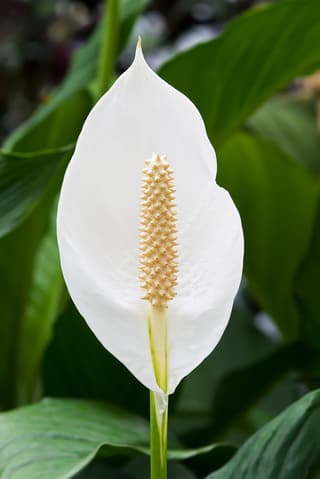
| Peace Lily | Easy | Low light | 4d | ⚠️ |
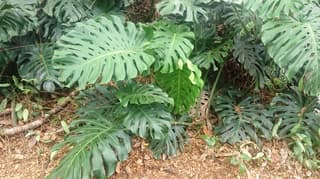
| Swiss Cheese Plant | Easy | Partial shade | 10d | ⚠️ |
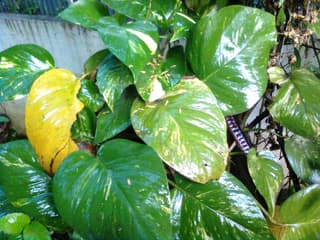
| Golden Pothos | Easy | Low light | 8d | ⚠️ |
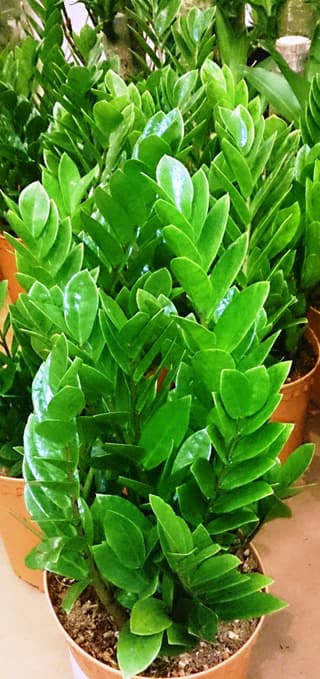
| ZZ Plant | Easy | Low light | 18d | ⚠️ |