Orchidaceae
Moth Orchid: Perfect Indoor Houseplant
Phalaenopsis
Prefers bright indirect light, weekly watering without waterlogging, and moderate humidity. Avoid letting water accumulate in the crown of the leaves.
Every 9 days
Partial shade
16° - 32°C
50% - 70%
Categories
What is Moth Orchid?
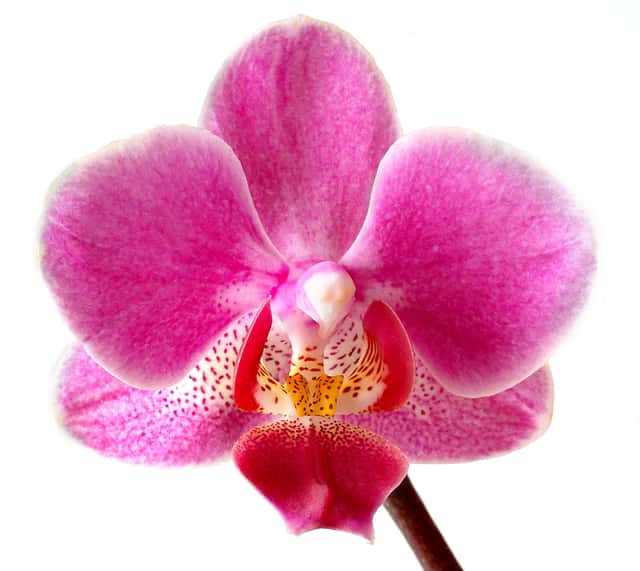
Moth Orchid (Phalaenopsis) is a easy-care plant from the Orchidaceae family. The Phalaenopsis, commonly known as the moth orchid, is one of the most popular orchids in the world due to its elegance and ease of indoor cultivation. Its flowers, which can last up to three months, grow on graceful stems and come in a wide range of colors and patterns. Its leaves are broad, flesh...
Moth Orchid grows up to 60cm, with spread of 45cm, watering every 9 days, 16°C – 32°C, 50–70% humidity. It is suitable for indoor environments and safe for pets.
Unlike many tropical plants, Moth Orchid tolerates watering mistakes. Best for beginners. Unlike many popular species, Moth Orchid is safe to keep around pets. Without adequate drainage, root rot can develop within 18 days.
How to Care for Moth Orchid?
TLDR: Moth Orchid needs Partial shade, watering every 9 days, and temperatures between 16-32°C with 50-70% humidity.
How Often Should You Water Moth Orchid?
Water when the roots visible through the pot turn a silvery shade. If they are vibrant green, the plant still has enough moisture.
How Much Light Does Moth Orchid Need?
Place it near an east-facing window. If the leaves turn very dark, it needs more light; if they turn yellowish or develop dry spots, it is receiving too much direct sun.
What Is the Best Soil for Moth Orchid?
Use a mix of pine bark, charcoal, and sphagnum moss to ensure the roots can breathe.
What Pot Should You Use for Moth Orchid?
Clear plastic pots with extra holes for drainage and root aeration.
Care Schedule
Fertilize
Every 14 days
Misting
Every 2 days
Rotate
Every 30 days
Repot
Every 730 days
What Is Moth Orchid and Where Does It Come From?
The Phalaenopsis, commonly known as the moth orchid, is one of the most popular orchids in the world due to its elegance and ease of indoor cultivation. Its flowers, which can last up to three months, grow on graceful stems and come in a wide range of colors and patterns. Its leaves are broad, fleshy, and deep green, serving as water reservoirs for the plant.
How to Propagate Moth Orchid?
Keiki Propagation
- Keep the keiki moist but not waterlogged after planting
- Use rooting hormone at the base of the keiki to speed up the process
- 1 Identification
Wait for a 'keiki' (a small baby plant) to emerge from a node on the flower spike after blooming.
- 2 Development
Allow the keiki to grow on the mother plant until it has at least 3 roots about 2 inches (5 cm) long.
- 3 Separation and Planting
Carefully cut the keiki and plant it in a small pot with moist orchid substrate.
Materials needed:
How Big Does Moth Orchid Grow?
TLDR: Moth Orchid can reach up to 60cm tall with Slow growth rate.
Max height
60cm
Spread
45cm
Growth rate
Slow
Foliage
Evergreen
Plant Uses
Ornamental
Great for decoration
Is your plant showing symptoms?
Click on the symptom to discover possible causes:
What Diseases Commonly Affect Moth Orchid?
TLDR: Moth Orchid is susceptible to 13 known diseases. Monitor regularly for early detection.
Bacterial Soft Rot
Bacterial soft rot is a destructive plant disease caused primarily by bacteria from the genera Pectobacterium (formerly Erwinia) and Dickeya. These bacteria produce enzymes that break down plant cell walls, causing rapid and foul-smelling tissue decomposition. It mainly affects succulent tissues such as tubers, fruits, stems, and bulbs, being especially problematic in warm and humid conditions.
Crown Rot
Crown rot is a serious fungal disease that attacks the crown (base) of the plant where the stem meets the soil. It is caused by various fungal pathogens including Phytophthora, Fusarium, and Rhizoctonia. The disease thrives in waterlogged conditions and can quickly spread to kill the entire plant if not addressed promptly.
Root Rot
Root rot is a serious fungal disease that affects the root system of plants, causing them to decay and die. It is primarily caused by overwatering, poor drainage, or soil-borne fungi such as Pythium, Phytophthora, Rhizoctonia, and Fusarium. The disease thrives in waterlogged conditions where roots are deprived of oxygen, making them susceptible to fungal infection.
Anthracnose
Anthracnose is a fungal disease caused by fungi in the genus Colletotrichum that affects many plants, including vegetables, fruits, and trees. The disease thrives in cool, wet conditions, causing dark, sunken lesions on leaves, stems, flowers, and fruits.
Meaning & Symbolism
Symbolizes love, beauty, refinement, fertility, and new beginnings.
Compare with similar plants
| Attribute | Difficulty | Light | Watering | Pet Safe |
|---|---|---|---|---|
| Peace Lily | Easy | Low light | 4d | ⚠️ |
| Swiss Cheese Plant | Easy | Partial shade | 10d | ⚠️ |
| Golden Pothos | Easy | Low light | 8d | ⚠️ |
| ZZ Plant | Easy | Low light | 18d | ⚠️ |