Apocynaceae
Madagascar periwinkle: Full Sun Plant
Catharanthus roseus
Thrives in full sun and well-draining soil. It is relatively drought-tolerant once established but performs best with regular watering and monthly fertilization.
Every 7 days
Direct sun
15° - 35°C
30% - 50%
Categories
What is Madagascar periwinkle?
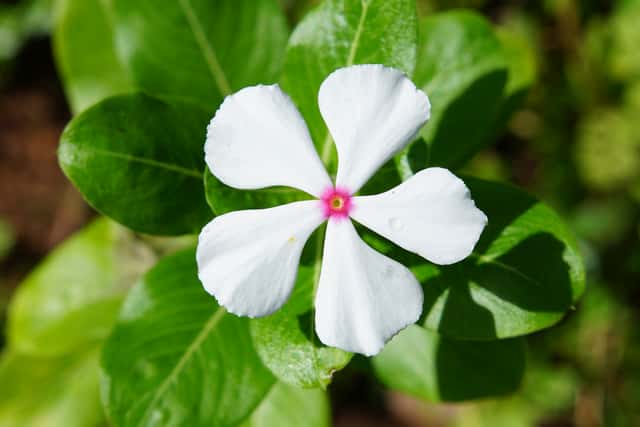
Madagascar periwinkle (Catharanthus roseus) is a easy-care plant from the Apocynaceae family. Catharanthus roseus, commonly known as the Madagascar periwinkle, is a hardy evergreen subshrub. It features glossy, oval-shaped dark green leaves with a pale midrib and produces abundant five-petaled flowers. While native to Madagascar, it has become a staple in tropical and subtropical gardens wor...
Madagascar periwinkle grows up to 60cm, with spread of 45cm, watering every 7 days, 15°C – 35°C, 30–50% humidity. It is suitable for indoor environments and not safe for pets.
Unlike many tropical plants, Madagascar periwinkle tolerates watering mistakes. Best for beginners. Without precautions, ingestion can cause irritation in pets. Keep out of reach of cats and dogs. Without adequate drainage, root rot can develop within 14 days.
How to Care for Madagascar periwinkle?
TLDR: Madagascar periwinkle needs Direct sun, watering every 7 days, and temperatures between 15-35°C with 30-50% humidity.
How Often Should You Water Madagascar periwinkle?
Water when the top 2-3 cm of soil feels dry. Avoid overhead watering to reduce the risk of leaf spot diseases.
How Much Light Does Madagascar periwinkle Need?
Place in a location that receives at least 6 to 8 hours of direct sunlight daily for maximum flower production.
What Is the Best Soil for Madagascar periwinkle?
Prefers a sandy or loamy mix that allows water to pass through quickly; avoid heavy clay.
What Pot Should You Use for Madagascar periwinkle?
A well-draining terracotta pot is ideal to prevent soil saturation and root rot.
Care Schedule
Fertilize
Every 14 days
Rotate
Every 30 days
Repot
Every 365 days
What Is Madagascar periwinkle and Where Does It Come From?
Catharanthus roseus, commonly known as the Madagascar periwinkle, is a hardy evergreen subshrub. It features glossy, oval-shaped dark green leaves with a pale midrib and produces abundant five-petaled flowers. While native to Madagascar, it has become a staple in tropical and subtropical gardens worldwide due to its heat tolerance and continuous blooming habit.
How to Propagate Madagascar periwinkle?
Stem Cuttings
- Keep the cutting in a warm, humid spot with indirect light until roots form.
- Using rooting hormone can speed up the process.
- 1 Take Cutting
Cut a 10-15 cm healthy stem tip just below a leaf node.
- 2 Prepare Stem
Remove the lower leaves, leaving only the top two or three sets.
- 3 Planting
Insert the cut end into a moist, sterile potting mix or perlite.
Materials needed:
Seed Sowing
- Avoid overwatering during the germination phase to prevent damping off.
- Ensure complete darkness for the seeds until sprouts appear.
- 1 Sow Seeds
Sow seeds in a seed-starting mix, covering them lightly as they need darkness to germinate.
- 2 Maintain Warmth
Keep the soil temperature around 24-27 degrees Celsius.
- 3 Thinning
Once seedlings have two sets of true leaves, transplant them into individual pots.
Materials needed:
How Big Does Madagascar periwinkle Grow?
TLDR: Madagascar periwinkle can reach up to 60cm tall with Fast growth rate.
Max height
60cm
Spread
45cm
Growth rate
Fast
Foliage
Evergreen
Warning: Toxic Plant
This plant can be toxic if ingested. Keep out of reach of:
Plant Uses
Ornamental
Great for decoration
Medicinal
Medicinal properties
Medicinal Uses
- Source of alkaloids vincristine and vinblastine used in cancer treatments
- Traditional remedy for managing diabetes
- Used in folk medicine to treat high blood pressure
Is your plant showing symptoms?
Click on the symptom to discover possible causes:
What Diseases Commonly Affect Madagascar periwinkle?
TLDR: Madagascar periwinkle is susceptible to 13 known diseases. Monitor regularly for early detection.
Bacterial Wilt
Bacterial wilt is a fatal vascular disease caused by bacteria (Erwinia tracheiphila, Ralstonia solanacearum, Xanthomonas spp.) that infects the water-conducting tissue of plants. The bacteria multiply and block the flow of water and nutrients, causing rapid wilting and plant death within 1-2 weeks.
Phytophthora Blight
Devastating fungal disease caused by Phytophthora species (primarily P. capsici and P. infestans), famously responsible for the Irish Potato Famine in the 1840s. Affects all plant parts including roots, stems, leaves, and fruits in warm, wet conditions. The pathogen is technically an oomycete (water mold) that thrives in saturated soils and can survive in soil for 5+ years.
Fusarium Wilt
Fusarium wilt is a serious fungal disease caused by the soil-borne fungus Fusarium oxysporum. The fungus invades roots and blocks the water-conducting vessels (xylem) of the plant, causing progressive wilting and eventual death. Host-specific forms of the pathogen exist that attack different plant species.
Root Rot
Root rot is a serious fungal disease that affects the root system of plants, causing them to decay and die. It is primarily caused by overwatering, poor drainage, or soil-borne fungi such as Pythium, Phytophthora, Rhizoctonia, and Fusarium. The disease thrives in waterlogged conditions where roots are deprived of oxygen, making them susceptible to fungal infection.
Meaning & Symbolism
Often associated with pleasant memories, everlasting love, and benevolence.
Compare with similar plants
| Attribute | Difficulty | Light | Watering | Pet Safe |
|---|---|---|---|---|
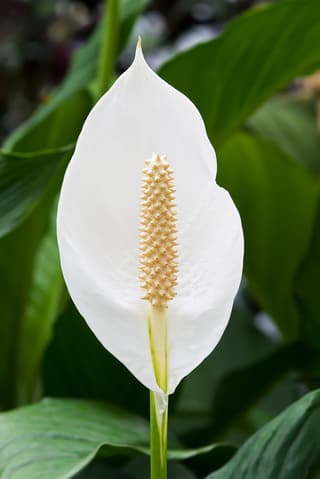
| Peace Lily | Easy | Low light | 4d | ⚠️ |
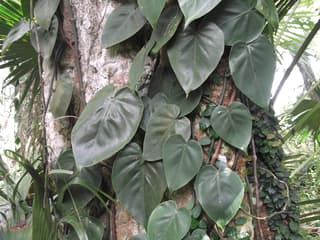
| Swiss Cheese Plant | Easy | Partial shade | 10d | ⚠️ |
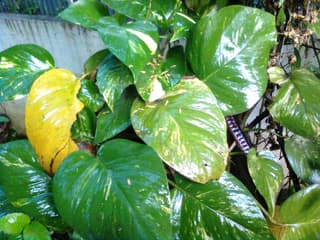
| Golden Pothos | Easy | Low light | 8d | ⚠️ |
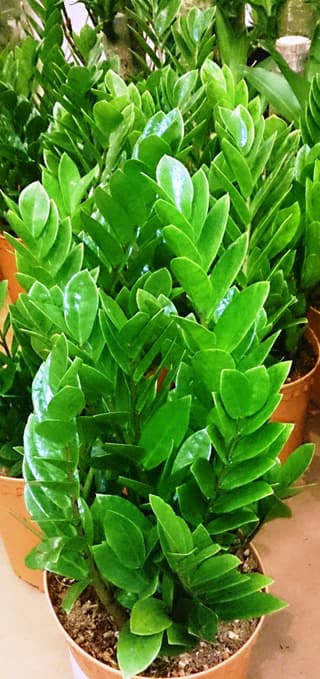
| ZZ Plant | Easy | Low light | 18d | ⚠️ |