Ulmaceae
Field Elm: Full Sun Plant
Ulmus minor
Requires a full sun location and deep, cool soils. Its primary maintenance focuses on health monitoring against pests and annual structural pruning.
Every 10 days
Direct sun
-25° - 38°C
30% - 60%
Categories
What is Field Elm?
Field Elm (Ulmus minor) is a medium-care plant from the Ulmaceae family. Ulmus minor, known as the field elm, is a majestic deciduous tree native to Europe, North Africa, and Western Asia. It is distinguished by its robust stature, deeply fissured bark in mature specimens, and alternate leaves with a markedly asymmetrical base. It is a keystone species in riparian forest...
Field Elm grows up to 30.0m, with spread of 1500cm, watering every 10 days, -25°C – 38°C, 30–60% humidity. It is not suitable for indoor environments and safe for pets.
Unlike many popular species, Field Elm is safe to keep around pets.
How to Care for Field Elm?
TLDR: Field Elm needs Direct sun, watering every 10 days, and temperatures between -25-38°C with 30-60% humidity.
How Often Should You Water Field Elm?
Water deeply and regularly during the first few years of life. Once established, the tree can tolerate moderate periods of drought.
How Much Light Does Field Elm Need?
For vigorous growth and a dense canopy, it should be placed in a location where it receives direct sunlight for most of the day.
What Is the Best Soil for Field Elm?
Prefers loamy, nutrient-rich soils with good moisture retention capacity, although it tolerates calcareous soils.
What Pot Should You Use for Field Elm?
It is not suitable for permanent pot cultivation, unless grown as a bonsai in ceramic trays with excellent drainage.
Care Schedule
Fertilize
Every 180 days
What Is Field Elm and Where Does It Come From?
Ulmus minor, known as the field elm, is a majestic deciduous tree native to Europe, North Africa, and Western Asia. It is distinguished by its robust stature, deeply fissured bark in mature specimens, and alternate leaves with a markedly asymmetrical base. It is a keystone species in riparian forests, although its populations have been drastically reduced in recent decades due to Dutch elm disease, a devastating fungal infection.
How to Propagate Field Elm?
Sowing samaras
- Seeds lose their viability very quickly, so they should be sown shortly after being collected.
- 1 Collection
Collect the samaras (winged fruits) directly from the tree when they begin to ripen and turn a brown color.
- 2 Hydration
Soak the seeds in water for 24 hours to improve the germination rate.
- 3 Sowing
Sow immediately in a light substrate, covering them with barely a centimeter of soil.
Materials needed:
Softwood cuttings
- Use a misting system or cover with plastic to prevent the cutting from dehydrating before rooting.
- 1 Cutting the stem
Cut young shoots of the year about 15 cm long during early summer.
- 2 Treatment
Apply rooting hormones to the base of the cut to stimulate root growth.
- 3 Planting
Insert into a mixture of peat and perlite, maintaining very high ambient humidity.
Materials needed:
How Big Does Field Elm Grow?
TLDR: Field Elm can reach up to 30.0m tall with Fast growth rate.
Max height
30.0m
Spread
15.0m
Growth rate
Fast
Foliage
Deciduous
Plant Uses
Ornamental
Great for decoration
Medicinal
Medicinal properties
Medicinal Uses
- Treatment of skin conditions
- Natural astringent
- Anti-inflammatory for mucous membranes
Is your plant showing symptoms?
Click on the symptom to discover possible causes:
What Diseases Commonly Affect Field Elm?
TLDR: Field Elm is susceptible to 9 known diseases. Monitor regularly for early detection.
Aphids
Aphids are small, soft-bodied, pear-shaped insects (1/16 to 1/8 inch long) that feed by sucking nutrient-rich sap from plants. They reproduce rapidly and can quickly weaken plants, causing distorted growth and transmitting plant viruses. Aphids come in various colors including green, black, red, yellow, brown, and gray. They secrete honeydew, a sticky substance that attracts ants and encourages sooty mold growth.
Caterpillars
Caterpillars are the larval stage of moths and butterflies that feed voraciously on plant foliage, stems, flowers, and fruits. Common species include cabbage loopers, tomato hornworms, armyworms, and cutworms. These pests can cause extensive damage by consuming large amounts of plant tissue in a short time. They vary in size from small (1/4 inch) to large (5 inches), with colors ranging from green to brown, often featuring stripes or spots. Caterpillars are highly mobile and can quickly spread throughout gardens, making them one of the most destructive common pests.
Leafminers
Leafminers are the larvae of various insects including flies, moths, sawflies, and beetles that tunnel between leaf surfaces, creating distinctive serpentine trails or blotchy patches. While primarily cosmetic, severe infestations can weaken plants by reducing photosynthesis capacity and making them susceptible to secondary infections.
Scale Insects
Scale insects are small sap-sucking pests that appear as brown, shell-like bumps on plant stems and leaves. There are over 25 species, divided into armored (hard) and unarmored (soft) scales. They feed by piercing plant tissue and extracting sap, which weakens the plant and can lead to yellowing, stunted growth, and even death if left untreated. They also excrete honeydew, which attracts ants and promotes sooty mold growth.
Meaning & Symbolism
Historically, the elm has been a symbol of justice and protection, serving as the center for council meetings in Spanish town squares.
Compare with similar plants
| Attribute | Difficulty | Light | Watering | Pet Safe |
|---|---|---|---|---|
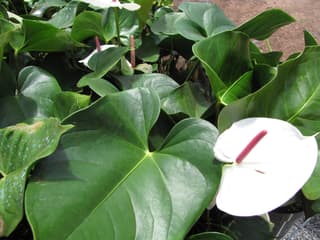
| Flamingo Flower | Medium | Partial shade | 5d | ⚠️ |
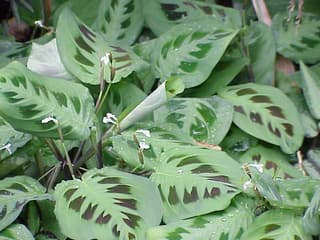
| Prayer Plant | Medium | Partial shade | 3d | ✓ |
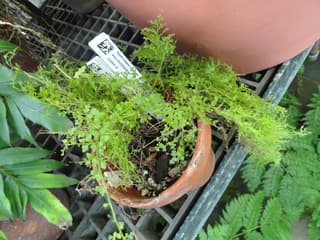
| Boston Fern | Medium | Partial shade | 3d | ✓ |
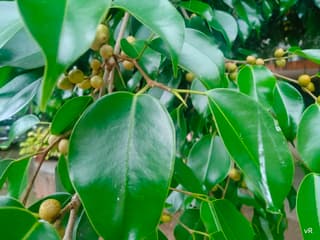
| Weeping Fig | Medium | Partial shade | 10d | ⚠️ |