Caryophyllaceae
Common mouse-ear chickweed: Ground Cover Plant
Cerastium fontanum
This plant is extremely hardy and requires very little maintenance. It thrives in full sun and well-drained soil, spreading quickly to form a dense green mat.
Every 7 days
Bright indirect
-30° - 30°C
30% - 60%
Categories
What is Common mouse-ear chickweed?
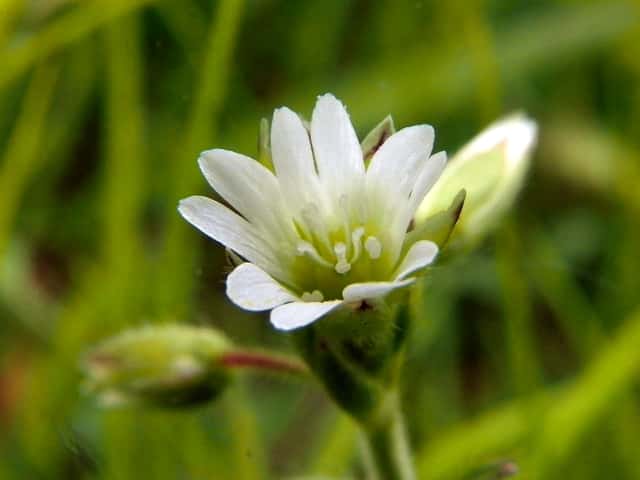
Common mouse-ear chickweed (Cerastium fontanum) is a easy-care plant from the Caryophyllaceae family. Cerastium fontanum, commonly known as mouse-ear chickweed, is a low-growing, mat-forming perennial herb. It is easily identified by its small, hairy, oval leaves and tiny white flowers with five petals that are so deeply notched they appear as ten. It is a resilient species often found in lawns, mea...
Common mouse-ear chickweed grows up to 30cm, with spread of 30cm, watering every 7 days, -30°C – 30°C, 30–60% humidity. It is not suitable for indoor environments and safe for pets.
Unlike many tropical plants, Common mouse-ear chickweed tolerates watering mistakes. Best for beginners. Unlike many popular species, Common mouse-ear chickweed is safe to keep around pets.
How to Care for Common mouse-ear chickweed?
TLDR: Common mouse-ear chickweed needs Bright indirect, watering every 7 days, and temperatures between -30-30°C with 30-60% humidity.
How Often Should You Water Common mouse-ear chickweed?
Water regularly during the first few weeks of planting; once established, it is moderately drought-tolerant but prefers moist soil.
How Much Light Does Common mouse-ear chickweed Need?
For the most abundant flowering, ensure the plant receives at least 6 hours of direct sunlight daily.
What Is the Best Soil for Common mouse-ear chickweed?
Adaptable to most soil types, but prefers a neutral to slightly acidic pH and must have good drainage to prevent rot.
What Pot Should You Use for Common mouse-ear chickweed?
While best suited for ground cover, it can be grown in wide, shallow containers with excellent drainage.
Care Schedule
Fertilize
Every 90 days
What Is Common mouse-ear chickweed and Where Does It Come From?
Cerastium fontanum, commonly known as mouse-ear chickweed, is a low-growing, mat-forming perennial herb. It is easily identified by its small, hairy, oval leaves and tiny white flowers with five petals that are so deeply notched they appear as ten. It is a resilient species often found in lawns, meadows, and disturbed soils across temperate regions.
How to Propagate Common mouse-ear chickweed?
Sowing Seeds
- Keep the soil consistently moist until the seedlings are established
- Thin out seedlings if they become too crowded to allow for spreading
- 1 Prepare Soil
Clear the planting area of weeds and loosen the top inch of soil with a rake.
- 2 Sow Seeds
Scatter seeds thinly over the soil surface. Do not bury them deeply as they require light to germinate.
- 3 Press and Water
Lightly press the seeds into the soil with your hand and mist with water to keep the surface moist.
Materials needed:
Root Division
- Water the new transplants immediately to help them settle
- Division is best done in early spring before the main growth spurt
- 1 Lift Clump
Use a trowel to dig up a healthy, established clump of the plant including the roots.
- 2 Divide
Gently pull the root mass apart into smaller sections, ensuring each piece has both roots and foliage.
- 3 Replant
Place the new sections into prepared holes at the same depth they were previously growing.
Materials needed:
How Big Does Common mouse-ear chickweed Grow?
TLDR: Common mouse-ear chickweed can reach up to 30cm tall with Fast growth rate.
Max height
30cm
Spread
30cm
Growth rate
Fast
Foliage
Evergreen
Plant Uses
Ornamental
Great for decoration
Edible
Can be consumed
Ground Cover
Soil coverage
Medicinal Uses
- Used in traditional folk medicine for its cooling and anti-inflammatory properties
- Applied as a poultice to soothe minor skin irritations and itches
Culinary Uses
- Young leaves and stems can be eaten raw in salads
- Can be boiled as a potherb or added to soups
Is your plant showing symptoms?
Click on the symptom to discover possible causes:
What Diseases Commonly Affect Common mouse-ear chickweed?
TLDR: Common mouse-ear chickweed is susceptible to 11 known diseases. Monitor regularly for early detection.
Powdery Mildew
Powdery mildew is a common fungal disease caused by various fungi species including Erysiphe, Podosphaera, Oïdium, and Leveillula. It affects over 10,000 plant species worldwide. The disease thrives in warm, dry climates with high humidity and appears as a distinctive white powdery coating on plant surfaces.
Root Rot
Root rot is a serious fungal disease that affects the root system of plants, causing them to decay and die. It is primarily caused by overwatering, poor drainage, or soil-borne fungi such as Pythium, Phytophthora, Rhizoctonia, and Fusarium. The disease thrives in waterlogged conditions where roots are deprived of oxygen, making them susceptible to fungal infection.
Leaf Spot
Leaf spot is a common fungal disease caused by various pathogens including Alternaria, Ascochyta, Colletotrichum, Septoria, and Venturia. It primarily affects leaves, causing discolored spots that can lead to premature leaf drop if left untreated.
Rust
Rust is a common fungal disease caused by fungi in the order Pucciniales that affects a wide variety of plants. The disease gets its name from the characteristic orange, yellow, or reddish-brown pustules that appear on leaves, resembling metal rust. This obligate fungal parasite requires living plants to survive and can cause significant economic losses in agricultural crops.
Meaning & Symbolism
Represents resilience, simplicity, and the ability to thrive in humble conditions.
Compare with similar plants
| Attribute | Difficulty | Light | Watering | Pet Safe |
|---|---|---|---|---|
| Peace Lily | Easy | Low light | 4d | ⚠️ |
| Swiss Cheese Plant | Easy | Partial shade | 10d | ⚠️ |
| Golden Pothos | Easy | Low light | 8d | ⚠️ |
| ZZ Plant | Easy | Low light | 18d | ⚠️ |